Parliament speaker does not trust statistical data offered by government bodies

Chairman of Tajikistan’s lower house (Majlisi Namoyandgon) of parliament, Shukurjon Zhurov, does not trust statistical data offered by the government bodies and ordered to define more precisely what criteria are used to identify poverty in a family in Tajikistan. A regular sitting of the Majlisi Namoyandagon, presided over by its head, Shukurjon Zhurov, took place […]

Asia-Plus

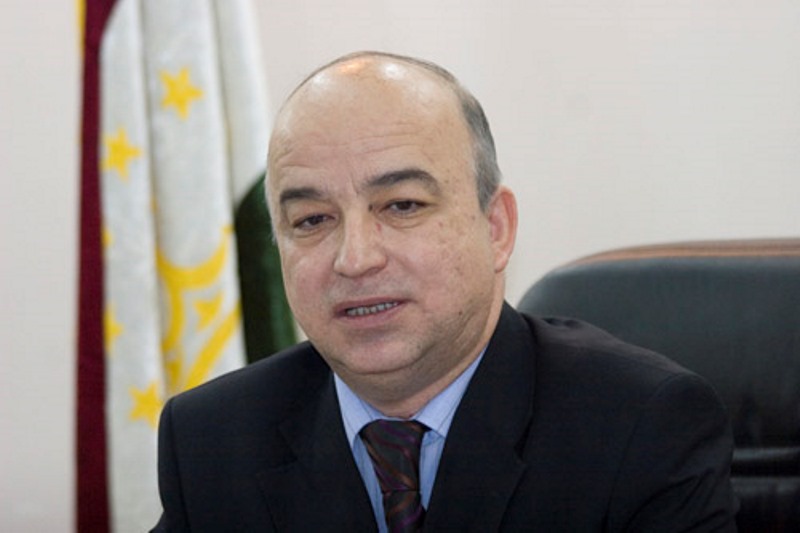
Chairman of Tajikistan’s lower house (Majlisi Namoyandgon) of parliament, Shukurjon Zhurov, does not trust statistical data offered by the government bodies and ordered to define more precisely what criteria are used to identify poverty in a family in Tajikistan.

A regular sitting of the Majlisi Namoyandagon, presided over by its head, Shukurjon Zhurov, took place on June 20.    

Speaking at the meeting, Zuhurov said that he is confident that nobody in the country knows exactly what criteria are used to identify poor families in Tajikistan.   

The parliament speaker criticized work carried out by the government bodies, first of all, the Ministry of Health and Social Protection of Population, to identify poor families in the country.  

“According to the statistical date, the poverty rate in Tajikistan declined from 73 percent in 2003 to 31 percent in 2015,” said Zuhurov.  “On what this statistical data is based?  Therefore, I ask the Ministry of Health to provide a specific report on how poor families are identified in our country.” 

Speaking on this issue, the head of the Majlisi Namoyandagon Committee on Finance and Economics, Sharif Rahimzoda, noted that the poverty rate in the country is identified by the Agency for Statistics under the President of Tajikistan through sociological surveys conducted quarterly.  

Meanwhile, a report by the World Bank, Tajikistan: Country Economic Update Spring 2017, notes that 13 percent of Tajikistan's population lives below the poverty line, and this indicator has not changed since 2009.  The World Bank defines a poverty threshold of $3.1 per person per day.  Thus, the person whose expenses per day is less than the specified one is identified as poor, and those who spend less than $1.1 a day are below the poverty line.

Join us on social media!

Article translations:

Related Article

Оби зулол
Оби зулол

Most Read

Акика Алиф

Recent Articles

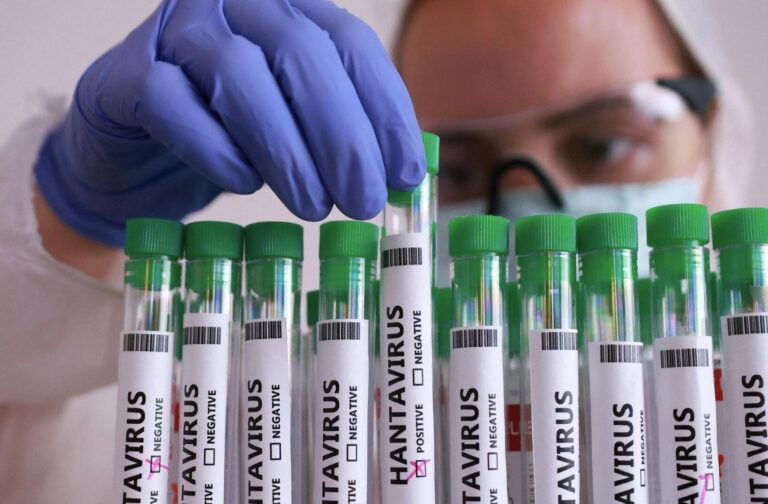
The ministry of health states that hantavirus does not threaten Tajikistan

Cases of infection with this virus were detected on board the cruise liner Hondius near the Canary Islands.

Tajikistan lags behind other Central Asian countries in number of chain hotels – study

The Republic remains a niche market with a limited number of quality hotels.

Climate risks threaten food security in Central Asia – FAO

Land degradation reduces agricultural productivity. The loss of biodiversity weakens the ecosystems that farmers, livestock breeders, and rural communities depend on.

Potential or illusion? Why the world overlooks Tajikistan’s mineral wealth

The republic may indeed possess significant reserves of rare metals, but there is a catch...

The case of ousted Kyrgyz security boss classified and moves to court

The former head of the GKNB is charged with violent seizure of power and abuse of official position.

Trump states that Iran’s nuclear program is a higher priority than U.S. citizens’ economic issues

Fluctuations in energy prices led to record inflation in the United States in April, the highest in the past three years.

Foot-and-mouth disease, plague, and flu: Central Asia threatened by transboundary animal diseases

FAO urges Central Asian countries to strengthen coordination and epidemiological surveillance.

Tajikistan approves the second phase of the Electric Transport Development Program; $95 million will be allocated for its implementation.

At this stage, the authorities are focusing on charging infrastructure, services for electric vehicles, and the expansion of the electric bus fleet.

Tajikistan and Kazakhstan to sign roadmap for cooperation in the agrarian sector

The parties are interested in expanding investment cooperation and establishing joint ventures.