Russia’s interior ministry proposes refusing reentry to migrants who don’t pay for their own deportation

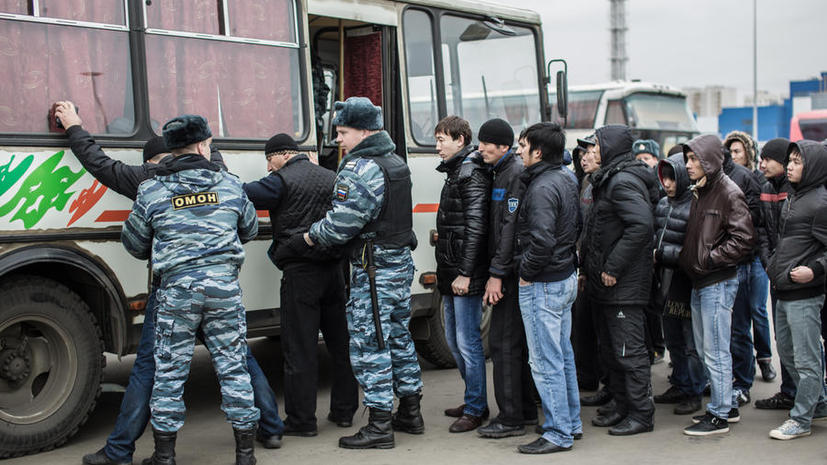
Russia’s Interior Ministry has drafted a bill that, if adopted, would introduce stricter requirements for migrants who are deported from Russia to reimburse the costs of their own deportation. Current Russia's entry-exit law turns to deportees first to request reimbursement but does not officially penalize them for refusing and allows for a string of other […]

Asia-Plus

Russia’s Interior Ministry has drafted a bill that, if adopted, would introduce stricter requirements for migrants who are deported from Russia to reimburse the costs of their own deportation.

Current Russia's entry-exit law turns to deportees first to request reimbursement but does not officially penalize them for refusing and allows for a string of other funding sources.

The new bill, posted on the federal portal of draft standard legal acts, would prohibit migrants from reentering Russia until they pay for their own removal from the country.

The public discussion of this initiative, which can take effect in July, has been extended until April 17.  

About 10 million foreign nationals and stateless persons reportedly stay in Russia every year, while more than one million foreign citizens temporarily reside in the country.

Every year, about one million Tajik seasonal workers travel abroad seeking better employment opportunities, primarily to Russia but also to neighboring Kazakhstan, Kyrgyzstan and Uzbekistan.

Join us on social media!

Article translations:

Related Article

Оби зулол
Оби зулол

Most Read

Recent Articles

Residents of a settlement in Sughd: “Afghan refugees have disappeared from the Dehmoy jamoat”

Earlier, a citizen of Afghanistan was detained on charges of murdering a resident of Khujand.

In Russia, it was proposed to revoke residence permits and temporary residence permits from migrants who do not work for more than two months

During January-March 2026, 90% more residence permits were revoked from migrants in the country compared to the same period last year.

From reach to influence: why advertising no longer works by old rules discussed in Dushanbe

Market research forces a complete reconsideration of the advertising budget allocation strategy.

Facial recognition cameras are being tested in Tashkent schools

Biometric control over children is being implemented without their explicit consent.

A cross-cultural educational festival “New Day” is taking place in Dushanbe

This is not a one-time event — it is an educational laboratory where a child goes from the first acquaintance with a field to achieving their own result.

Tajikistan’s Ombudsman evaluates prison conditions: ‘Access to phone, library, bath, and medical treatment available’

However, he noted that issues with healthcare and transportation persist in detention centers.