
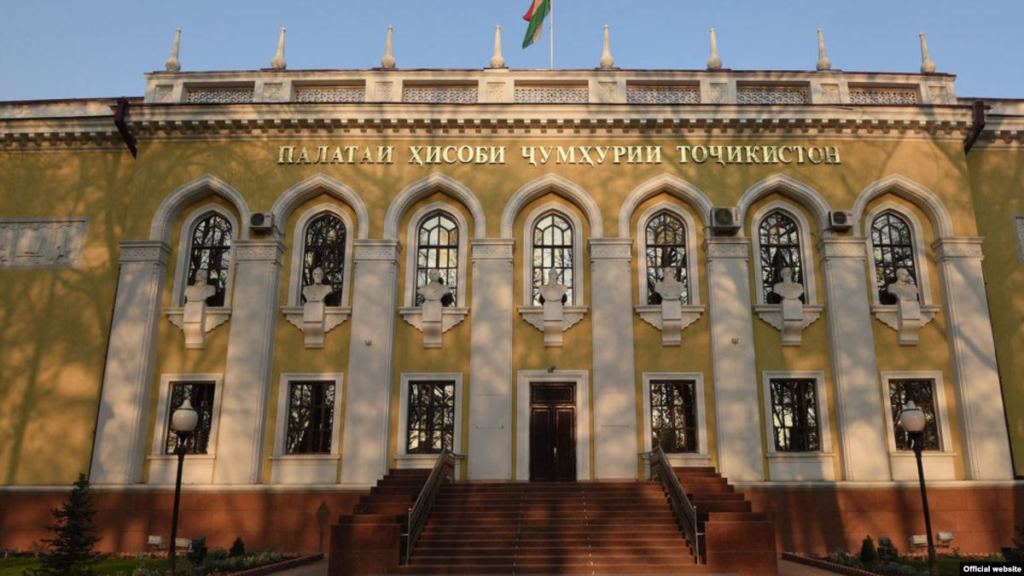
In a report released at a press conference in Dushanbe, representatives of the Accounts Chamber revealed on July 17 that according to findings by the Accounts Chamber, financial irregularities have cost Tajikistan at more than 88 million somoni (equivalent to more than 9.3 million U.S. dollars) in January-June this year.
Over the report period, the Accounts Chamber auditors have conducted 156 inspections. They have reportedly inspected the federally funded institutions such as ministries and agencies, economic entities, project implementation units and so forth.
The inspection conducted by the Accounts Chamber auditors in January-June this year have revealed more than 88 million somoni worth of damage, which has been caused by:
- illegal expenses – 4.4 million somoni;
- shortage and unreasonable write-off – 3.7 million somoni;
- tax evasion – 30.9 million somoni;
- embezzlement of funds – 37.1 million somoni;
- overstating repair and construction works – 11.4 million somoni;
- damage caused by sale and rental of state-owned property – 237,800 somoni;
- nonpayment of dividends on state shares.
As a result of measures taken, more than 46 percent (41.1 million somoni) of the damage has reportedly been reimbursed.
According to the Accounts Chamber, inspections conducted at the National Bank of Tajikistan (NBT) and Amonatbonk (Tajikistan’s savings bank) in the first half of this year have revealed 9.1 million somoni worth of damage. 7.6 million somoni has reportedly been reimbursed.
Over the repot period, the largest damage has reportedly been revealed in the State Unitary Enterprise (SUE) Affordable Housing. 13 audit inspections conducted at economic entities of the (SUE Affordable Housing over the same six-month period have revealed 41.1 million somoni worth of damage, according to the Accounts Chamber.
Tajikistan’s lower chamber (Majlisi Namoyandagon) of parliament passed the law on the establishment of the Accounts Chamber on June 1, 2011. This government institution reportedly controls revenue and expenditure parts of the national budget, off-budget funds and investments coming in the country’s economy from abroad. The Accounts Chamber was reportedly established to tighten control of finances as well as conduct audit and assess the national budget.
The Accounts Chamber is accountable to the President and the Parliament. The Majlisi Namoyandagon elects chief auditors of the Accounts Chamber upon the recommendation of the President; chief auditor may be elected to not more than two seven-year terms.
