The Tajik central bank notes that the country has seen bank deposits grow reflecting rising public confidence in the banking sector.
Despite impact of external factors, Tajikistan has achieved macroeconomic sustainability in recent years, providing stable development of the economy, the first deputy head of the National Bank of Tajikistan (NBT), Jamolidding Nouraliyev, noted during a meeting with representatives of an international credit rating agency, Moody’s Investors Service.
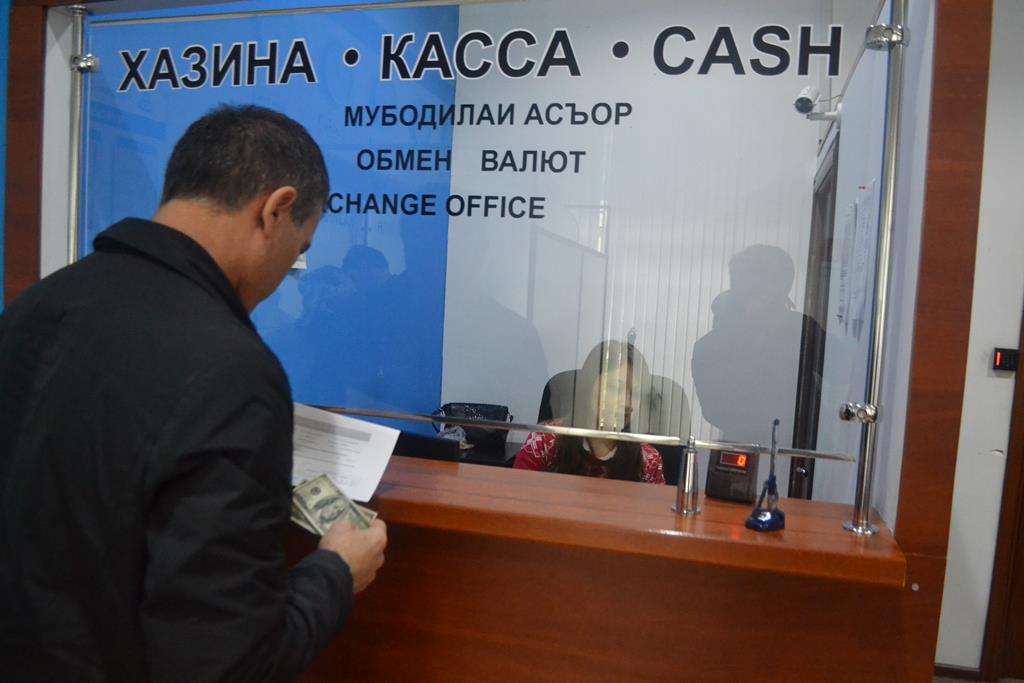
Nouraliyev noted that the situation in Tajikistan’s banking sector improved, the number of inactive loans had decreased, the loan portfolio had improved, and attraction of deposits had increased.
According to him, all this reflects the expanding economy and rising public confidence in the country’s banking sector.
The meeting was reportedly held within the framework of work carried out by Moody’s to determine a sovereign loan rating of Tajikistan, according to the NBT press service.
The agency specialists reportedly presented an assessment methodology, main criteria to determine a country's rating, in particular financial stability indicators, government obligations, monetary and fiscal policy, implementation of the regime of inflation targeting, existence of potential risks, and so forth.
Moody's Investors Service, often referred to as Moody's, is the bond credit rating business of Moody's Corporation, representing the company's traditional line of business and its historical name. Moody's Investors Service provides international financial research on bonds issued by commercial and government entities. Moody's, along with Standard & Poor's and Fitch Group, is considered one of the Big Three credit rating agencies.
The company ranks the creditworthiness of borrowers using a standardized ratings scale which measures expected investor loss in the event of default. Moody's Investors Service rates debt securities in several bond market segments. These include government, municipal and corporate bonds; managed investments such as money market funds and fixed-income funds; financial institutions including banks and non-bank finance companies; and asset classes in structured finance.