Kazakh lawmakers adopt law toughening punishment for rape

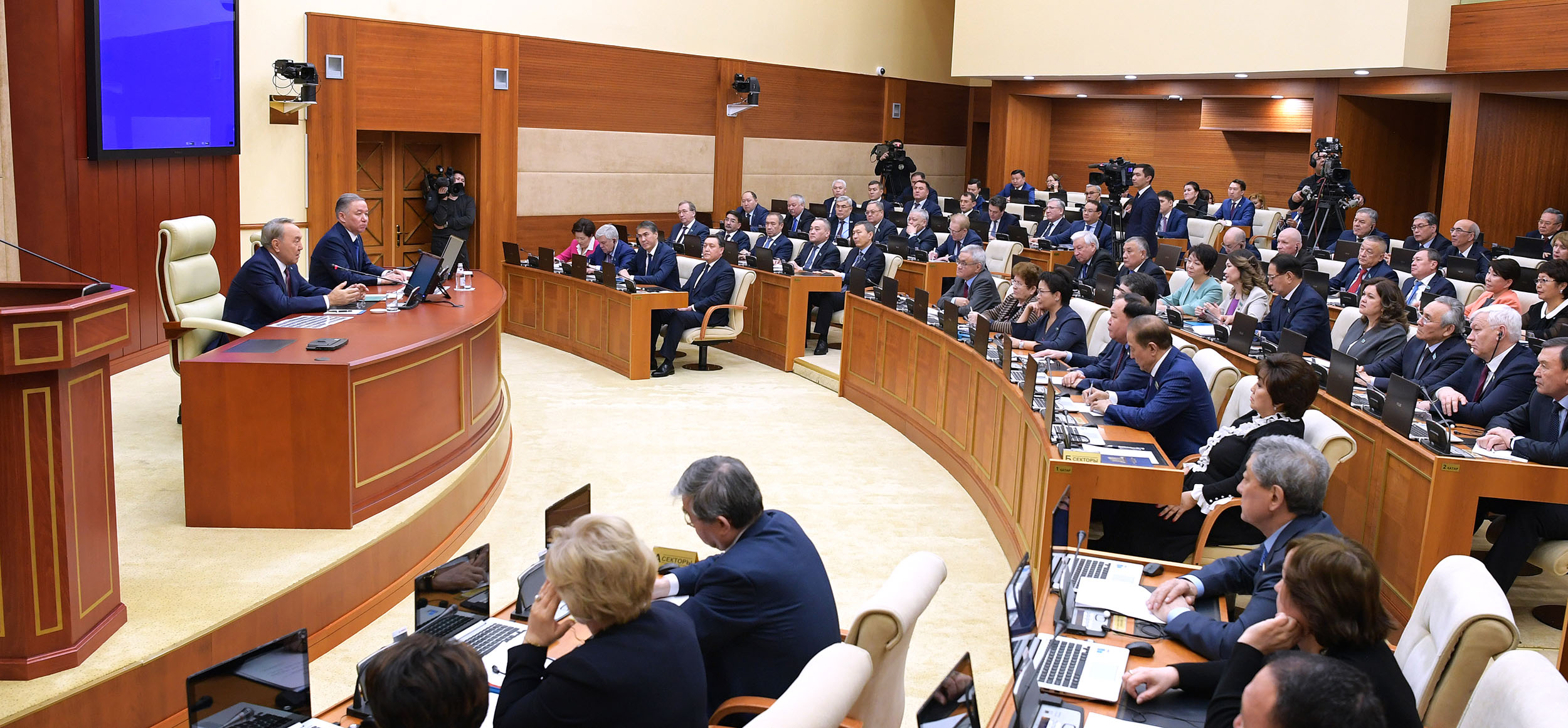
Kazakh lawmakers have endorsed a draft law providing for toughening punishment for rape, according to Fergana news agency. Now any sexual violence will be classified as a grave crime and reconciliation of the parties is impossible,” Kazakh parliament speaker  Nurlan Nigmatulin said.  Punishment for child sexual abuse is also toughened.  The draft law that was […]

Kazakh lawmakers have endorsed a draft law providing for toughening punishment for rape, according to Fergana news agency.

Now any sexual violence will be classified as a grave crime and reconciliation of the parties is impossible,” Kazakh parliament speaker  Nurlan Nigmatulin said. 

Punishment for child sexual abuse is also toughened. 

The draft law that was worked out to further improve the Criminal Code and the Code of Criminal Procedure includes amendments to toughen liability for intentionally committing certain types of serious and grave crimes.  For example, liability for committing a crime that violates sexual integrity will be increased – rape and sexual assault, even without aggravating circumstances, will be categorized as grave crimes,” he said.

Recall, Article 120, which concerns punishment for rape, was at the center of an urgent nationwide conversation about rape and sexual assault this summer after a judge passed down a light sentence on two train conductors who beat and raped a passenger in November 2018.

Although prosecutors requested six years prison for the defendants, the court on July 26 decided each man would get two and a half years behind bars. 

In his September 2 state of the nation address, President Kassym-Jomart Tokayev called for toughening penalties “for sexual violence, pedophilia, drug trafficking, human trafficking and other serious crimes, especially those against children.”

“We have moved away from excessively repressive measures and harsh punitive practices. However, numerous serious crimes still occur in the country. We got carried away with the humanization of legislation, having lost sight of the fundamental rights of citizens,” he said.  

Kazakhstan’s lawmakers first made rape illegal in 1997, when they introduced Article 120 into the legal code. At the time it was adopted, Article 120 penalized rape as a “serious” crime.  Not long after, however, lawmakers amended the rule and reduced rape to a crime of “moderate” severity.

Many have criticized Article 120 for its characterization of rape as anything less than a serious crime. 

Join us on social media!

Article translations:

Related Article

Tenisi
Оби зулол
Оби зулол

Most Read

Коммерсбонк Точикистон

Recent Articles

RZD announces the restoration of passenger services between Moscow and Dushanbe

Direct rail services between the capitals of Russia and Tajikistan were suspended in March 2020 due to the COVID-19 pandemic.

#AP30/Stories. “Selam! Heller nichek?” How Tatars live today in Sughd province

On the 30th anniversary of "Asia-Plus," we continue to publish reports that remain relevant even after years. This story was told in 2021, and since then, little has changed in the life of the Tatar community in Tajikistan.

15,000 cameras, drones, and robots: how technology monitors pilgrims in Mecca and Medina

During Hajj 2026, Mecca and Medina were under unprecedented digital control.

Another child in Dushanbe removed from family and sent to boarding school

The Ministry of Internal Affairs reports that the parents did not pay adequate attention to the child.

Emomali Rahmon instructs to address issues in seed production following criticism of the industry

Issues have been noted with certification, seed quality, and the material and technical base of the industry.

Water, climate, and a $130 billion deficit: seven key outcomes of the Water Conference in Dushanbe

At the forum, countries and international organizations discussed new mechanisms for cooperation, investments, and technologies that are essential for addressing the global water crisis.

Eskhata Bank introduces a new generation children’s wallet

"Eshkata Bank" has created a full-fledged digital platform that helps children aged 7 to 16 learn how to manage money.