

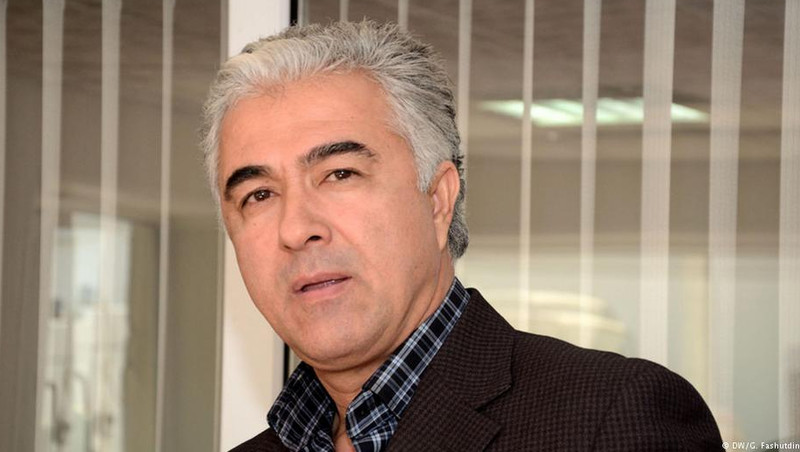
The Democratic Party of Tajikistan plans to nominate at least nineteen candidates for parliament. Four of them will be put on party list and remaining fifteen candidates will run in elections in single-mandate constituencies.
The DPT pre-election congress took place Dushanbe on December 15. DPT leader Saidjaffar Usmonzoda and his deputies Dilovar Kholov, Zuhro Mirzoyeva and Tavarali Ziyoyev were put on the party list.
“Fifteen our candidates will run in the upcoming parliamentary elections in single-mandate constituencies,” DPT leader Saidjaffar Usmonzoda told Asia-Plus in an interview.
According to him, they intend to form their faction consisting of five persons in the next Majlisi Namoyandagon.
The Majlisi Namoyandagon is the lower house of Tajikistan’s parliament. It has 63 members, elected for a five-year term in, 22 by proportional representation (party list) and 41 in single-seat constituencies.
The Democratic Party of Tajikistan can trace its origins back to the last days of the Soviet Union. Registered on June 21, 1991 and banned by the Supreme Court on June 21, 1993, the Democratic Party of Tajikistan was reregistered on December 3, 1999.
At the end of 1990s, two factions laid claim to the Democratic Party of Tajikistan: the Almaty platform led by Mahmadruzi Iskandarov and the Tehran platform run by Azam Afzali. The Tehran platform later transformed itself into the Taraqqiyot (Progress) Party.
On October 5, 2005, the Supreme Court sentenced DPT leader Mahmadruzi Iskandarov to 23 years in prison. The sentence followed his conviction on charges of terrorism, the embezzlement of state funds, and the illegal storage of weapons, though his supporters say he was jailed for political motives.
The party split into two factions again and the Ministry of Justice recognized Masoud Sobirov as the legitimate leader of the Democratic Party of Tajikistan in October 2006.
Democrats in the Sughd province and the Gorno Badakhshan Autonomous Region (GBAO) as well as some primary organizations of the party in other regions of the country did not recognize Masoud Sobirov as the party leader and they demanded convocation of the extraordinary congress of the party.
An extraordinary congress of the party took place in Dushanbe on December 23, 2012 and Saidjaffar Usmonzoda was elected as chairman of the party.
According to some sources, the party now has some 20,000 members.
