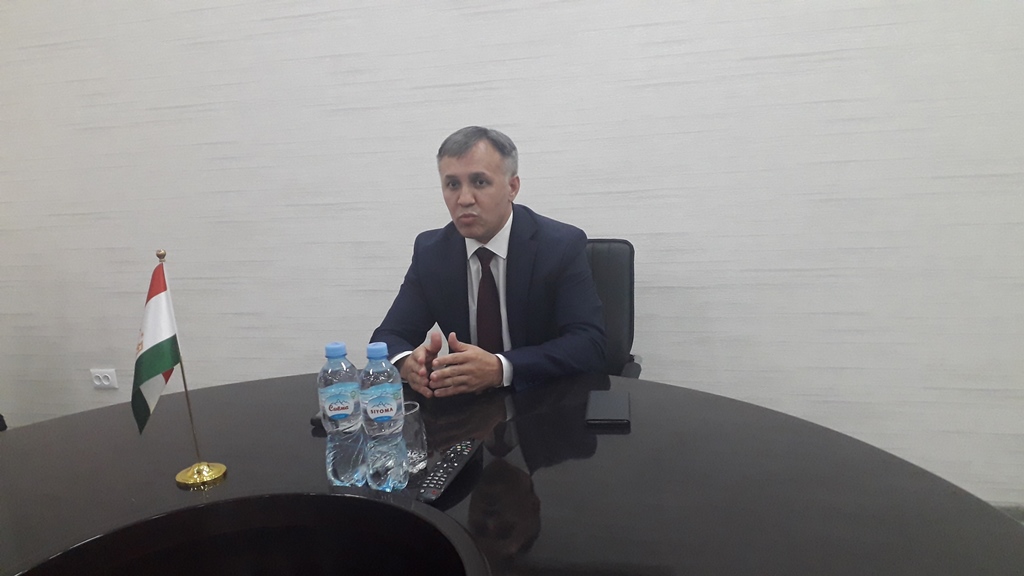
Entrepreneurs who refuse to do business in an online format may lose their business in the near future, Jamshed Jumakhonzoda, the head of the Chamber of Commerce and Industry (CCI) of Tajikistan, told reporters in Dushanbe on July 15.
According to him, such entrepreneurs are let down by the inability to adapt to new conditions.
“Coronavirus pandemic and toughening of anti-pandemic measures have made their own adjustments to the activities of Tajikistan’s CCI,” said Jumakhonzoda. “To assist domestic exporters with developing new sales markets, the Chamber of Commerce and Industry is actively working on putting business on online regime.”
“Unfortunately, many domestic businessmen have not been not ready for challenges caused by the pandemic. They still do not have a sufficient understanding of the benefits of online-business. They prefer traditional methods of doing business. Such companies will lose their market and cease to exist soon, I am afraid,” Tajik official noted.
According to him, Tajikistan’s CCI intends to establish the Council for E-commerce in order improve efficiency of its activities on providing assistance to exporters of domestic products and developing business in Tajikistan.
E-commerce (electronic commerce) is the activity of electronically buying or selling of products on online services or over the Internet. Electronic commerce draws on technologies such as mobile commerce, electronic funds transfer, supply chain management, Internet marketing, online transaction processing, electronic data interchange (EDI), inventory management systems, and automated data collection systems. E-commerce is in turn driven by the technological advances of the semiconductor industry, and is the largest sector of the electronics industry.
Modern electronic commerce typically uses the World Wide Web for at least one part of the transaction's life cycle although it may also use other technologies such as e-mail. There are three areas of e-commerce: online retailing, electronic markets, and online auctions.