More than 95% of Tajikistan’s external debt reportedly falls on direct government debt, which was attracted to perform the services of the government of the republic, according to the Ministry of Finance Secretariat.
Government debt, also known as public interest, public debt, national debt and sovereign debt, contrasts to the annual government budget deficit, which is a flow variable that equals the difference between government receipts and spending in a single year. The debt is a stock variable, measured at a specific point in time, and it is the accumulation of all prior deficits.
Government debt can be categorized as internal debt (owed to lenders within the country) and external debt (owed to foreign lenders). Another common division of government debt is by duration until repayment is due. Short term debt is generally considered to be for one year or less, and long term debt is for more than ten years. Medium term debt falls between these two boundaries. A broader definition of government debt may consider all government liabilities, including future pension payments and payments for goods and services which the government has contracted but not yet paid.
Governments create debt by issuing government bonds and bills. Less creditworthy countries sometimes borrow directly from a supranational organization (e.g. the World Bank) or international financial institutions.
As of July 1, the country’s external debt has reportedly amounted to about 3.1 billion U.S. dollars, including the government debt amounting to more than 2.9 billion U.S. dollars.
Debts with a state guarantee in the structure of external debt have amounted to 79.3 million U.S. dollars. Debts of state-owned enterprises that do not have a government guarantee have amounted to 31.5 million U.S. dollars. .
The remaining 23.1 million U.S. dollars are debts of the National Bank of Tajikistan (NBT) to the International Monetary Fund (18 million U.S. dollars), China (3 million U.S. dollars) and the Islamic Development Bank (2.1 million U.S. dollars).
China remains Tajikistan’s largest creditor. As of July 1, 2020, Tajikistan owes 1.2 billion USD to the Export-Import Bank of China (China Eximbank), which is nearly 40 percent of a total Tajikistan’s external debt estimated at about 3.1 billion somoni.
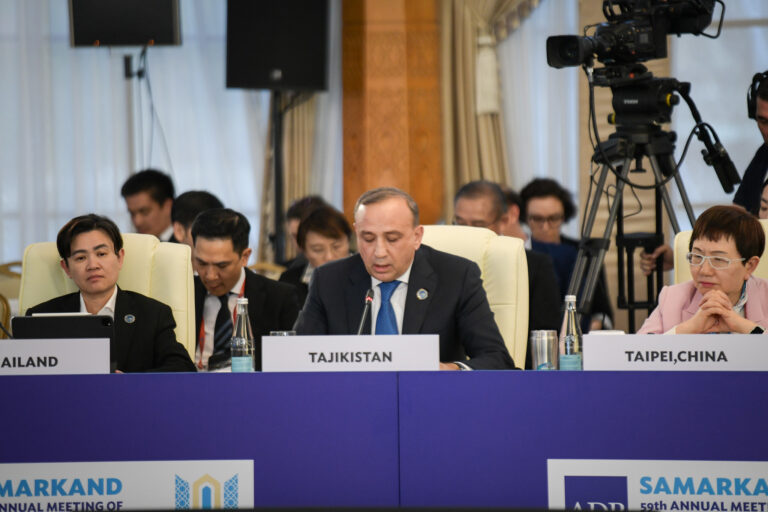
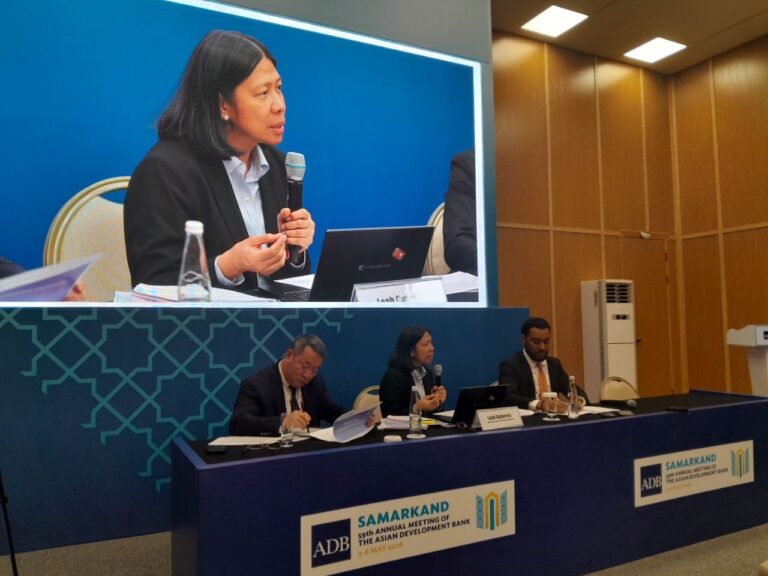
Besides, Tajikistan has relatively large debts to the World Bank (338.5 million USD), the Asian Development Bank (287.3 million USD) and the Islamic Development Bank (131.9 million USD).
Recall, the Government of Tajikistan has asked China to give relief on loan obligations in connection with effects of the novel coronavirus (COVID-19).