Over the first nine months of this year, Tajikistan retail trade has declined 2.7 percent, according to the Agency for Statistics under the President of Tajikistan.
Over the reporting period, retail sale of goods and products has amounted to 19.4 billion somoni.
In January-September this year, the proportion of products of the food industry in the country’s retail trade turnover was reportedly 49.1 percent, and the proportion of non-foodstuffs in a total volume of the retail trade turnover was 50.9 percent.
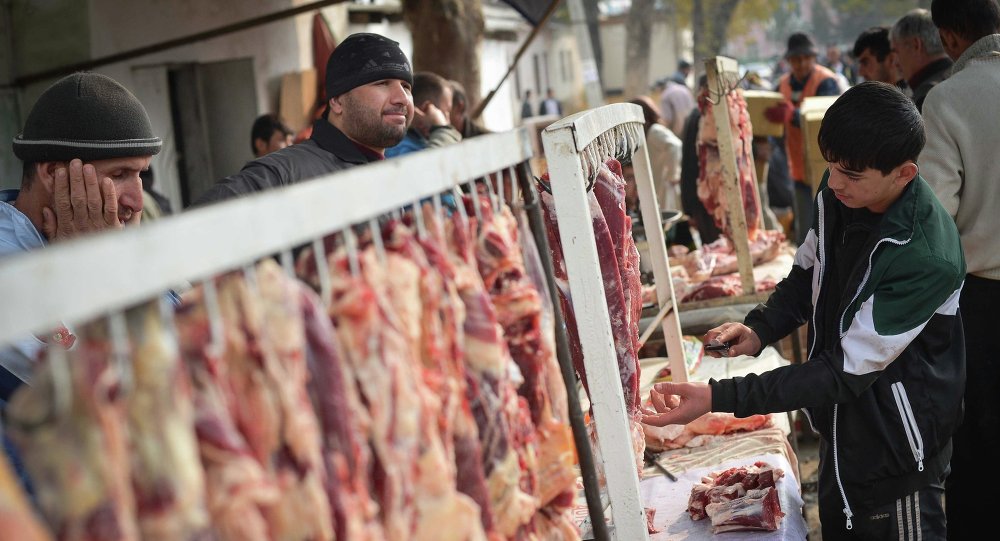
In terms of costs, the share of meat and meat products in the retail trade of food products was 15.4 percent over the reporting period.
They were followed by wheat and bakery products – 12.5 percent, sugar and confectionery – 6.8 percent, vegetables and potatoes – 6.1 percent, vegetable oil – 5.1 percent, and others.
Among non-foodstuffs, building materials had the largest share in terms of costs – 28.1 percent.
They are followed by petroleum products – 10.4 percent, cars and spare parts – 9.6 percent, shoes, knit goods, clothing and clothes – 9.1 percent, and fabrics – 8.8 percent.
Recall, the cost of products of the food industry in January-September has increased on average by 6.3 percent. Non-foodstuffs have reportedly risen in cost on average 3.8 0.9 percent over the same nine-month period, and prices and rates for services rendered to the population reportedly have increased on average by 3.7 percent over the first nine months of this year.
Prices have increased due to the devaluation of the national currency, the somoni, and a decline in imports due to restrictions associated with the novel coronavirus.
Findings of a survey conducted by marketing company KTM in October last year show that most of the population of Tajikistan spend a large part of their income on food.
Most of the population in Tajikistan live in rural areas and spend a large part of their income on food.
According to the survey, 30 percent of the country’s urban population spend up to 75 percent of their income on food. 35 other percent of the country’s urban population reportedly spend 50-75 percent of their income on food. The same percentage of Tajikistan’s urban population spend 25-50 percent of their income on food. And only 1.0 percent of the urban population in Tajikistan spend less than 25 percent of their income on food.