

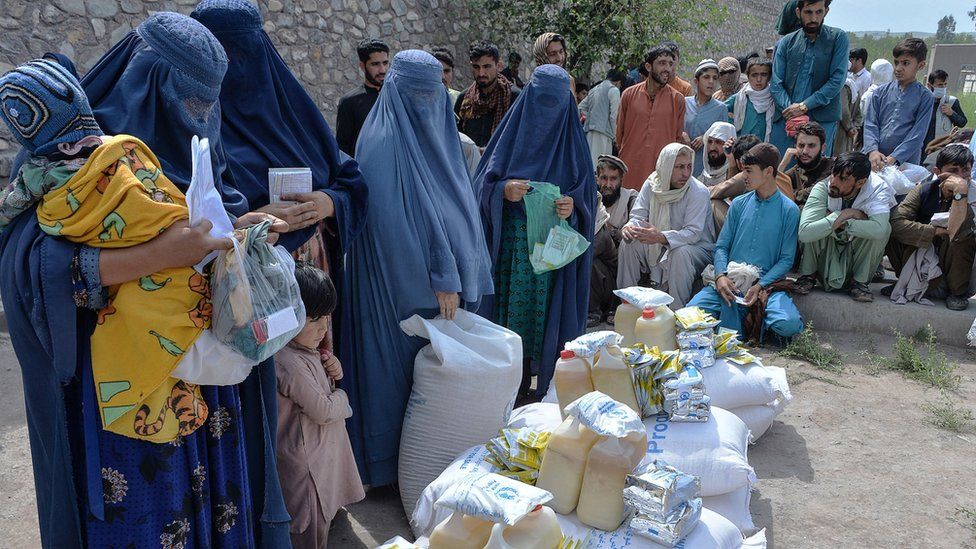
Afghans facing ‘hell on earth’ as winter looms, says WFP executive director

The weather is turning from early autumn warmth to a sharp chill in Afghanistan.  Several areas are reporting drought, which adds to the sense of growing catastrophe. If the weather is as bad as experts are predicting this winter, the expectation is that large numbers will be threatened with acute hunger and widespread famine. The […]

Asia-Plus

The weather is turning from early autumn warmth to a sharp chill in Afghanistan.  Several areas are reporting drought, which adds to the sense of growing catastrophe.

If the weather is as bad as experts are predicting this winter, the expectation is that large numbers will be threatened with acute hunger and widespread famine.

The World Food Programme (WFP) is faced with having to raise its supplies to Afghanistan to help more than 22 million people.
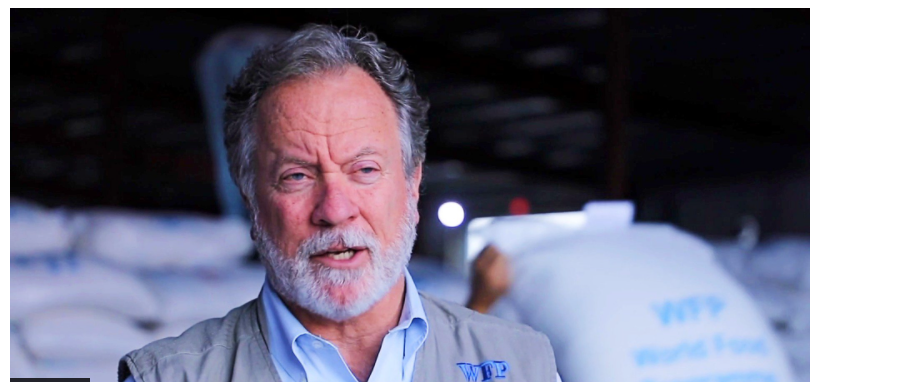
During his visit to Kabul on Sunday (November 7), the WFP Executive Director, David Beasley, told the BBC in an interview that “95 percent of the people [in Afghanistan] don't have enough food, and now we're looking at 23 million people marching towards starvation."

"The next six months are going to be catastrophic. It is going to be hell on Earth," he added.   

Mr. Beasley challenges the governments and the billionaires of the developed world to face up to the urgent need for help.

"To the world leaders, to the billionaires: imagine that this was your little girl or your little boy, or your grandchild about to starve to death," he said.  "You would do everything you possibly could, and when there's $400 trillion worth of wealth on the earth today, shame on us."

"We let any child die from hunger. Shame on us. I don't care where that child is," he said. 

"It is as bad as you possibly can imagine," said Mr. Beasley. "In fact, we're now looking at the worst humanitarian crisis on Earth.

Before the Taliban took power in Afghanistan in August, there was confidence that the government of President Ashraf Ghani would be able to cope with the threat of a bad winter, given the help of the international community.  But that help reportedly evaporated when Ghani's government collapsed.

 

Article translations:

Related Articles

Оби зулол

Most Read

Join us on social media!

Recent Articles

Hajj 2026: New Rules and Restrictions Introduced in Saudi Arabia

Entry to Mecca is now only possible with a special permit.

Emomali Rahmon flies to Astana for the Regional Ecological Summit

President of Tajikistan Emomali Rahmon departed today for a...

Nexign and TelecomDaily: the telecommunications market in Tajikistan grew by 13.7% in 2025

A study showed that the country's communications market has grown to 4.9 billion somoni, and the dynamics are influenced by an increase in the subscriber base, growth in internet traffic, and expansion of mobile and fixed network coverage.

Tajikistan’s Parliament approves organized recruitment of migrants to Russia

The paperwork will be transferred to the home country, and employers will select employees in advance.

Creativity as an asset: why marketing in Central Asia is reaching a new level

Business expert in international projects for the support and development of media companies, Svetlana Lebedeva, on marketing and the media market.

European Immunization Week starts in Tajikistan

Information and awareness-raising activities are being conducted across the country to increase trust in vaccination and combat misinformation.

The plan to launch the CASA-1000 project in 2027 discussed in Dushanbe

The Ministry of Energy of Tajikistan, Afghan DABS, and other project participants held a series of meetings.