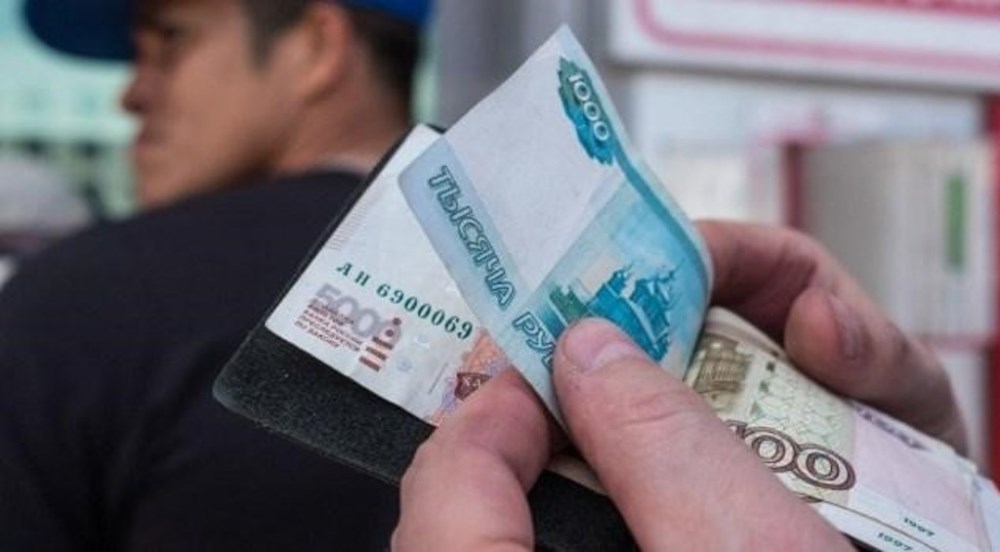
The Russian ruble (RR) exchange rate against the Tajik national currency, the somoni (TJS), is continuing to rise, while the exchange rate of the dollar (USD) against TJS is falling.
Over the past weekends, TJS has lost 1.1 percent of its value against RR: from 0.175:1 on June 11 to 0.177:1 on June 13.
Meanwhile, as far as the exchange rate of TJS against USD is concerned, it has risen 0.9 percent over the past weekends: from 11.3:1 on June 10 to 11.199 on June 13.
An official exchange rate of RR against USD set by the Central Bank of Russia on June 13 is 57.7780:1 (1.0-percent increase compared to June 10).
CBS News said on May 27, 2022 that two months after the ruble's value fell to less than a U.S. penny amid the swiftest, toughest economic sanctions in modern history, Russia's currency has mounted a stunning turnaround. The ruble has jumped 40% against the dollar since January.
"It's an unusual situation," said Jeffrey Frankel, professor of capital formation and growth at the Harvard Kennedy School.
Normally, a country facing international sanctions and a major military conflict would see investors fleeing and a steady outflow of capital, causing its currency to drop. But Russia's unusually aggressive measures to keep money from leaving the country, in combination with the forcefulness of Western sanctions, are working to create demand for rubles and pushing up its value.
The ruble's resiliency reportedly means that Russia is partly insulated from the punishing economic penalties imposed by Western nations after its invasion of Ukraine, although how long that protection will last is uncertain.
Experts note that the main reason for the ruble's recovery is soaring commodity prices. After Russia launched the so-called “special military operation” in Ukraine on February 24, already high oil and natural gas prices rose even further.
“Commodity prices are currently sky-high, and even though there is a drop in the volume of Russian exports due to embargoes and sanctioning, the increase in commodity prices more than compensates for these drops,” said Tatiana Orlova, lead emerging markets economist at Oxford Economics.
Russia is reportedly pulling in nearly US$20 billion a month from energy exports. Since the end of March, many foreign buyers have complied with a demand to pay for energy in rubles, pushing up the currency's value.