Moscow hopes that Dushanbe will soon determine what benefits will bring it the accession to the Eurasian Economic Union (EAEU).
The Russian Foreign Ministry press center says Russian Foreign Minister Sergei Lavrov stated this yesterday during a visit to the headquarters of the Russian military base deployed in Tajikistan.
“We very much hope that your Tajik hosts, providing this hospitable territory, will soon determine what benefits will bring them the accession to the EAEU. People are working on this, and there is a special consultation mechanism. And, of course, we will continue to work in the United Nations,” Lavrov was citing as saying awhile addressing the Russian servicemen.
He reportedly added that the prototype of a new architecture of security and development of cooperation in the world are the Shanghai Cooperation Organization (SCO), the Collective Security Treaty Organization (CSTO), the Commonwealth of Independent States (CIS) and the Eurasian Economic Union (EAEU).
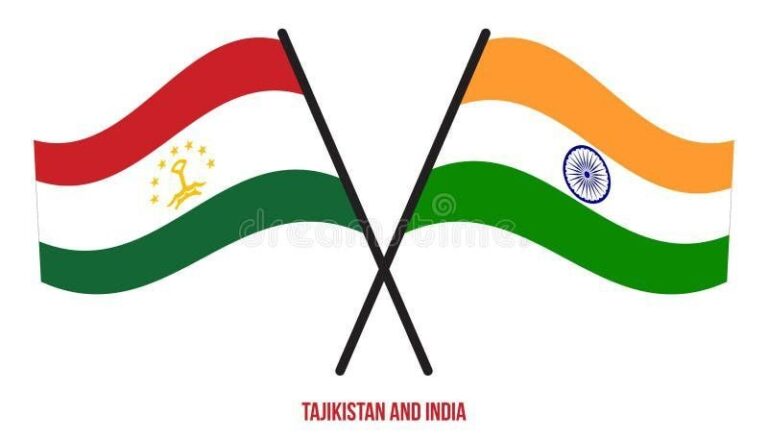
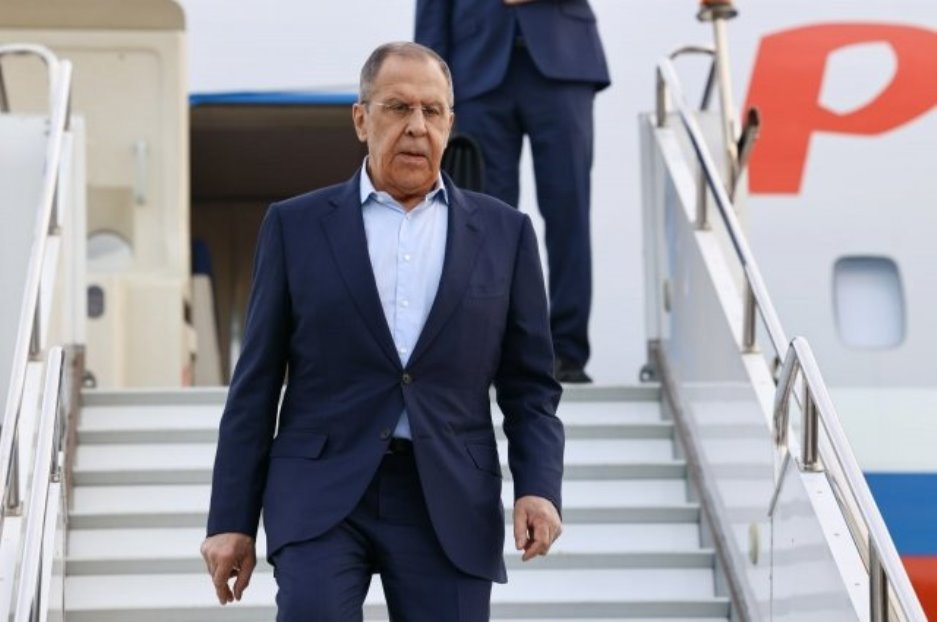
The top Russian diplomat Sergei Lavrov arrived in Dushanbe on a two-day official visit yesterday evening. Today, Lavrov is scheduled to hold talks with his Tajik counterpart Sirojiddin Muhriddin and the Tajik President Emomali Rahmon.
The parties are expected to discuss a number of topical issues related to the bilateral cooperation between Russia and Tajikistan, “further development of the alliance of Moscow and Dushanbe in political, economic and humanitarian areas.”
A special attention will be paid to further deepening of foreign policy coordination of Russia and Tajikistan within multilateral organizations such as the Collective Security Organization (CSTO), the Commonwealth of Independent States (CIS), the Shanghai Cooperation Organization (SCO), as well as within the United Nations, the Organization for Security and Cooperation in Europe (OSCE) and the Conference on Interaction and Confidence Building Measures in Asia (CICA).
The Russian military base deployed in Tajikistan is subordinate to the Central Military District. It is Russia's largest non-naval military facility outside the country.
It was officially opened in Tajikistan in 2004 under a previous agreement, which was signed in 1993, and hosts Russia’s largest military contingent deployed abroad.
A total of some 7,000 Russian troops are now stationed at two military facilities collectively known as the 201st military base – in Dushanbe and Bokhtar (formerly Qurghon Teppa), some 100 kilometers from Dushanbe.
As far as the Eurasian Economic Union (EAEU) is concerned, the Minister of Economic Development and Trade Zavqi Zavqizoda told reporters in Dushanbe on July 14 that the inter-agency working group is comprehensively exploring the issue of possible accession to the EAEU.
“Based on the conclusion of the inter-agency working group, the Government will take a final decision,” the minister added.
The Eurasian Economic Union (EAEU) is an economic union of states located primarily in northern Eurasia. A treaty aiming for the establishment of the EAEU was signed on May 29, 2014 by the leaders of Belarus, Kazakhstan and Russia, and came into force on January 1, 2015. Treaties aiming for Armenia's and Kyrgyzstan's accession to the Eurasian Economic Union were signed on October 9 and December 23, 2014, respectively. Armenia's accession treaty came into force on January 2, 2015. Kyrgyzstan's accession treaty came into effect on August 6, 2015.
The Eurasian Economic Union has an integrated single market of 183 million people and a gross domestic product of over 4 trillion U.S. dollars. The EEU introduces the free movement of goods, capital, services and people and provides for common transport, agriculture and energy policies, with provisions for a single currency and greater integration in the future.
The Union operates through supranational and intergovernmental institutions. The Supreme Eurasian Economic Council is the “Supreme Body” of the Union, consisting of the Heads of the Member States. The other supranational institutions are the Eurasian Commission (the executive body), the Eurasian Intergovernmental Council (consisting of the Prime Ministers of member states) and the Court of the EEU (the judicial body).