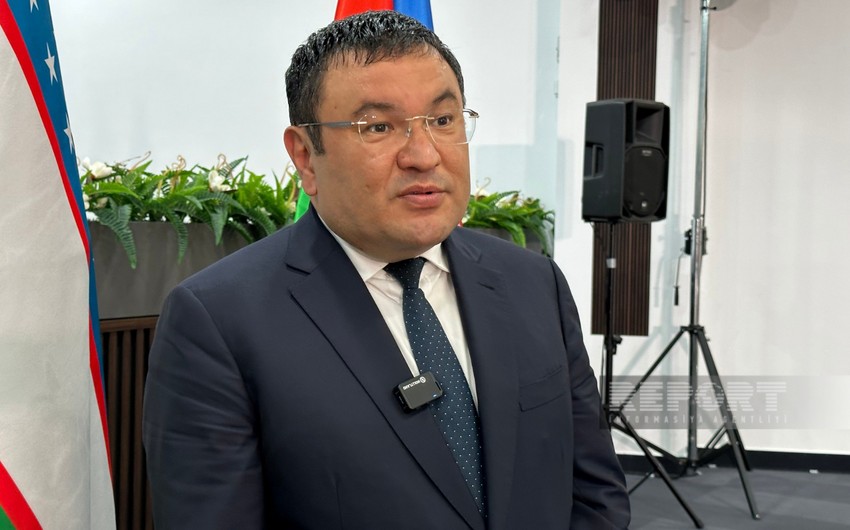
Fergana news agency, citing Report.az, says the Energy Minister of Uzbekistan Zhurabek Mirzamakhmudov stated on the sidelines of the first meeting of the energy ministers of Central Asia’s nations held in Kazakhstan’s capital, Astana, that Uzbekistan will be able to export surplus generated green power to Europe starting from 2030.
Electricity supplies to Europe will become possible in case of laying a deep-sea cable along the bottom of the Caspian Sea.
This tripartite project was reportedly signed on May 1, 20-24 in Uzbekistan’s capital, Tashkent, following a meeting of the ministers of economy and energy of Uzbekistan, Kazakhstan and Azerbaijan.
The parties reportedly signed a Memorandum of Understanding (MoU) on cooperation on the unification of their power systems.
“If the project is implemented, electricity will flow from Uzbekistan through Kazakhstan via a common power system of Central Asia and further via the deep-sea cable along the bottom of the Caspian Sea to Azerbaijan, from there to Georgia and further via the cable along the bottom of the Black Sea to Romania, Hungary and Bulgaria,” Fergana news agency says.
According to Mirzamakhmudov, it is planned to supply from 2 to 5 GW of electricity obtained from renewable sources.
“By the end of this year, will be bring the total energy power received from the renewable sources to more than 4 GW. By 2030, this figure will be more than 20 GW, from which from 2 to 5 GW will be supplied to Europe,” the Uzbek minister of energy said.
Uzbekistan has reportedly set a target of 30 percent of renewable energy (solar, wind, and hydro) (around 15 gigawatts) by 2030. Meanwhile, the country currently has only two large-scale operating solar farms, each 100 megawatts.
However, the majority of primary energy in Uzbekistan currently comes from fossil fuels, with natural gas, coal and oils the main sources. According to some sources, hydroelectricity, the only significant renewable source in the country, reportedly accounted for about 21.4% of the primary energy supply.