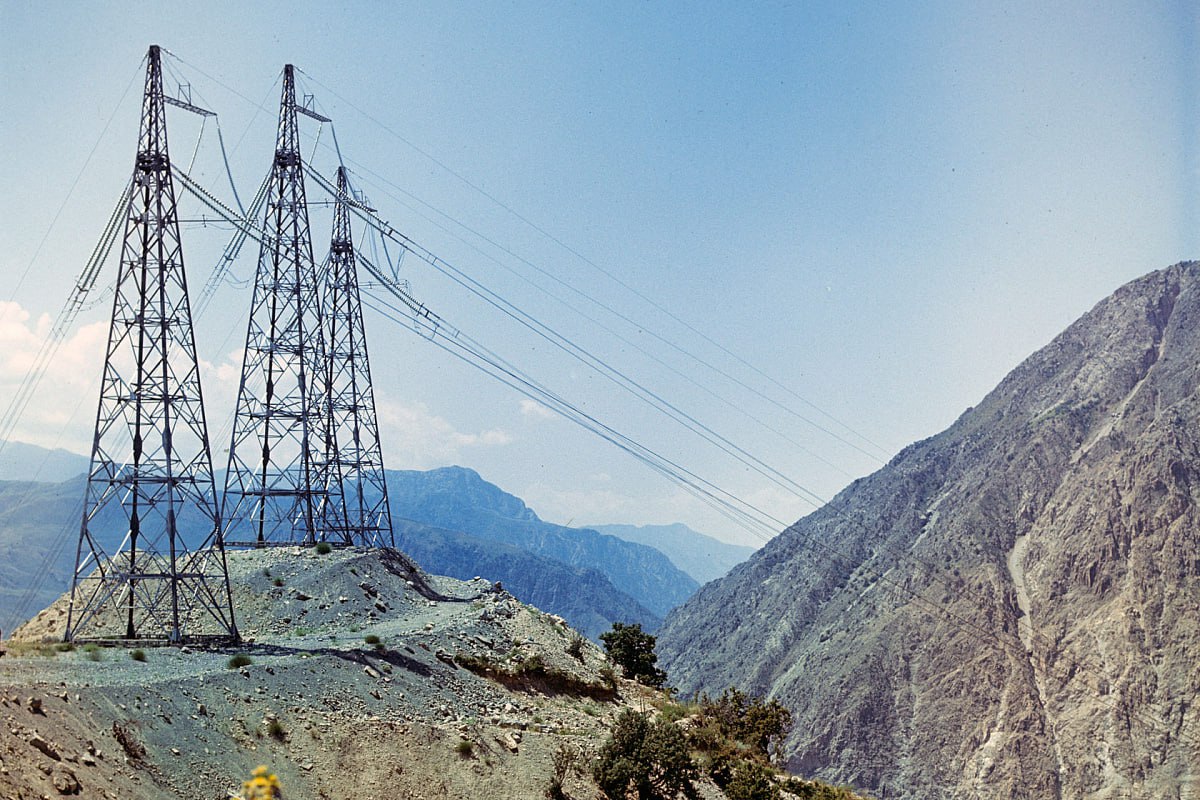
The Agency for Statistics under the President of Tajikistan says that over the first eight months of this year, Tajikistan has exported electricity to neighboring countries worth US$82.3 million, which is US$2.8 million of 3.3 percent less than in the same period last year.
Over the reporting period, electricity exports have reportedly accounted for 6.5% of Tajikistan’s total exports.
According to the Agency for Statistics, Tajikistan has generated around 15.4 billion kWh of electricity, of which about 1 billion kWh (6.5% of total generation) have been exported.
In January-August this year, the majority of Tajikistan's electricity—over 80 percent—has been exported to Afghanistan, while the remaining 20 percent have gone to Uzbekistan.
It is important to note that Tajikistan has export agreements for 2024 only with these two countries. According to Barqi Tojik, which now operates just as power generation company, electricity exports to Uzbekistan are limited to the summer period, while supplies to Afghanistan will continue in the fall and winter, though in smaller quantities, "solely to maintain infrastructure."
Company officials stated that during the colder months, when Tajikistan itself faces electricity shortages, exports to Afghanistan are reduced tenfold—from 400 MW to 40 MW.
Previously, it had been reported that Tajikistan and Kazakhstan signed a memorandum of understanding (MoU) for the supply of electricity generated by the Roghun hydropower plant during the period up to 2032.
Having agreements to supply electricity to Kazakhstan and Uzbekistan is one of the conditions for securing external financing for the Roghun project.
Tajikistan has sufficient summer-time (defined as May 1 to September 30) hydropower surpluses to export to the neighboring countries.
Electricity shortages and rationing for the population in Tajikistan typically begin in late September or early October and last until April. The lifting of restrictions depends on favorable weather conditions and increased water flow in the Vakhsh River.
Both the Ministry of Energy and the country’s energy companies anticipate potential electricity shortages in the upcoming fall and winter season.