The adverse effects of global crises have reportedly complicated the implementation of Tajikistan's National Development Strategy (NDS) for the period to 2030 (NDS-2030).
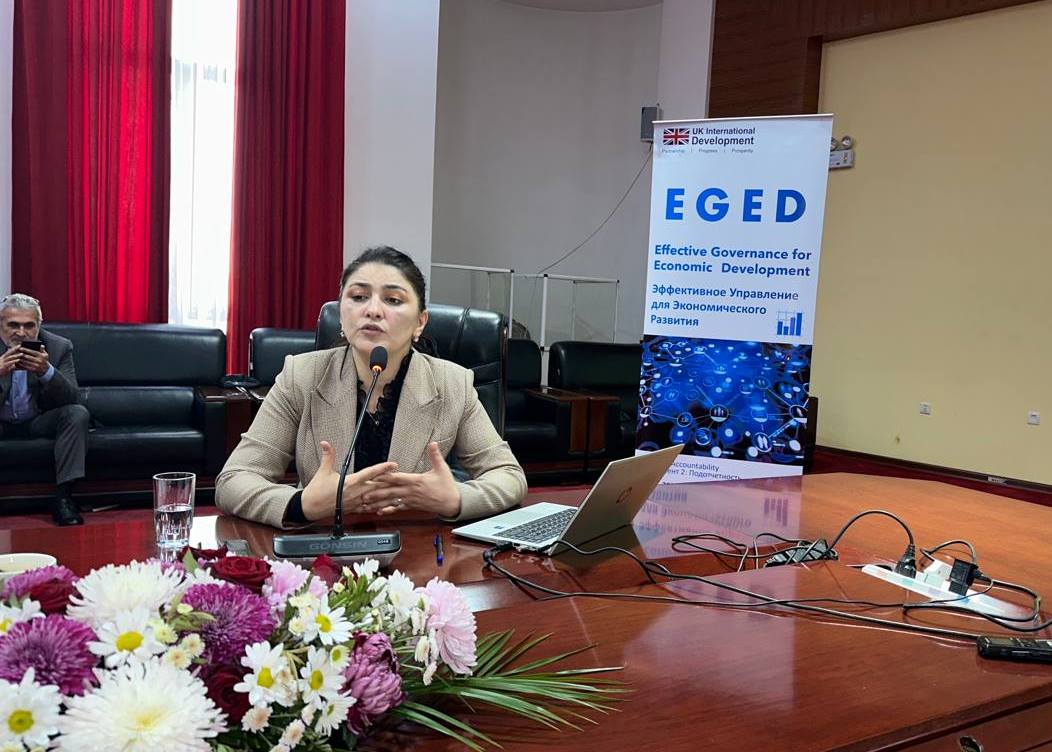
Ms. Manouchehra Majon, Head of the Investment Policy and Regional Development Department of Tajikistan's Ministry of Economic Development and Trade, discussed this issue yesterday at a meeting with reporters and experts on the theme “Cooperation between Government and Civil Society in Monitoring NDS-2030 Implementation.”
She, in particular, highlighted the COVID-19 pandemic, which redirected financial resources to combat the virus.
“Although Tajikistan achieved relatively high economic growth (4.5%) compared to other countries in the region during the pandemic, it was a challenging year,” Majon stated.
She emphasized that the government had to shift its priorities, allocating funds, including those from development partners, to pandemic recovery efforts.
Furthermore, Majon noted that due to the complex political situation globally, development partners have altered their priorities, making fund acquisition even more difficult for countries like Tajikistan.
Today, the government's efforts focus on attracting the global community's, development partners', and other stakeholders’ attention to implementing the NDS.
According to Tajikistan’s Ministry of Economic Development and Trade, 110 billion somonis of the 125 billion somonis pledged was raised in the first phase (2016-2020) of the Strategy, sourced as follows: 68 billion somonis – government funds (99% of planned amount); 31 billion somonis – private sector (69%); 11 billion somonis – development partners (89%).
For the second phase (2021-2025), only 58% of the required funds—62 billion somonis of the planned 115 billion—has been secured so far.
The main priorities of the NDS-2030 include: 1) education; 2) health care; 3) employment; 4) inequality; 5) combating corruption; 6) food security and nutrition; 7) good governance; 8) social welfare; 9) prevention of potential conflicts; and 10) energy security, environmental protection and management of demographic processes.
NDS-2030 suggests that coordination institutions and accountability of state administration bodies, business and civil society should play an important role for the implementation of these priorities. Performance of these institutions will be based on a national system of evaluation and forecasting of future development, short-term and long-term objectives and plans for implementation, accordingly.