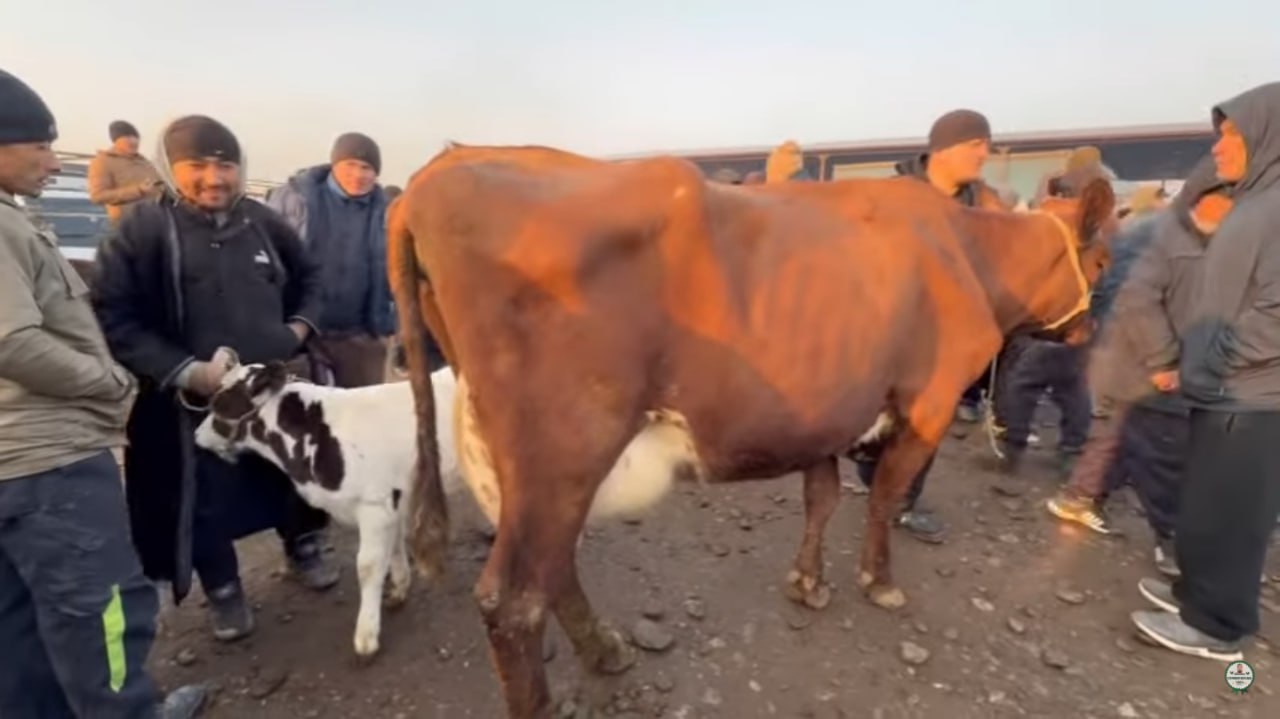
The Kaliningrad agricultural holding, DolgovGroup, has begun monthly deliveries of breeding cattle to Tajikistan.
According to one of the company's owners, Alexander Dolgov, cattle exports to Tajikistan have been ongoing since October. He stated that one to two truckloads of cattle are sent to Tajikistan each month.
Additionally, the company is considering expanding its cooperation with other countries in the region. “We are currently receiving inquiries from colleagues in Kyrgyzstan, Uzbekistan, and Kazakhstan,” Dolgov noted.
DolgovGroup is the largest agricultural enterprise in the Kaliningrad region, operating a closed-cycle production system. It is the only officially recognized breeding farm in the region specializing in elite cattle breeds, including Holstein, Limousin, Charolais, and Aberdeen Angus. The company's livestock complex houses over 12,000 head of cattle.
Cattle imports: impact on Tajikistan’s meat and dairy market
In 2024, Tajikistan's import of cattle, primarily breeding and dairy cows, reached a record US$14.1 million, nearly double the US$7.2 million imported in 2023.
Experts attribute this surge to increasing demand for livestock, the development of the livestock sector, and expanding trade relations. The significant rise in imports in 2024 reflects industry growth, which could impact the country's meat and dairy markets.
In recent years, Tajikistani entrepreneurs have been actively importing various breeds of dairy cows. Cattle exported to Tajikistan from Russia, Belarus, and Kazakhstan include Black-and-White, Simmental, and Holstein breeds.
Aberdeen Angus cattle are widely used for industrial crossbreeding with dairy and dual-purpose breeds, while the Kazakh White-Headed breed is among the most popular meat breeds.
On Tajikistan’s markets, the price for these cattle ranges from 40,000somonis to 60,000 somonis.
Growth of Tajikistan’s cattle population: demand for meat and milk remains high
In 2024, all types of agricultural enterprises in Tajikistan reported an increase in livestock numbers.
According to the Ministry of Agriculture, the cattle population reached 2.789 million head, an increase of 127,200 (4.8%) compared to the previous year. Of these, 1.473 million were cows, with their numbers rising by 83,600 (6.0%).
This positive trend also reflected in production volumes.
Meat production (live weight) in 2024 exceeded 400,000 tons
Milk production reached 1.1 million tons
However, despite this growth, demand remains high, driving further price increases.
Tajikistan's agricultural sector is still dominated by small-scale farms, with over 90% of meat and milk produced in household farms.
However, low productivity of local cattle breeds remains a significant issue.
The import of breeding cattle is seen as a potential solution to increase milk yields and boost production.