Tajikistan's economic growth is expected to slow to 7.5% in 2025 due to the decline in domestic demand driven by reduced remittances from migrant workers relative to GDP, says the Regional Economic Outlook released by the Eurasian Fund for Stabilization and Development (EFSD) on April 16.
It is noted that between 2025 and 2027, remittances from migrant workers will gradually return to long-term levels after the high figures of 2022–2024. However, the balance of payments will remain stable due to the reduction in capital outflow (including in the form of currency acquisition).
The authors of the review link the reduction in remittances to the "deterioration of the external environment."
A report on migration published by the World Bank in early March this year indicated that in 2024, remittances from Tajik migrant workers would account for 45% of Tajikistan's GDP. This is the highest figure in the world in relative terms. In Kyrgyzstan, the figure is 24% of GDP, while in Uzbekistan it is 14% of GDP.
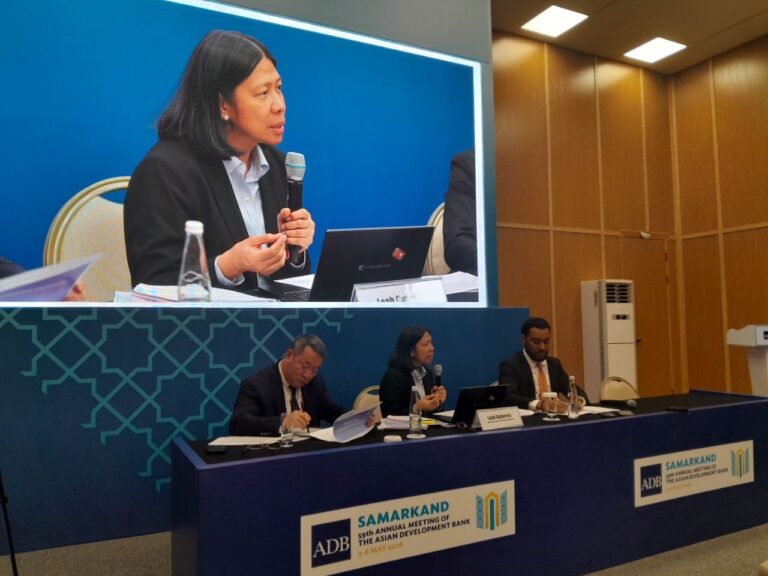
Analysts from the Asian Development Bank (ADB) recently predicted in their regional development review that remittances would decrease to 37% of GDP in the coming year.
Meanwhile, experts from the EFSD expect inflation in Tajikistan to remain “closer to the upper limit of the target range.” The target inflation rate for 2025 is set by the National Bank of Tajikistan at 5% (+/-2 percentage points).
“In the medium term, average annual inflation is expected to decrease to the middle of the target range,” the EFSD review emphasizes.
According to the authors of the review, inflationary risks for Tajikistan are mainly associated with the threat of a more significant rise in food prices than is anticipated in the baseline scenario.
The authorities of Tajikistan are aiming for economic growth of no less than 8%. In 2024, growth was 8.4%, which is 0.1 percentage points higher than the figure for 2023.
Last year, the country's GDP amounted to 153.4 billion somonis ($14 billion). The structure of last year's GDP was as follows: agriculture accounted for 22.8%, industry – 16.9%, trade – 15.2%, taxes – 9.4%, transport – 9.3%, construction – 8.1%, and other sectors and industries – 18.3%.
The Eurasian Fund for Stabilization and Development (EFSD) is a regional financial mechanism with a volume of more than US$9 billion, which was established in 2009 by the Eurasian Development Bank (EBD)’s member nations Armenia, Belarus, Kazakhstan, Kyrgyzstan, Russia and Tajikistan. The Fund was established to overcome the negative consequences of the crisis, ensure long-term sustainability and promote the integration of the economies of the Fund's member nations.