

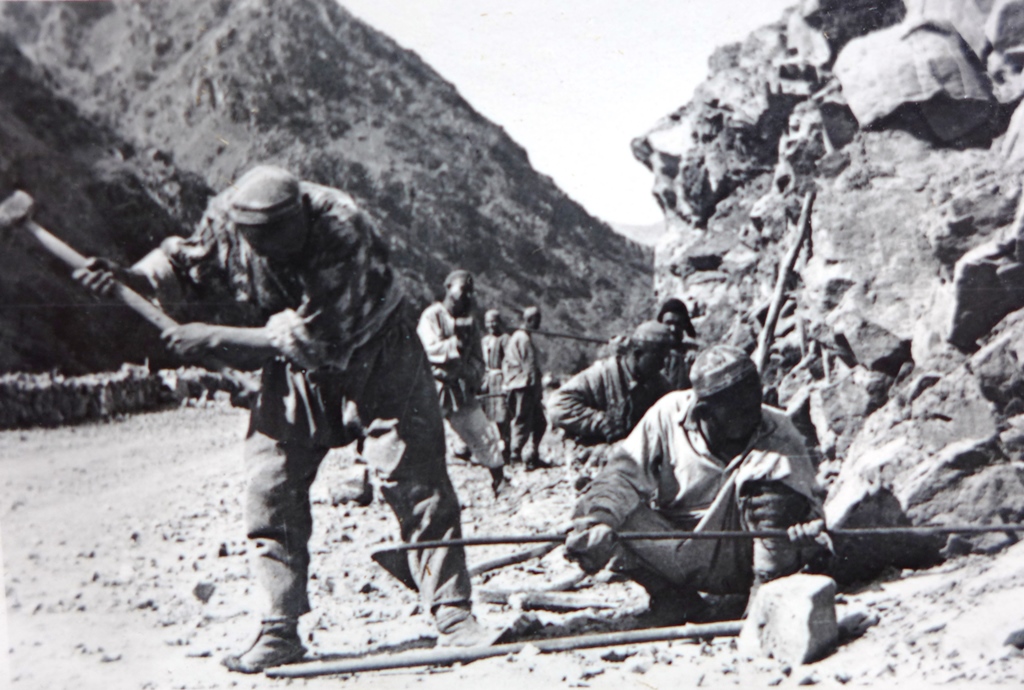
90 years ago, on August 20, 1935, a through passage along the Dushanbe–Ura–Tyube road was opened, it connected the capitals of the two republics, Dushanbe and Tashkent, with a direct road link.
Background
Back in the early 20th century, many foreign researchers in Tajikistan noted in their travel notes that it was a country of unexplored riches and classic off-road terrain.
Most of the villages located among the mountains were cut off from the outside world almost all year round, and in the summer communication was maintained along ravines – narrow and dangerous mountain trails thrown from ledge to ledge.
After the establishment of the Tajik SSR, the government of the republic began to develop the economy of the republic. In 1929, the construction of the Termez–Dushanbe railway was completed.
But the construction of the railway solved only part of the task: it was the gateway to the republic. Most of the cargo was stuck in Dushanbe, especially during the autumn and winter period, as it was not possible to transport them to the districts. In this regard, the task of connecting Dushanbe with good, well-maintained highways to all settlements of the republic came to the fore.
How was the highway built?
The first attempts to lay a road date back to 1929, but the main work began in May 1933. At the same time, cars, graders, ice rinks and other road equipment were sent to Tajikistan from Russia. Hundreds of workers, dozens of technicians and engineers came to build the road from different parts of the USSR.
The cost of the road was estimated at over 35 million gold rubles.
The road was built in unusual mountainous conditions: She crossed three ridges – Gissar, Zeravshan and Turkestan – with her canvas. The volume of work is characterized by the following figures: up to 3.5 million cubic meters of rock were removed for the construction of the highway, of which up to 2.5 million by blasting. 350,000 kilograms of explosives were used up in the northern section of the road construction alone.
It was especially difficult to overcome the gorges, the rock work was difficult, where the drillers had to hang over a chasm up to 100 meters deep.
In the frosty cold of the mountains, blizzard and blizzard, and summer heat, shock brigades of workers – Tajik, Russian, Uzbek, Tatar, Kirghiz, Ukrainian people – the motley International of builders cleared their way, using ammunition to pave the way through the impassable peaks of the ridges.
On August 20, 1935, two months ahead of schedule, construction was completed with the completion of the 280–kilometer–long Stalinabad–Ura–Tyube road. It connected the center of the republic with the northern regions, shortening the route by 1,000 kilometers.
The material uses photographs from the Central State Archive of the Republic of Tajikistan and from the author's personal archive.
