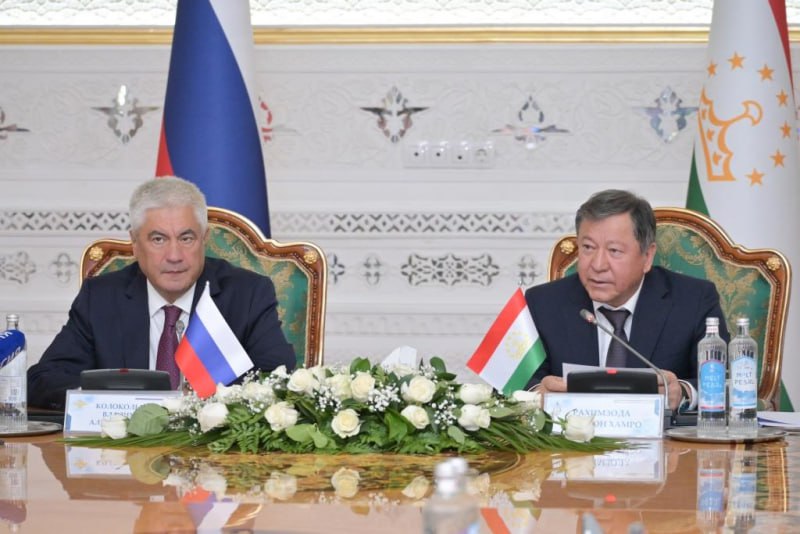
Over the first eight months of this year, Russian law enforcement authorities have detained 400 Tajik nationals wanted by Tajikistan’s Ministry of Internal Affairs. Russian Interior Minister Vladimir Kolokoltsev disclosed the figures at a joint board session of the Tajik and Russian interior ministries, which took place in Dushanbe on September 22.
The Russian Interior Ministry reports that in his opening remarks, Kolokoltsev expressed gratitude to his Tajik counterpart, Ramazon Hamro Rahimzoda, and the Tajik delegation for their warm welcome.
Kolokoltsev reportedly emphasized that bilateral cooperation between the two ministries continues to grow steadily, covering a broad range of security-related priorities. “Thanks to the implementation of previously adopted joint board decisions, operational coordination between our respective departments has become increasingly effective,” he stated.
He highlighted successful collaboration in public order enforcement and criminal investigations. “Last year, Russian territorial authorities detained around 260 suspects wanted by Tajikistan’s Interior Ministry. In just the first eight months of this year, that number has already reached 400,” Kolokoltsev noted.
A key factor in this success, he said, has been Tajikistan's increased contribution of photographic data on wanted individuals to shared databases — a move that has significantly boosted identification and arrest efforts.
Kolokoltsev also addressed the cross-border nature of many crimes, calling for continued joint investigative efforts. He underscored that “changing citizenship should not serve as a way to escape legal responsibility,” referring to concerns about suspects avoiding prosecution through migration and acquiring foreign nationality.
The Russian minister reaffirmed the importance of inter-agency cooperation in pre-trial investigations and joint investigative-operational task forces. “We’ve built years of experience and established legal frameworks that support interstate collaboration,” he said.
One of the key themes of the session was the use of the Interstate Information Bank — a central database supporting law enforcement across the Commonwealth of Independent States (CIS). Kolokoltsev highlighted that the database now contains over 160 million records and is most frequently used for information on individuals wanted across CIS countries.
“In the face of growing threats from terrorism, extremism, and other cross-border crimes, maintaining and updating this database is more vital than ever,” he said.
The session reportedly concluded with the approval of a new joint action plan between the Interior Ministries of Russia and Tajikistan for the upcoming period.