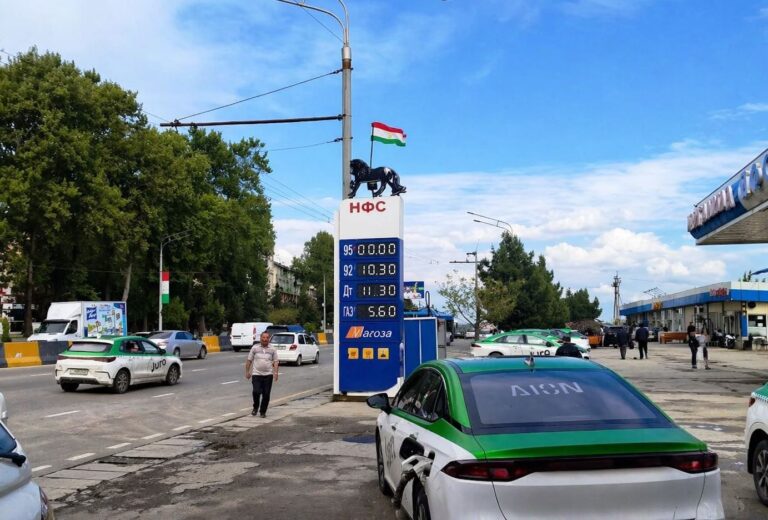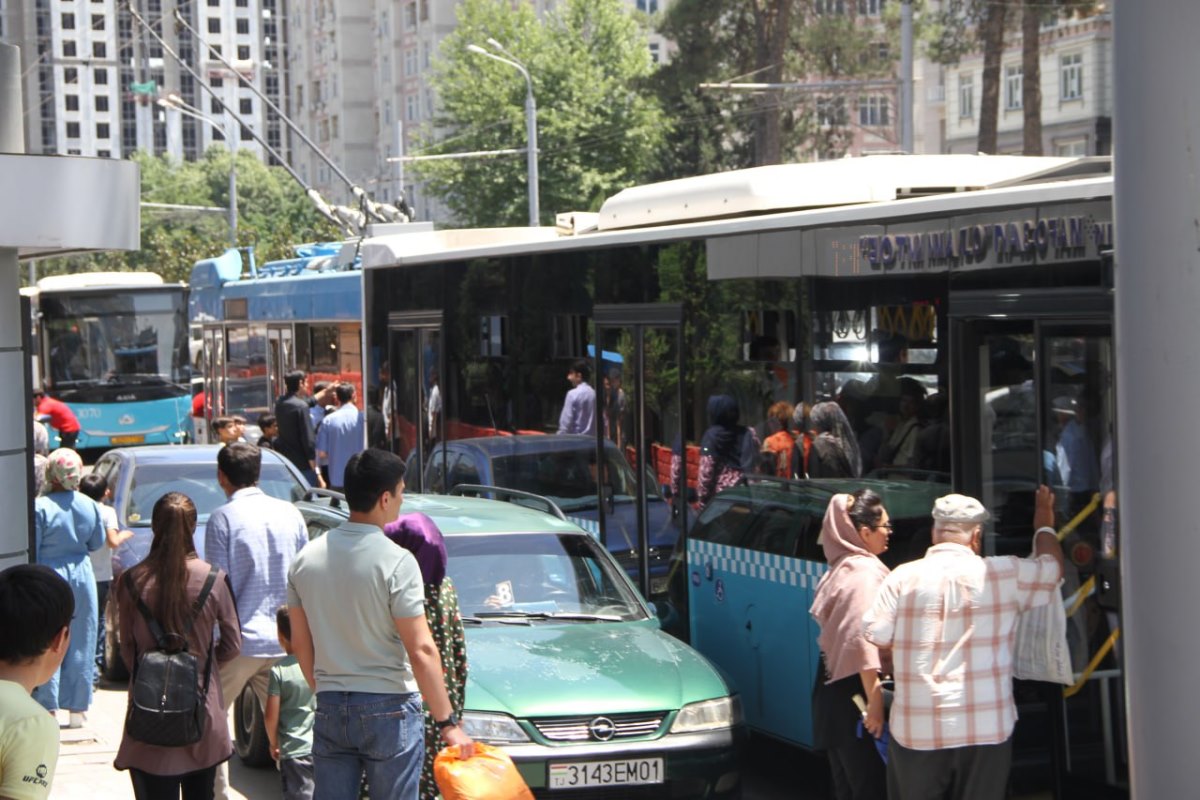
Tajikistan’s Minister of Transport, Azim Ibrohim, has instructed key agencies to urgently develop and submit proposals aimed at reducing traffic congestion, particularly in Dushanbe and other major cities, according to a statement from the ministry’s press office.
Highlighting the growing toll of gridlock—including higher fuel consumption, increased air pollution, delays for emergency services, and rising stress levels among drivers and passengers—Ibrohim cited rapid population growth and a surge in the number of vehicles as primary causes of worsening traffic jams.
“Work with relevant ministries and agencies to address this issue and present urgent measures for easing congestion,” Ibrohim told heads of the ministry’s departments of land transport, construction, road infrastructure, as well as the State Transport Supervision Authority, the Auto Transport and Logistics Company, the Center for Digitalization of the Transport Sector, and regional road organizations.
Key initiatives ordered by the ministry
Authorities and affiliated enterprises were tasked with:
- Completing a full inventory of road infrastructure and developing a digital map of the country's roadways;
- Preventing the operation of overloaded vehicles;
- Accelerating the use of digital technologies and artificial intelligence in the transport sector;
- Transitioning all transport services to cashless payment systems by the end of 2025.
According to ministry’s data, Tajikistan transported 115.6 million tons of cargo and 832 million passengers in the first nine months of 2025—figures significantly higher than last year’s.
The country is currently implementing 11 large-scale infrastructure projects totaling over $1.1 billion, including the construction of key highways (Danghara–Guliston, Guliston–Farkhor) and the region’s longest road bridge, the 920-meter Obigarm–Nourobod span.
Under the Unified State Information System (SGB.net), the ministry also plans to implement full cashless payment for all state services in the transport sector—ranging from taxes and fines to licenses and international transport permits—by the end of 2025.
Dushanbe’s proposed traffic solutions
Deputy Mayor of Dushanbe, Rahmiddin Salomzoda, recently proposed several additional measures to combat urban congestion. These include:
- Restricting the use of private vehicles in the capital;
- Introducing tolls for driving on central streets;
- Installing AI-powered “smart” traffic lights to better manage flow;
- Expanding paid parking zones to encourage greater use of public transport;
- Building multi-level parking structures in key areas.
He also called for stricter regulation of the city’s rapidly expanding taxi services—particularly illegal ones—and emphasized the need for dedicated bus lanes. Salomzoda pointed out that even where bus lanes exist, enforcement is weak, with private vehicles often encroaching without penalty.
Long-term plans: A Dushanbe metro?
Salomzoda also addressed a glaring infrastructure gap: the absence of metro, or monorail systems in Dushanbe. He confirmed that a feasibility study for the city’s first metro line is expected to be completed in 2025, with construction planned between 2028 and 2033.
The first underground line will span 10.5 kilometers, linking the southern gate of the capital (Darvozai Janubi) to the city center near the state circus.
Citing best practices from other countries, Salomzoda laid out a broad urban mobility strategy that includes:
- Reducing the number of parking spaces and increasing parking fees;
- Expanding public transport fleets;
- Creating intelligent transport systems;
- Building multi-level interchanges;
- Developing bike and pedestrian-friendly infrastructure.
“Only a comprehensive approach—combining infrastructure development, urban planning reform, public transport promotion, and smart technology—can ease traffic congestion and improve quality of life in Dushanbe,” the deputy mayor concluded.
Asia-Plus has reached out to industry experts for commentary on the proposals and will publish their views in the near future.