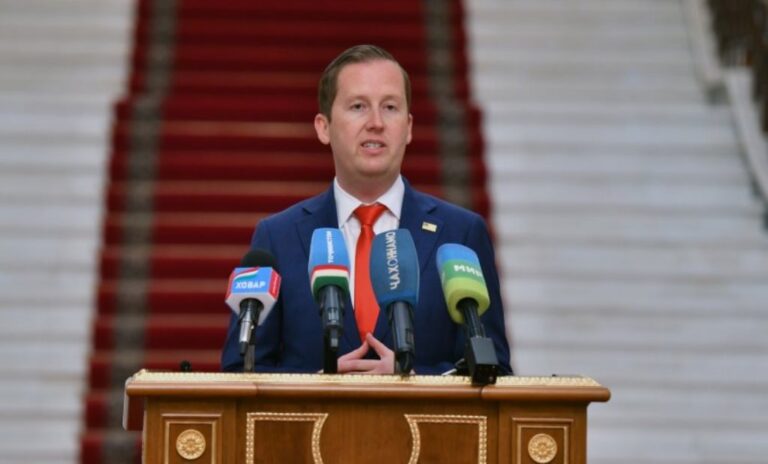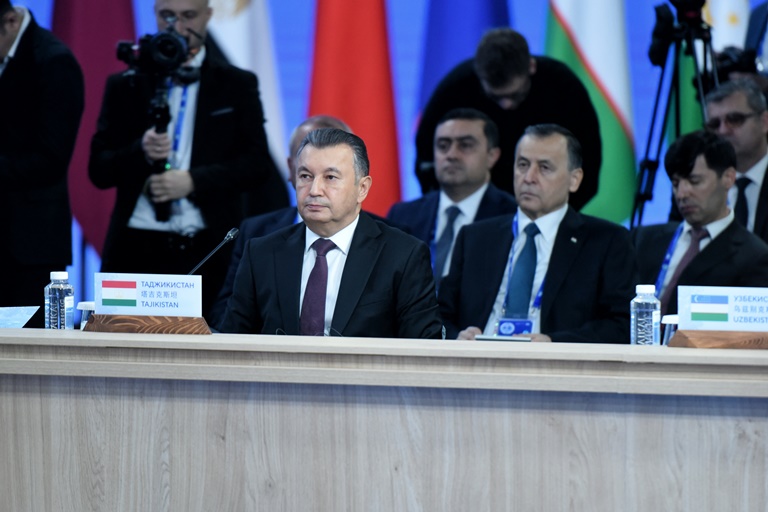
Tajikistan’s Prime Minister Qohir Rasoulzoda took part in the meeting of the Council of Heads of Government (CHG) of the Shanghai Cooperation Organization (SCO), held on November 18 in Moscow, the Tajik state-run news agency Khovar reports.
The summit reportedly focused on advancing cooperation among SCO member states in key sectors such as transportation, energy, investment, agriculture, climate change, regional security, and cultural and humanitarian exchanges.
In his address, Rasoulzoda highlighted that Tajikistan considers trade and economic ties within the SCO as a strategic pillar of its foreign economic policy. He noted that two-thirds of Tajikistan’s foreign trade is conducted with SCO member countries, and that the nation’s economy is expected to grow by 8.2% in 2025.
To streamline cross-border logistics, the prime minister proposed creating a unified SCO digital platform for managing multimodal transport operations. He also called for expanding student exchange programs and intensifying cooperation in innovation, industrial development, and agriculture.
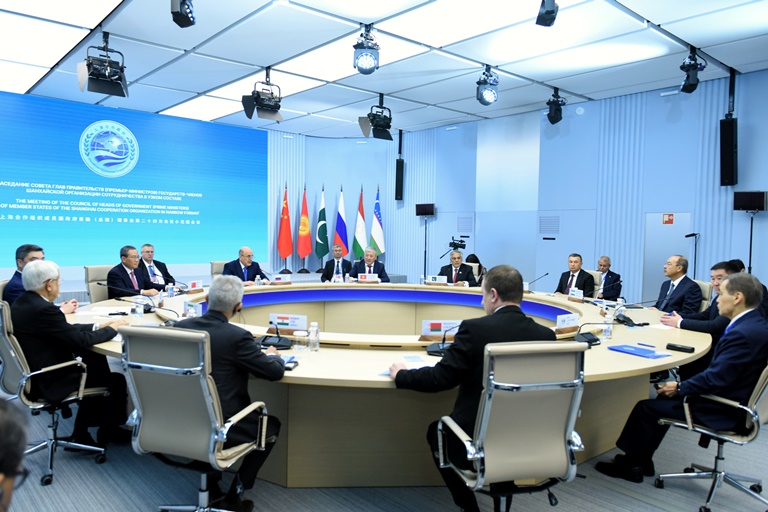
“Tajikistan, which will assume the SCO Council of Heads of Government chairmanship in 2026, is committed to advancing the strategic renewal of the organization’s economic agenda, with an emphasis on deeper cooperation, sustainable development, and regional integration,” Rasoulzoda stated.
Following the meeting, SCO heads of government held a session with Russian President Vladimir Putin, who underscored the critical role of national governments in implementing practical cooperation within the organization. He emphasized the importance of enhancing the SCO’s influence both regionally and globally.
The two-day gathering, held on November 17–18, marked the conclusion of Russia’s chairmanship of the SCO Council of Heads of Government for the 2024–2025 period. The summit concluded with the adoption of a joint communiqué. Tajikistan will take over the rotating chairmanship in 2026.
The SCO Council of Heads of Government, which convenes annually, focuses primarily on economic and trade-related cooperation. It is the organization’s second-highest decision-making body, responsible for approving the annual budget and promoting multilateral initiatives among member states.
Founded in 2001 by China and Russia, the Shanghai Cooperation Organization is a political, economic, and security alliance representing the world’s largest regional organization by geographic and population scale. Covering about 24% of the Earth’s landmass (65% of Eurasia) and home to roughly 42% of the global population, the SCO accounts for 23% of global nominal GDP and 36% based on purchasing power parity (PPP) as of 2024.
The SCO currently includes ten full members: China, Russia, Kazakhstan, Kyrgyzstan, Tajikistan, Uzbekistan, India, Pakistan, Iran, and Belarus. Mongolia and Afghanistan hold observer status, although Afghanistan has been inactive since September 2021. Dialogue partners include countries such as Turkiye, Egypt, Saudi Arabia, Qatar, and the UAE.
ASEAN, the Commonwealth of Independent States (CIS), Turkmenistan, and the United Nations participate in the SCO as guest attendees.