Tajikistan’s Minister of Agriculture, Qurbon Hakimzoda, has sharply criticized local officials who illegally force farmers to plant cotton despite the crop’s low profitability. He made the statement on January 29 during a press conference held by the ministry.
According to the minister, authorities in several cotton-growing districts ignore government recommendations on crop diversification, resulting in direct economic losses for farmers.
Responding to journalists’ questions about local demands to allocate up to 65 percent of all farmland exclusively to cotton, Hakimzoda described such practices as unacceptable.
“This is a blow to farmers’ pockets. It is wrong and harmful to the economy,” he said.
The minister explained that meeting such requirements would require expanding cotton fields to around 400,000 hectares, while the country’s actual annual cotton acreage stands at only 174,000–185,000 hectares. “These figures are nothing more than an excuse,” he added.
Hakimzoda stressed that farmers must be protected from unlawful actions by local authorities.
“No one has the right to destroy someone else’s crops,” he said, commenting on cases in which farmers are forced to eliminate other crops in favor of cotton. He emphasized that, under the law, farmers’ losses must be compensated.
Cotton prices remain a key concern
The minister also highlighted the ongoing problem of declining global cotton prices, which directly affects farmers’ incomes.
“Cotton prices are a serious concern for farmers,” Hakimzoda noted, adding that in the face of falling prices, government support is essential to prevent negative consequences for the entire agricultural sector.
He recalled that in some years cotton prices dropped to as low as $350–400 per ton. Although prices have since risen slightly, they remain insufficient given the rising costs of fuel, mineral fertilizers, and other inputs.
Mechanization as a solution
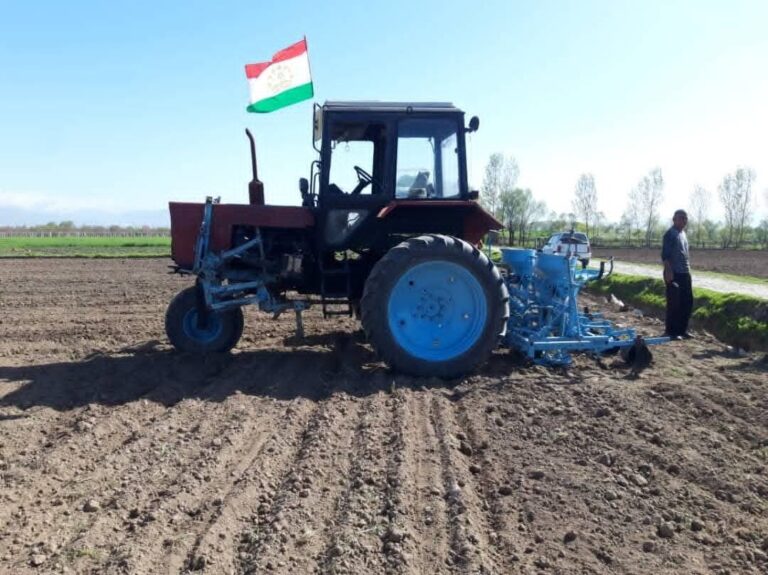
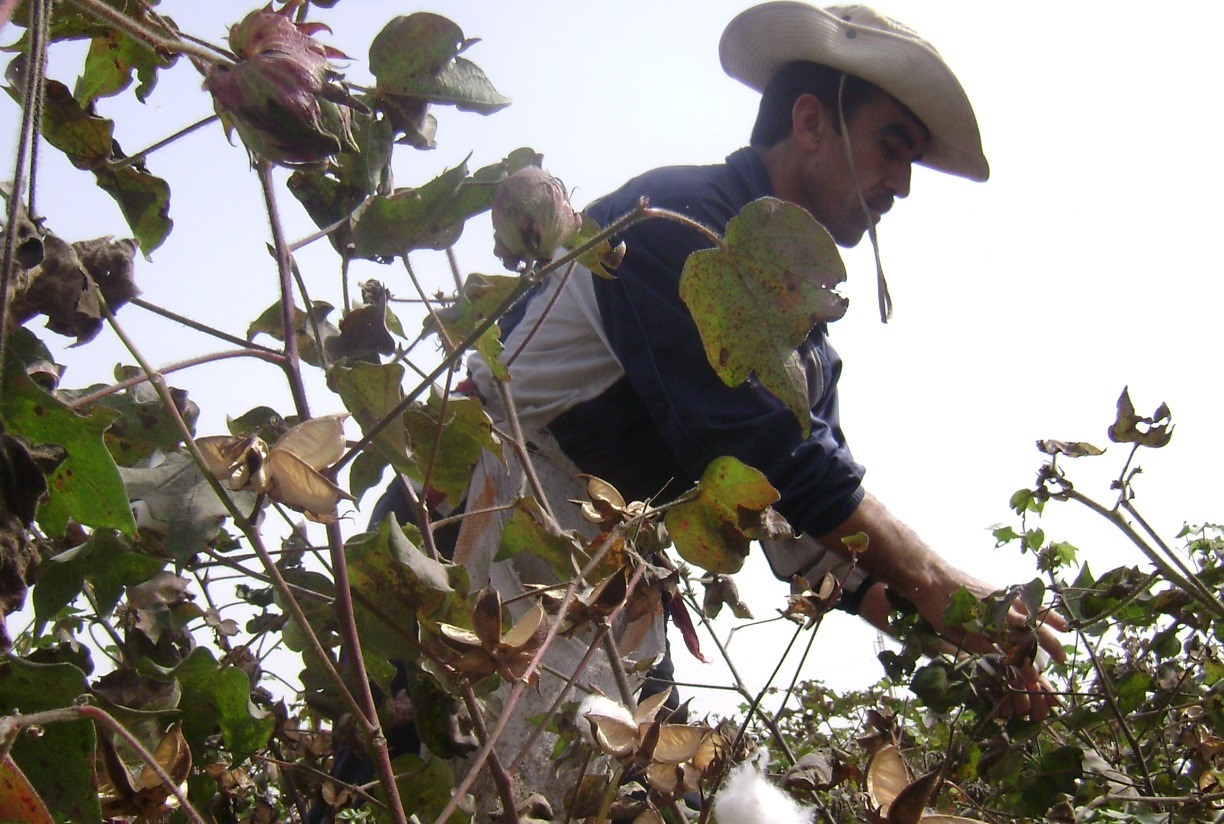
One of the main drivers of high production costs, according to the minister, is the continued reliance on manual labor. Outdated harvesting methods are still widely used in Tajikistan, forcing farmers to spend heavily on labor.
Hakimzoda emphasized the importance of mechanization. Previously, farmers paid up to 2 somoni per kilogram of cotton for manual picking, while mechanized harvesting can reduce costs to about 0.5 somoni per kilogram. These measures are included in the country’s agricultural mechanization program.
Uzbekistan’s experience and farmer subsidies
The minister pointed to neighboring Uzbekistan as an example of effective state support for cotton producers.
“There, farmers receive subsidies of $100 for every ton of cotton produced and sold. We are studying this experience and plan to introduce a similar mechanism in Tajikistan,” Hakimzoda said.
Such support, he noted, significantly eases the financial burden on farmers and stimulates production growth.
Innovation and higher yields
Increasing yields should become a top priority amid low prices, the minister said.
“If yields exceed 30 quintals per hectare, farmers make a profit. At 18–22 quintals, they incur losses,” he explained.
Hakimzoda noted that in districts such as Dousti, Bobojon-Ghafourov, and Jaihoun, farmers using drip irrigation and plastic mulch technologies have achieved yields of up to 60–70 quintals per hectare, far above the national average.
In 2025, Tajikistan harvested 393,000 tons of cotton—140,000 tons more than the previous year. Average yields reached 25.3 quintals per hectare, despite nearly unchanged planting areas.
Plans for 2026–2030
In the near future, Tajikistan plans to present a draft “State Program for Innovative Development of Cotton Production for 2026–2030.” According to the minister, the program will focus on expanding mechanization, introducing new technologies, and strengthening the sector’s sustainability.
“To meet the needs of Tajikistan’s industry at current capacity, annual production of around 450,000–500,000 tons of cotton will be sufficient,” Hakimzoda concluded.