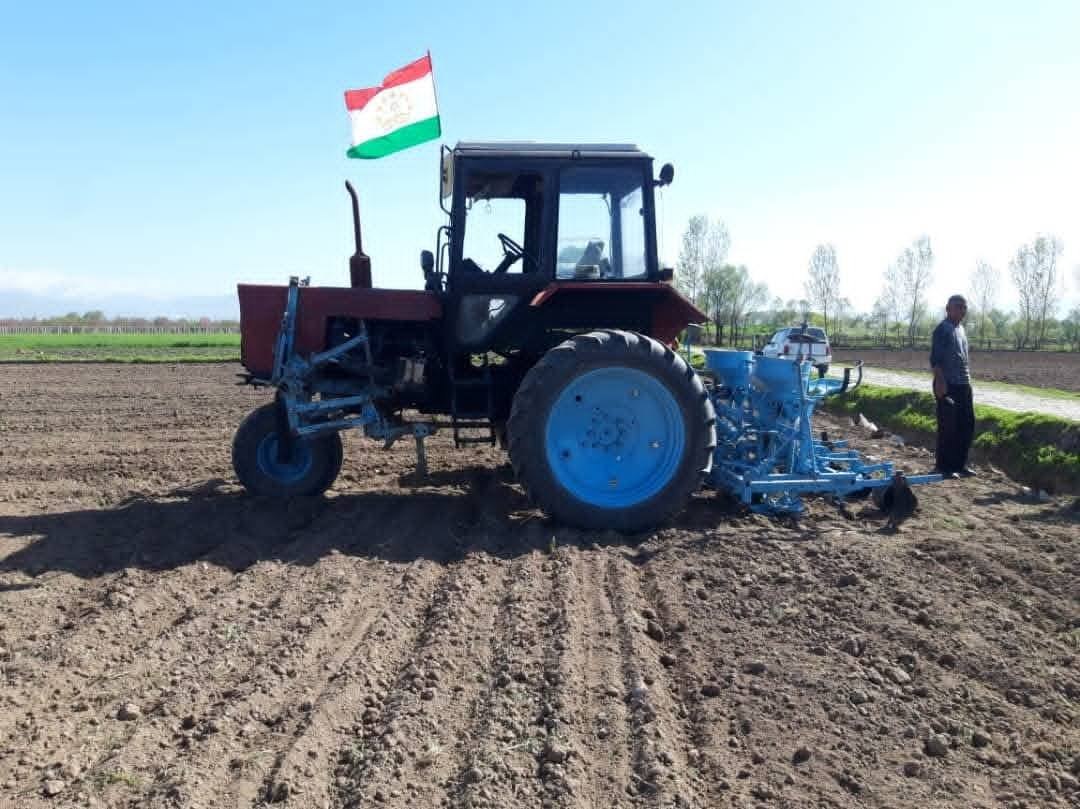
The sowing of cotton for 2026 has started in Tajikistan, with farmers facing strict requirements from local authorities, compelling them to plant 70% of their fields with cotton despite the economic unfeasibility of this method.
As reported by the Ministry of Agriculture of Tajikistan, as of April 3, more than 23 thousand hectares of this crop have already been sown in the country, with the majority of the sowing taking place in the Khatlon province. Overall, in 2026, it is planned to sow 186.8 thousand hectares under cotton, one of the country’s key agricultural crops.
According to the Forecast of Main Macroeconomic Indicators for 2026-2028, Tajikistan expects a significant increase in cotton production volumes. In 2026, the country forecasts producing 422 thousand tons of cotton, which is 3.8% more compared to 2025.
Farmers in Tajikistan are being forced to grow cotton
In recent years, cotton cultivation has become economically unprofitable, and many farmers prefer to sow their fields with more profitable crops such as wheat and vegetables.
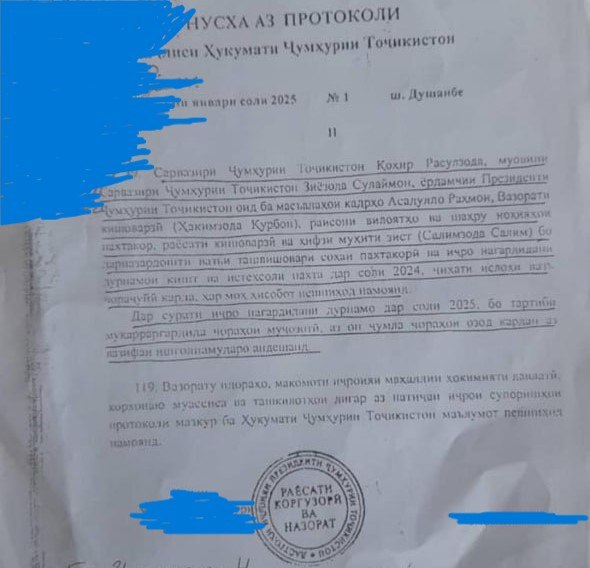
The government of Tajikistan has instructed local authorities to take necessary measures to ensure the fulfillment of cotton sowing forecasts. The relevant instruction is contained in the protocol of the government meeting. Asia-Plus received a copy of such protocol from January 2025 last year.
But what does this mean in practice?
Despite the Ministry of Agriculture’s statement that farmers can freely choose crops for sowing, in practice, local authorities continue to force them to sow cotton – local officials insist that 70% of the fields be sown with cotton, despite the sowing of other crops already conducted.
The Minister of Agriculture of Tajikistan, Kurbon Hakimzoda, expressed his position regarding the interference of local authorities, stating that they have no right to dictate the choice of agricultural crops. According to him, the problem of forced sowing can be solved through a system of pre-financing and improvement of procurement mechanisms, which would allow farmers to freely choose which crops to grow.
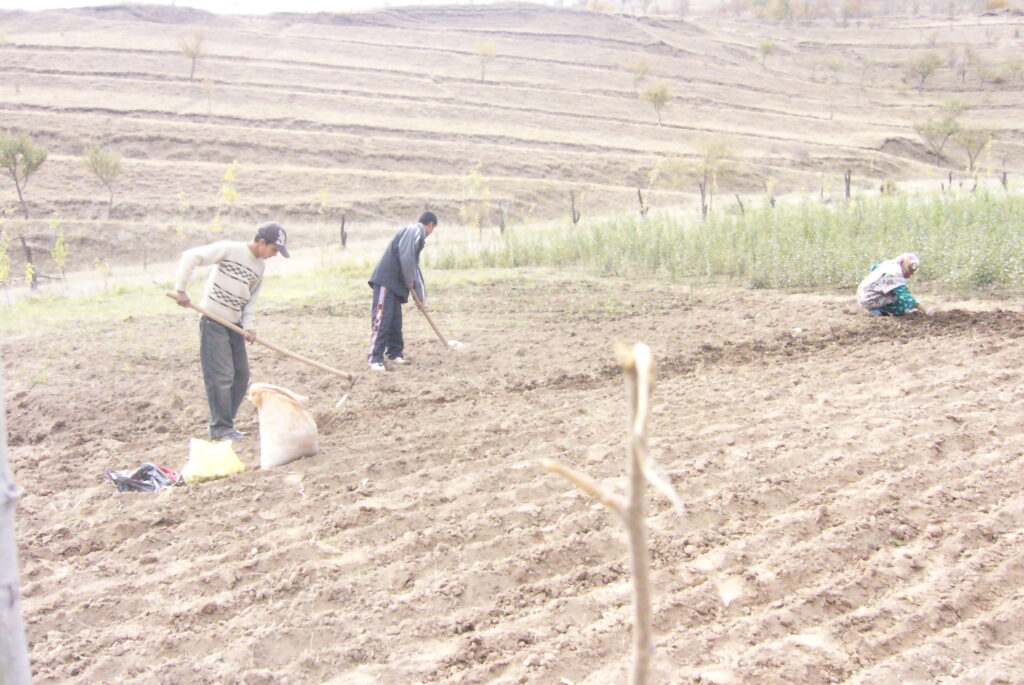
In the Hamadoni district of Khatlon province, the situation has reached a critical point. As reported by Radio Ozodi, the district chairman, Farrukhuddin Nabizoda, recently reacted harshly to the sowing of alfalfa instead of cotton, stating: “Dear chairman, where were you looking? All these farms in your village sowed alfalfa. Where will you sow cotton tomorrow?”.
He threatened, demanding that the fields be replowed so that 70% of all fields are sown with cotton. “Tomorrow afternoon we will come with tractors. All farms that sowed like this, we will plow everything. It doesn’t matter who it is, we don’t care what you had there,” the official emphasized.
The pressure raises questions from a legal standpoint, according to which dehkan (farmer) farms independently determine the direction of their activities and have the right to choose agricultural crops for cultivation, with state interference in their activities not allowed.
Low procurement prices and yield issues
Tajikistan has only about 700 thousand hectares of irrigated land, of which 180-186 thousand hectares are allocated annually for cotton. The authorities forecast to obtain 22.6 quintals per hectare, which is quite a low figure for a country with such agricultural potential. It is economically unprofitable, as the yield from such areas is significantly lower than possible.
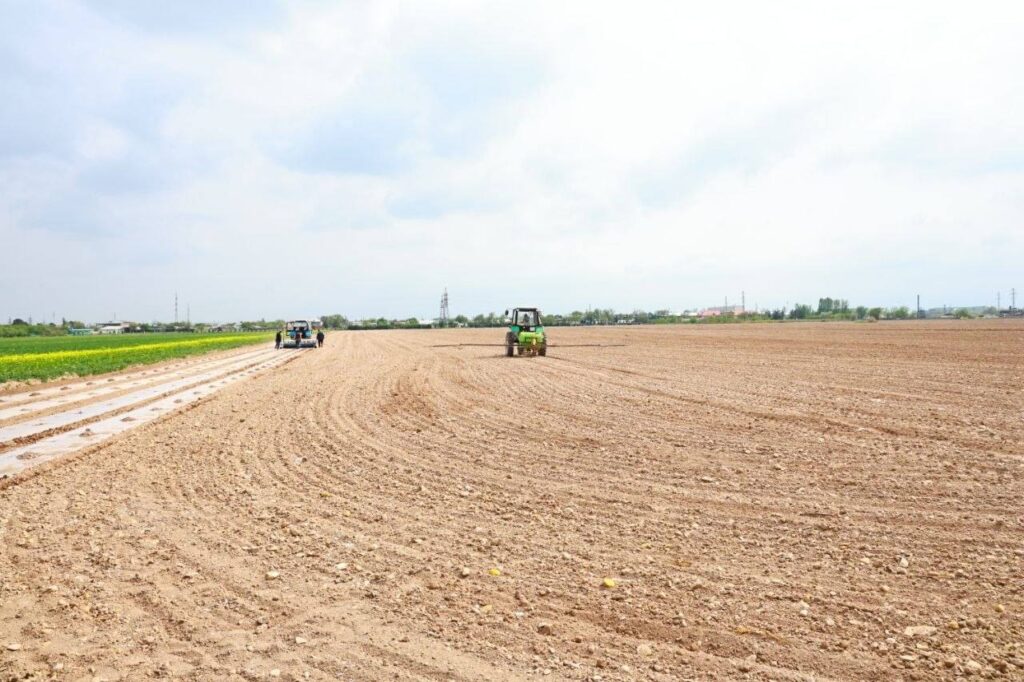
If 186.8 thousand hectares yielded 40 quintals per hectare, the harvest could exceed 700 thousand tons. Such a result is possible using innovative methods, such as sowing under film. In 2026, the republic plans to sow 40 thousand hectares under film.
Sowing cotton under film has several important advantages. The film helps retain moisture in the soil, which is especially important in drought conditions. It accelerates seed germination by creating optimal growth conditions. The film also protects the soil from erosion and suppresses weed growth, reducing the need for chemicals and additional irrigation. As a result, the yield can be significantly higher, and the costs of irrigation and treatment lower.

However, the expenses for this method are higher than for the traditional one. The cost of the film and the installation of a system for its use require additional investments. Despite this, in the long run, if the yield increases, farmers could offset these expenses and obtain greater income from cotton sales.
Yet there is another But…
The procurement prices for cotton in Tajikistan are only 6-7 somoni per kilogram, while production costs reach 15 thousand somoni per hectare. As a result, farmers incur losses, as the income from cotton sales does not even cover the costs of its cultivation.
At the same time, on the international market, the price of cotton is significantly higher – 15-16 somoni per kilogram, yet local farmers do not have the opportunity to sell their products directly.