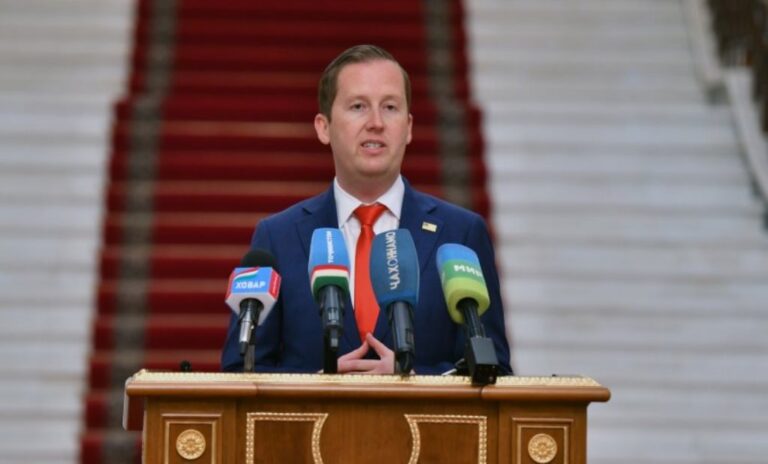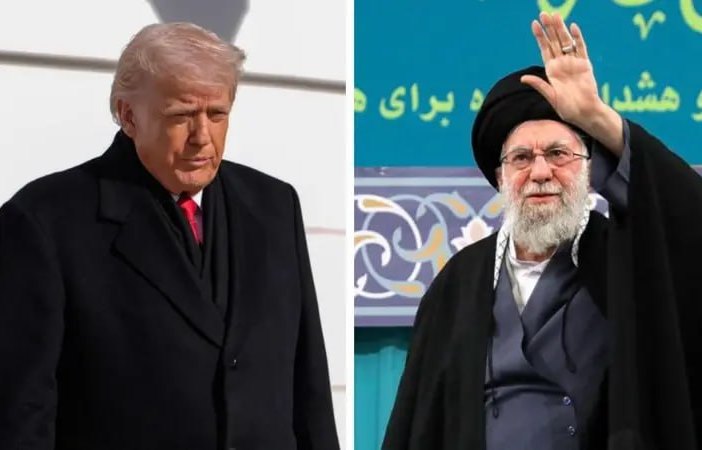
The likelihood of a U.S. military strike on Iran remains high, according to Tajik political scientist Parviz Mullojanov, who has assessed the current escalation in U.S.–Iran relations.
“Everything suggests that the decision to carry out a strike has largely already been made. At this stage, Trump’s inner circle is discussing various strike scenarios as well as possible developments after the start of a military operation,” Mullojanov wrote on his Facebook page.
At the same time, he notes that the possibility of a diplomatic resolution has not yet been fully exhausted. According to the expert, the United States has presented Iran with an ultimatum consisting of four demands.
These include halting Iran’s nuclear program and uranium enrichment, including for peaceful purposes; stopping the development and reducing the number of ballistic missiles; ending support for so-called proxy organizations—Islamist groups operating abroad, such as Hezbollah, the Houthis, Hashd al-Shaabi, Hamas, and Palestinian Islamic Jihad; and refraining from killing protesters inside Iran—a demand Mullojanov describes as largely belated, since the protests have already been mostly suppressed.
Tehran’s strategy
According to Mullojanov, Iranian authorities have publicly rejected all elements of the ultimatum, while behind-the-scenes contacts through intermediaries continue.
Unofficially, Tehran appears willing to discuss only the first point—limitations on its nuclear program. The analyst believes Iran’s current strategy is to prolong negotiations in order to secure at least partial sanctions relief in exchange for concessions on the nuclear deal. Such an agreement would effectively remove the remaining three demands from the agenda, on which Iran categorically refuses to compromise.
Tehran is also betting that the United States cannot maintain such a large military presence off Iran’s coast for an extended period. By dragging out talks, Iranian leaders hope Washington will eventually abandon the military option.
At the same time, this approach allows Iran to buy time to prepare for a possible strike—redeploying forces and positioning new weapons and equipment, which, according to U.S. intelligence, are currently being supplied to the country from Russia and China.
Meanwhile, Tehran has threatened a massive retaliatory strike against U.S. forces, American bases in the region, and Israel. The most serious threat, however, remains a potential closure of the Strait of Hormuz, through which about 20 percent of the world’s seaborne oil and up to 30 percent of global gas shipments pass.
Such a move could trigger a sharp spike in energy prices, with severe consequences for the global economy and for Donald Trump’s political standing at home, the analyst argues.
Donald Trump’s dilemma
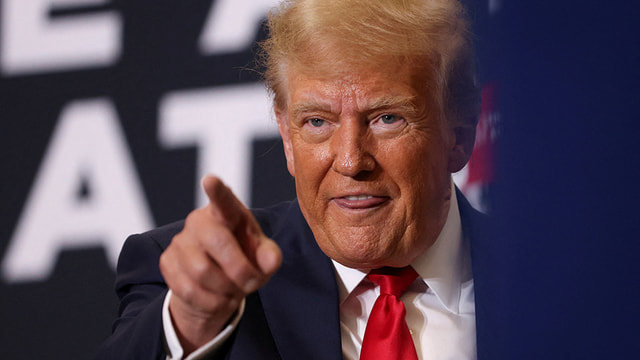
Ultimately, Mullojanov says, the decision rests with one person—U.S. President Donald Trump—who currently finds himself in a difficult political position.
On the one hand, Trump cannot simply back down, as this would be perceived as a failure and could damage his approval ratings amid intense domestic political competition. At the same time, regime change in Iran or support for protests is not a top priority for him. A geopolitical deal with Iran’s current leadership—at least on the first two or three points of the ultimatum—would be the most favorable outcome.
On the other hand, given the current circumstances, it would be difficult for the United States to limit its actions to a small, symbolic airstrike. Such a move would be unlikely to prevent Iranian retaliation, particularly an attempt to block the Strait of Hormuz—a factor of critical importance to both the U.S. and global economies. This suggests that any strike would likely have to be large-scale.
As a result, Trump faces a stark choice: either retreat with significant reputational losses, or launch a broad military operation targeting everything from nuclear and missile facilities to bases of the Islamic Revolutionary Guard Corps and the Basij, risking entanglement in a prolonged conflict if the operation fails.
This prospect has alarmed many countries in the region, whose leaders fear widespread destabilization and are actively trying to dissuade Washington from military action.
Nevertheless, Mullojanov does not rule out a compromise scenario that would allow both sides to claim victory. Iran would avoid a large-scale strike and retain its leadership, while Trump could withdraw the strike group without suffering political damage. Both sides would then present the outcome as a success to their domestic audiences.
“In any case, the wait will not be long. A U.S. aircraft carrier strike group cannot remain in such a reinforced configuration off Iran’s coast for too long, meaning President Trump will soon be forced to make a final decision,” the expert concluded.