DUSHANBE, September 29, 2010, Asia-Plus — “Mass Media together with the Committee for Environmental Protection under the Government of the Republic of Tajikistan and the National Commission on UNESCO Affairs in Tajikistan can play essential role in preservation of nature in Tajikistan”, – stated Head of National Commission on UNESCO Affairs in Tajikistan Karomatullo Olimov during the training for journalist titled “Improving Reporting on Climate Change, Environmental Issues and Biodiversity”.
According to him to preserve nature not only resources allocated by the government for implementation of programs and projects are necessary, but also educating the public to have sense of protectiveness in relation to environment is crucial. “Unfortunately not in all families children are brought up in this spirit. But Mass Media can play central role in changing the way of thinking in relation to natural resources, in particular to fresh water, woods and biodiversity that we have in Tajikistan”. Karomatullo Olimov mentioned that of trainings of this kind are important for raising awareness among journalists on wide spectrum of environmental issues and promotion of their best coverage in Media.
Making speech at this educational event the director of the Institute on Zoology and Parasitology of Academy of Science of the Republic of Tajikistan Abdusattor Saidov also noted that the issue of spreading the knowledge on environmental issues among population is one of the vital important issues of our days. “Until we do not change the attitude to environment and do not bring up our rising generation in according way, our nature will continue suffering”, – said A. Saidov.
Technical director of NGO “Fondi Kuhiston” Svetlana Blagoveshchenskaya, in her turn, encouraged journalists to actively cooperate with scientists and experts and be exact and careful in coverage of environmental issues. According to her, mistakes in usage of terminology related to ecosystem of Tajikistan may undermine not only the image of Tajik scientists, but also the image of Tajik media. “Particularly you may raise environmental awareness among population because this is considered to be one of the main issues for our society”, – stated S. Blagoveshchenskaya.
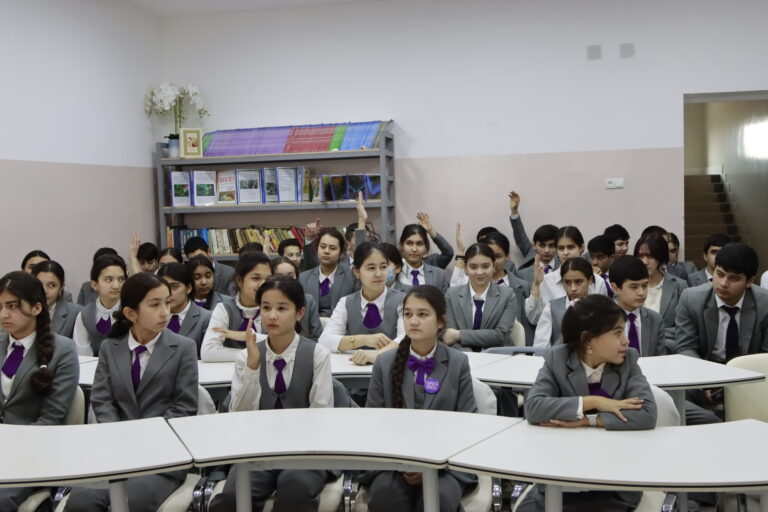
During 5-day training, conducted by Independent School of Journalism “Tajikistan – XXI century” on September 21-25 in Mercury Hotel, representatives of 18 print and electronic media from all the regions of the country improved their ability in reporting on environmental issues, climate change and biodiversity.
Dean of the Faculty of Communication and Media Arts at the Ohio University (USA), Professor David Mould acted as a trainer. 14 presentations of national experts and outstanding scientists of Tajikistan, representatives of government agencies, environmental NGOs and international organizations were offered for the attention of the training participants.
“The objective of the training was to improve the ability of journalists in Tajikistan to conduct research and analysis and present balanced and contextualized coverage of environmental issues and their human impacts as well as to encourage media to engage in public participation and to debate improvements that can lead to sustainable development”, – stated Executive Director of the ISJ “Tajikistan – XXI century” Safo Safarov. He noted that the training had a practical nature and the participants had notebooks, necessary professional audio and video equipments as well as access to Internet that they could use for preparation of their stories and media reports.
Moreover, in the framework of the training a field trip outside Dushanbe was organized for the participants and aimed at researching localities, where consequences of climate change and human affect on environment were evident. During the field trip the participants conducted interviews with representatives of local administration, experts and local residents. In the result of the trip they prepared print as well as audio and video stories using the collected information.
This educational event was conducted under financial support of the UNESCO International Programme for the Development of Communication and the British Embassy in Tajikistan. Technical support for the training was provided by Committee for Environmental Protection under the Government of the Republic of Tajikistan, UNESCO Cluster Office in Almaty, Media-Group “Asia-Plus” and Tajik branch of Central Asian Regional Environmental Center (CAREC).