
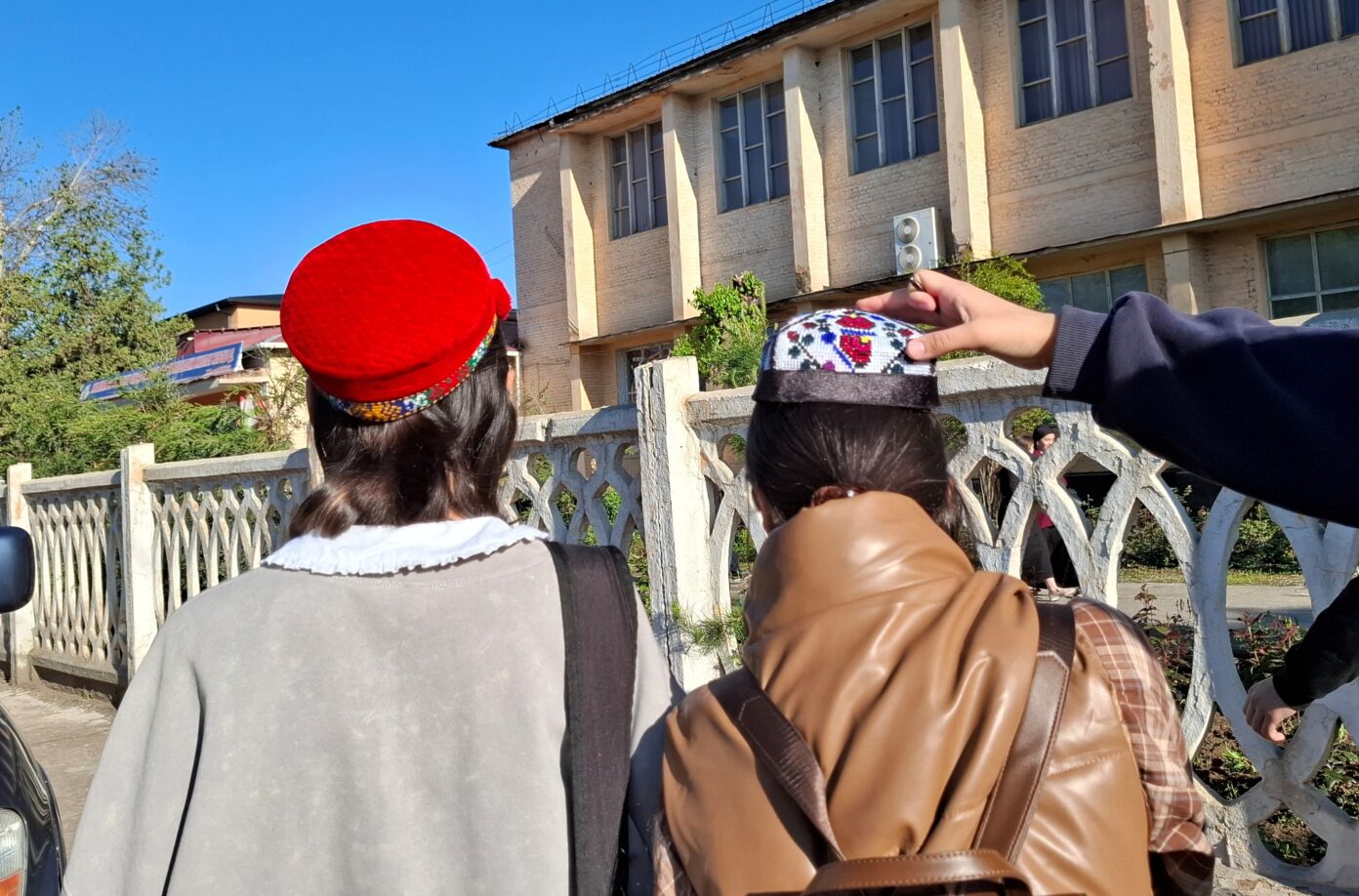
Several parents of schoolchildren in Dushanbe told “Asia-Plus” that their children were instructed to wear tubeteikas at school. According to them, this rule has been in effect since the beginning of spring, and compliance is mandatory. The Ministry of Education and Science assures that it is a recommendation, while local principals explain it as “tidying up” the appearance of female students.
“Without a tubeteika, they are not allowed into lessons”
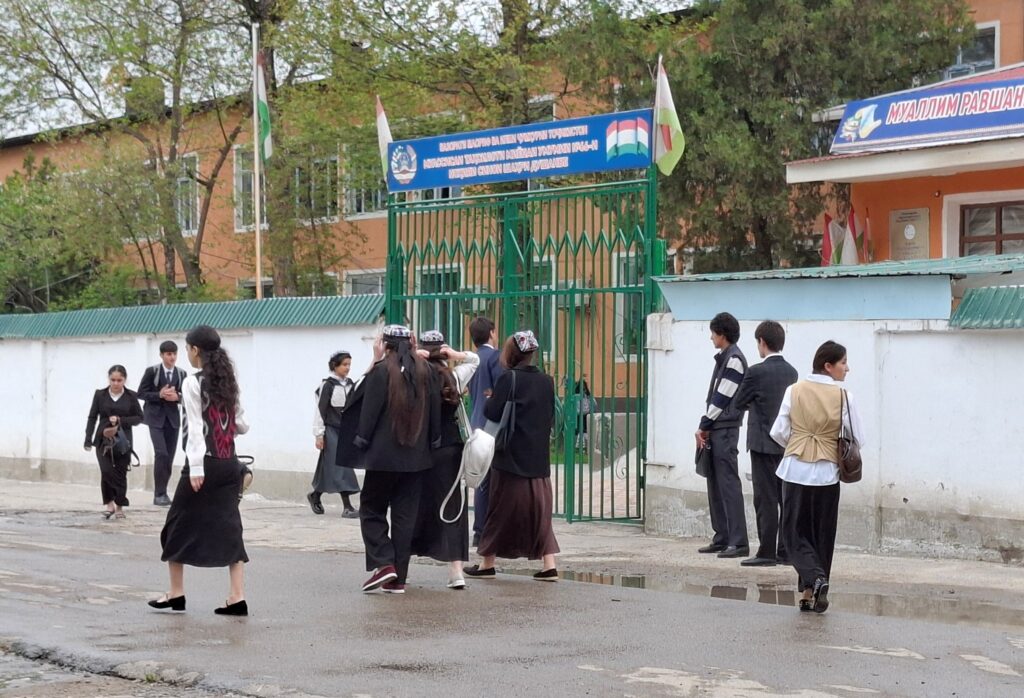
A few days ago, a correspondent from “Asia-Plus” observed a scene at the entrance of school No. 66 in the Sino district of the capital — students and class teachers were buying tubeteikas at a shop opposite the educational institution.
The vendor shared that he specifically brought in tubeteikas because he learned there was a demand among schoolgirls. From conversations among students and their mothers, we heard that without this headgear, they are not allowed into school.
“Without a tubeteika, they are not allowed into school. They are forced to bring them in their backpacks to the school entrance, then put them on and enter,” shares the mother of one of the students.
Near the vendor stood several class teachers — they were planning to buy tubeteikas for their students themselves — it turned out that they might receive a reprimand for their students lacking tubeteikas. However, they did not specify from whom.
The “Asia-Plus” correspondent observed the school entrance for a few minutes — some students were putting on tubeteikas at the building’s entrance before entering, while others entered without tubeteikas through another entrance.
“It’s not about the tubeteika; the issue is that wearing it has become mandatory. Wearing or not wearing a tubeteika is a personal choice and not related to education,” one student’s mother protests.
“We wanted to tidy up the girls’ appearance”
Zulfiya Salikhova, the principal of school No. 66, told “Asia-Plus” that on the eve of the Navruz holiday, girls were advised to tidy themselves up, braid their hair, and wear tubeteikas. She added that this measure was taken “after complaints from parents about the appearance and hairstyles of their daughters.”
“They dyed their hair in different colors, came with unkempt hair, so we recommended wearing tubeteikas. But it’s voluntary. Most parents ask us to monitor their children’s appearance,” she assures.
The mother of two students from school No. 90 told “Asia-Plus” that at this school, too, girls were instructed to come to classes wearing tubeteikas.
“Braiding hair into two braids and coming to lessons like that is good. But wearing a tubeteika every day is not necessary; on holidays and celebrations, it adds special beauty,” she believes.
Shakhnaza Vosidova, the principal of school No. 90, told “Asia-Plus” that “nobody forces girls to wear tubeteikas.”
“One or two students who have tubeteikas wear them at their own discretion if it’s hot. We have never forced girls to wear tubeteikas,” she claims.
Observations at the entrance to this school indeed showed that some students entered the educational institution without tubeteikas.
Ministry of Education: Wearing a tubeteika is only a recommendation
The Ministry of Education and Science of Tajikistan told “Asia-Plus” that “wearing a tubeteika in educational institutions is not a mandatory requirement of the Ministry of Education and Science. In the guidelines for recommended clothing for students and teachers of educational institutions, the tubeteika is only a recommendation. Principals and teachers do not have the right to force students to wear tubeteikas.”
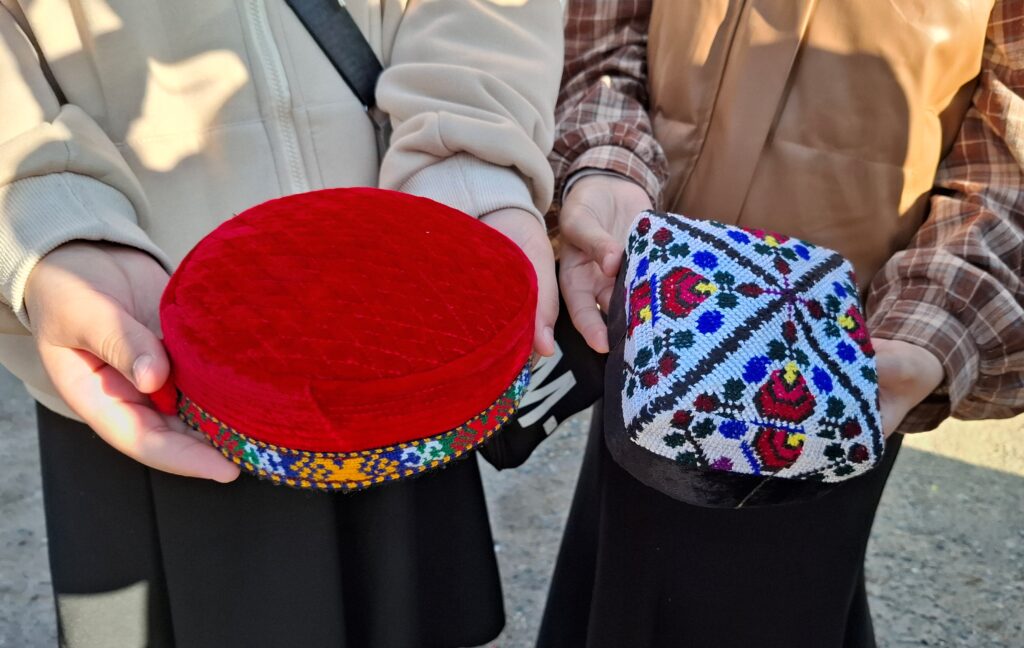
A representative of the department noted that complaints from students on this issue will be reviewed.
It should be noted that last year parents also complained about the coercion of girls to come to school wearing tubeteikas. Social media users wrote that at the same school No. 66, girls without this headgear were not allowed into classes.
Previously, the Ministry of Education and Science published norms of recommended school uniforms for boys and girls.
According to these norms, girls are prohibited from wearing hijabs, tight and torn jeans, short and tight skirts, as well as more than one earring in one ear and bright makeup. Schoolchildren are also prohibited from wearing sportswear with advertising slogans or symbols of other countries. There are recommendations on footwear and even backpacks.
