DUSHANBE, May 28, 2009, Asia-Plus — The Ministry of Energy and Industries (MoEI) and South Korea’s ANNA Energy Corporation Limited have reached an agreement on construction of a number of wind power plants in Tajikistan, according to the MoEI press service.
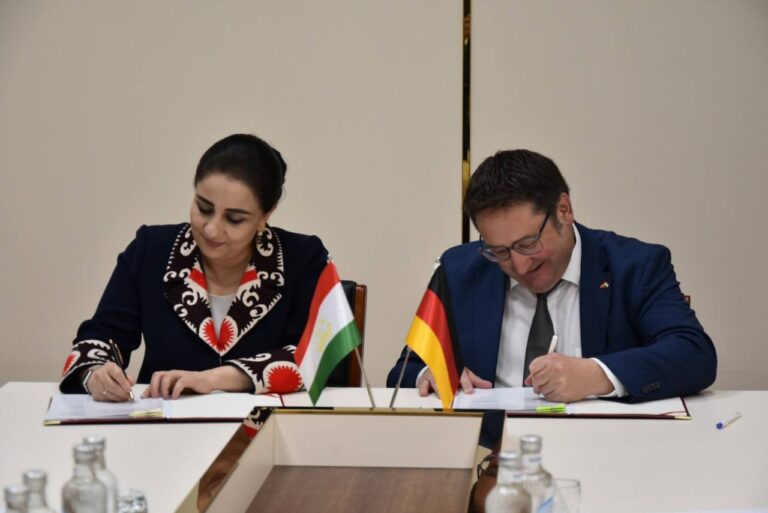
Speaking in an interview with Asia-Plus, Ms. Tojinisso Azizova, a spokesperson for a MoEI, said that a memorandum of understanding (MoU) was signed in Dushanbe on May 27. According to her, Korean specialists are expected to start surveys for construction of the wind power plants in Tajikistan in July this year.
“They plan to construct the power wind plants in GBAO’s Murgab district as well as a number of Khatlon’s districts and several districts subordinate to the center,” Azizova said.
Four wind power pants with a total capacity of 1,000 kW are expected to be built in Murgab and one wind power plant with capacity of 250 kWh will be built in each of the following districts: Baljuvon; Danghara, Fayzobod; and Rasht.
Wind power is the conversion of wind energy into a useful form, such as electricity, using wind turbines. At the end of 2008, worldwide nameplate capacity of wind-powered generators was 121.2 gigawatts. Wind power produces about 1.5% of worldwide electricity use, and is growing rapidly, having doubled in the three years between 2005 and 2008. Several countries have achieved relatively high levels of wind power penetration, such as 19% of electricity production in Denmark, 11% in Spain and Portugal, and 7% in Germany and Ireland in 2008. As of May 2009, eighty countries around the world are using wind power on a commercial basis.
Large scale wind farms are typically connected to the local electric power transmission network, with smaller turbines being used to provide electricity to isolated locations. A wind farm is a group of wind turbines in the same location used for production of electric power. Individual turbines are interconnected with a medium voltage (usually 34.5 kV) power collection system and communications network.