Rising prices of rail fares result from rising transit tariffs: Tajik railways deputy head

DUSHANBE , July 26, Asia-Plus — Experts from the Tajik Railways hold that rising transit tariffs lead to increase in rail fares in Tajikistan rather than rising oil prices. At present Tajikistan ’s Railways has three rail routes to the Russian Federation : Dushanbe to Moscow (thrice-weekly service); from Kulob to Moscow (twice-weekly service); and […]

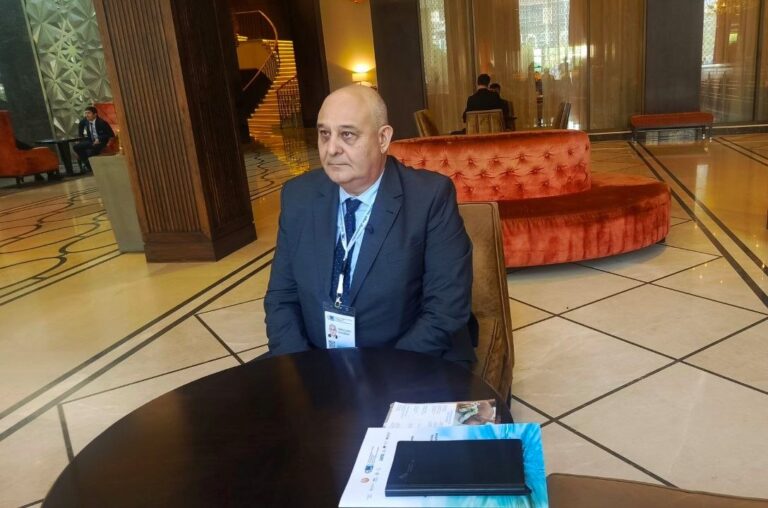
Nazarali Pirnazarov


DUSHANBE


, July 26, Asia-Plus — Experts from the Tajik Railways hold that rising transit tariffs lead to increase in rail fares in


Tajikistan


rather than rising oil prices.

At present


Tajikistan


’s Railways has three rail routes to the


Russian Federation


:


Dushanbe


to


Moscow


(thrice-weekly service); from Kulob to


Moscow


(twice-weekly service); and from Khujand to


Saratov


(two-three times a week). 

Inside the republic, there area four rail routes: from


Dushanbe


to Konibodom (twice-weekly service); from Qurghon Teppa to Konibodom (once-weekly service); from Qurghon Teppa to Kulob (once-weekly service; and from


Dushanbe


to Pakhataobod.  

Speaking to journalists, The Tajik Railways deputy chief, Vladimir Sobkalov, yesterday noted that the price of ticket for the carriage with numbered reserved seats on the train Dushanbe-Moscow is 538.00 Somonis and the ticket for the compartment on this train is 591 Somonis.  

According to him, during the period from July 1 to August 31 the Tajik Railways offers a 20-Somoni discount for the carriage with numbered reserved seats and a 40-Somoni discount for the compartment.  30%- 35%-discount will  be introduced in September, according to him.  

Mr. Sobkalov also noted that that all issues related to problems of transit tariffs would be considered at the 44

th

session of the council of the CIS railways  of the CIS and Baltics, which would be held in


Yerevan


(


Armenia


) in mid-October.  


NOTICES:


A total length of railways in


Tajikistan


is 950 kilometers, including 680 kilometers of the main railways.  The Tajik rolling stock includes 1,766 goods trucks, 314 passenger carriages, and 57 diesel locomotives.  8,000 people are currently working with the Tajik Railways, and an average monthly wage in the Tajik Railways  is 290.00 Somonis.

In January-June 2006, 6.516 million tons of various cargoes have been shipped by rail transportation (107.7 percent of the January-June 2005 quantity).  373,300 people have traveled by rail over the same six-month period, which 32,500 people compared to the same period of 2005.  
Article translations:

Related Articles

Оби зулол

Most Read

Join us on social media!

Recent Articles

Former Press Secretary of Emomali Rahmon Sent a Letter to the President Requesting Support for Media Workers

Zafar Sayidzoda believes it is necessary to establish a Media Support Fund, which should operate in the interests of all media — both state and private.

Neither War nor Peace: What Will Be the Next Step for Iran and the US After the Failure of Negotiations?

Tajik experts say that Iran has another leverage that could pose a serious threat to the Trump administration.

In Dushanbe, a criminal group issuing SIM cards and bank cards to fictitious persons was exposed

Through illegally issued plastic cards, the suspects were withdrawing money from an online casino game.

The eKhonish program, an analogue of eDonish, launched in Bokhtar

Now parents and education representatives will be able to remotely monitor students' attendance and academic performance.

#AP30/Experts. Rashid Ghani Abdullo: “Asia-Plus” has become a brand of Tajikistan

A well-known Tajik political scientist expressed his opinion on the role of our media in the informational space of the country and the region.

How did Sadriddin Ayni live? We created a video reconstruction

Today marks the 148th anniversary of the great writer, scholar, and public figure of Tajikistan.

Trump announces possible resumption of U.S.-Iran talks

Pakistan is once again actively working on their organization.

Six international organizations have urged Tokayev to stop the persecution of journalists in Kazakhstan

According to human rights activists, the lack of decisive measures to protect the press may undermine the credibility of the "New Kazakhstan" development program.