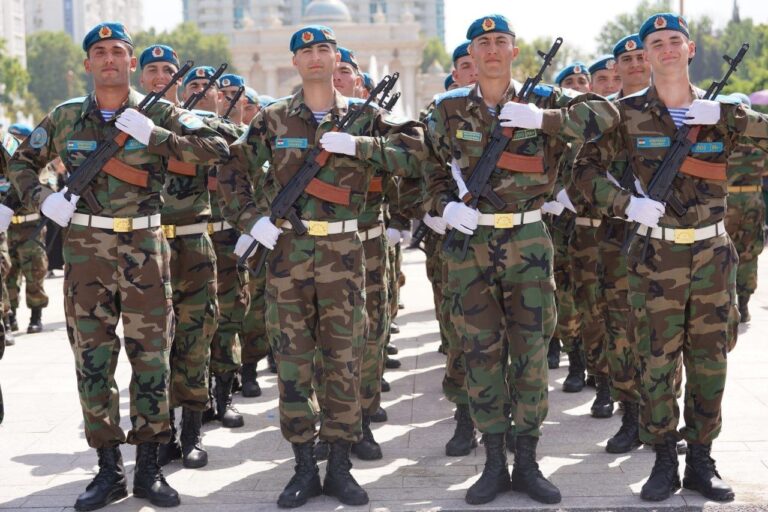
DUSAHNBE, August 17, Asia-Plus – RIA Novosti — An antiterrorism exercise conducted by a regional security organization has come with a price tag of 2 billion rubles ($80 million) for Russia, a Defense Ministry official said Friday.
The exercise, Peace Mission 2007, has been held in the Chelyabinsk region, the Urals, since August 9, with about 6,000 servicemen from Russia, Kazakhstan, Tajikistan, Kyrgyzstan, China and Uzbekistan under the auspices of the Shanghai Cooperation Organization (SCO). Leaders of the SCO member states attended the final day of drills Friday.
It is the first exercise in which military units of all SCO member states have participated.
President Vladimir Putin proposed conducting counterterrorism exercises on a regular basis. He told an SCO summit in Bishkek, Kyrgyzstan, Thursday that the world needs a multi-polar system for international security, and spoke out against attempts by any one nation to take global security into its own hands.
The bloc, which primarily addresses security issues, is seen by many as a counterbalance to NATO influence in the region.
In their summit declaration, leaders of the SCO countries said they can ensure regional stability and energy security without outside assistance.
The document also said the organization”s regional antiterrorism structure had sufficient resources to fight terrorism, separatism and extremism in Eurasia.
Member states pledged to push forward with creating a joint mechanism to counter threats to regional peace, stability and security, and to deepen cooperation in fighting drug trafficking and illegal migration.
Established in 2001 as a non-military alliance, the SCO initially set dealing with Islamic extremism and other security threats in Central Asia as its goal, but has since expanded its scope to include cooperation in disaster relief and trade.
The SCO never held a full-scale military exercise involving all its member states, but Russia and China have already held several military joint exercises within the framework of the organization, including the Peace Mission 2005 exercise.