Tajik entrepreneurs instructed in methods of use o barcode system

DUSHANBE, December 3, Asia-Plus  — A two-day seminar for Tajik entrepreneurs on methods of using GS1 barcode system concluded in Dushanbe on Saturday December 1.    The seminar, staged by the Consumers’ Union Public Association and the Item Numbering Association GS1-Tajikistan under financial and technical support of the Eurasia Foundation of Central Asia (EFCA) and […]

Bahrom Mannonov

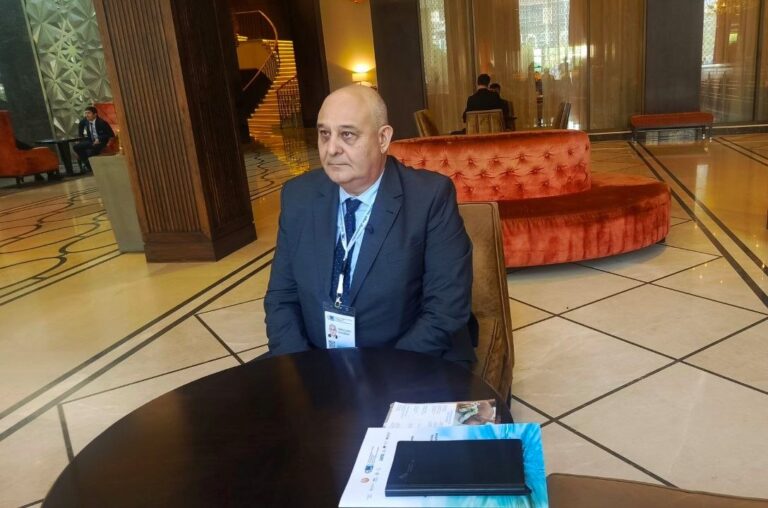
DUSHANBE, December 3, Asia-Plus  — A two-day seminar for Tajik entrepreneurs on methods of using GS1 barcode system concluded in Dushanbe on Saturday December 1.   

The seminar, staged by the Consumers’ Union Public Association and the Item Numbering Association GS1-Tajikistan under financial and technical support of the Eurasia Foundation of Central Asia (EFCA) and International Trade Center (ITC), acquainted local entrepreneurs with barcode system of the GS-1 standard.       

Vadim Sadonshoyev, public relations officer, EFCA Tajikistan, said the seminar was part of the project for creation of the barcode system in Tajikistan.   

According to him, after joining the GS1-Global International Association, the GS1-Tajikistan Association received its code (prefix) under the number of 488, and the Association itself received the right to numerate goods of all enterprises operating in the territory of Tajikistan.   

GS1 is a leading global organization dedicated to the design and implementation of global standards and solutions to improve the efficiency and visibility of supply and demand chains globally and across sectors.  The GS1 system of standards is the most widely used supply chain standards system in the world.  The Barcodes and GS1 Identification System have provided benefits to consumers around the world for over thirty years.  

A barcode is a machine-readable representation of information (usually dark ink on a light background to create high and low reflectance which is converted to 1s and 0s).  Originally, barcodes stored data in the widths and spacings of printed parallel lines, but today they also come in patterns of dots, concentric circles, and text codes hidden within images. Barcodes can be read by optical scanners called barcode readers or scanned from an image by special software.

Article translations:

Related Articles

Оби зулол

Most Read

Join us on social media!

Recent Articles

Hajj 2026: New Rules and Restrictions Introduced in Saudi Arabia

Entry to Mecca is now only possible with a special permit.

Emomali Rahmon flies to Astana for the Regional Ecological Summit

President of Tajikistan Emomali Rahmon departed today for a...

Nexign and TelecomDaily: the telecommunications market in Tajikistan grew by 13.7% in 2025

A study showed that the country's communications market has grown to 4.9 billion somoni, and the dynamics are influenced by an increase in the subscriber base, growth in internet traffic, and expansion of mobile and fixed network coverage.

Tajikistan’s Parliament approves organized recruitment of migrants to Russia

The paperwork will be transferred to the home country, and employers will select employees in advance.

Creativity as an asset: why marketing in Central Asia is reaching a new level

Business expert in international projects for the support and development of media companies, Svetlana Lebedeva, on marketing and the media market.

European Immunization Week starts in Tajikistan

Information and awareness-raising activities are being conducted across the country to increase trust in vaccination and combat misinformation.

The plan to launch the CASA-1000 project in 2027 discussed in Dushanbe

The Ministry of Energy of Tajikistan, Afghan DABS, and other project participants held a series of meetings.