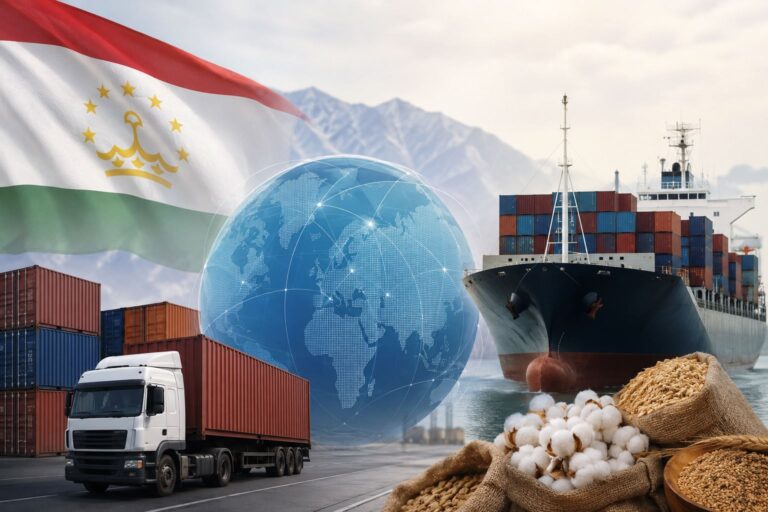
DUSHANBE, December 19, Asia-Plus — The Asian Development Bank (ADB) is providing a $3 million grant to facilitate trade among member nations of the Central Asia Regional Economic Cooperation (CAREC) as part of efforts to promote sustained economic progress across the region, press release issued by ADB said.
The Integrated Trade Facilitation Support for CAREC will receive an additional $600,000 from the governments of CAREC countries to complete the funding requirement.
The project supports the implementation of the trade facilitation component of the Transport and Trade Facilitation Strategy endorsed by the sixth Ministerial Conference on CAREC in November 2007. CAREC is composed of Azerbaijan, People’s Republic of China, Kazakhstan, Kyrgyzstan, Mongolia, Tajikistan, Uzbekistan and Afghanistan. Turkmenistan also participates in CAREC’s trade facilitation work.
Strengthened customs cooperation is the core program of the trade facilitation strategy. The project will also come up with an expanded scope of the work program to address broader issues of trade facilitation, focus on trade facilitation efforts on the CAREC transport corridors, adopt a results-based approach in monitoring time and cost savings as the key indicators of the program, and support logistics assessments and planning focusing on priority corridors and developing national and regional implementation strategies to facilitate trade.
The project will also support bilateral initiatives among CAREC countries and enhance partnership between CAREC’s participating multilateral institutions and key international agencies supporting customs reform, trade facilitation and logistics development in the region. It will also promote dialogue and cooperation with the private sector, which would help formulate and utilize trade facilitation measures, and undertake capacity building in areas of integrated trade facilitation and in broader areas related to trade and transport. The project will also produce knowledge products such as policy and strategic papers.
Trade facilitation plays a vital role for CAREC countries, especially in expanding intra- and interregional trade, which spur investments and economic growth in the long term. Trade facilitation refers to a wide range of activities such as import and export procedures, transport formalities, payments, and insurance and other financial requirements.
Despite years of reform and intensified regional cooperation efforts, the participation of Central Asian countries in international trade remains limited mainly due to the unnecessarily high costs of trade due to, among other reasons, the countries being landlocked, which makes trade and transit problematic.
At most borders, it is necessary to comply with a range of procedures in addition to customs, including animal quarantine, inspection of plants and other agricultural materials, checking of drivers’ licenses, axle loads, and compliance with other road rules.
Simplification and harmonization of such procedures are integral to trade facilitation. While international agreements on standard norms can help, a key requirement is to shift policy to place more emphasis on trade facilitation rather than trade control.