Vakhsh River expected to be blocked for beginning of work on construction of Roghun dam in late January 2010

DUSHANBE, December 22, 2009, Asia-Plus  — Blocking the Vakhsh River for beginning of work on construction of the Roghun dam is scheduled for late January 2010 when water levels in the Vakhsh River decrease, according to open joint-stock company NBO (nirugohi barqi obi meaning hydroelectric power plant) Roghun. Preparatory work in the place of damming […]

Victoria Naumova

DUSHANBE, December 22, 2009, Asia-Plus  — Blocking the Vakhsh River for beginning of work on construction of the Roghun dam is scheduled for late January 2010 when water levels in the Vakhsh River decrease, according to open joint-stock company NBO (nirugohi barqi obi meaning hydroelectric power plant) Roghun.

Preparatory work in the place of damming and at spillway tunnels is going on, the source at NBO Roghun said.

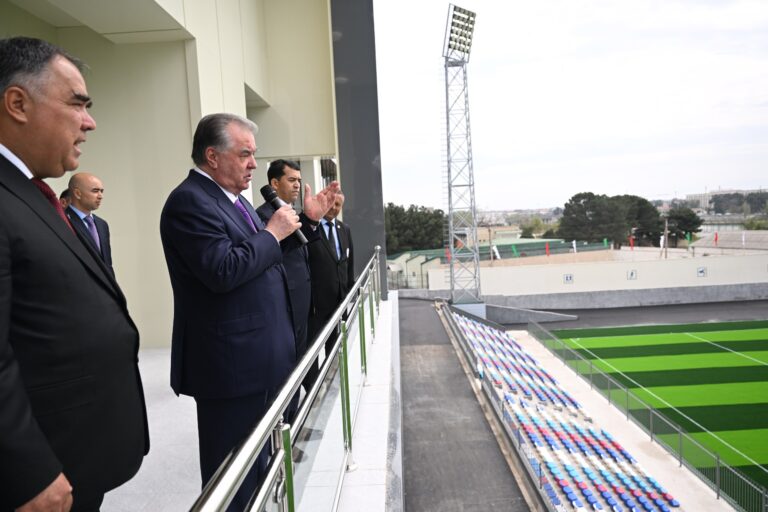
In the meantime, members of the Public Council of Tajikistan and representatives of media are visiting the site for construction of the Roghun hydroelectric power plant (HPP) today, the source at president’s executive office said.  According to him, President Emomali Rahmon is also expected to visit the Roghun site today.

As it had been reported earlier, specialists are currently clearing two tunnels that had been damaged in the 1990s. 

This year, the government has allocated 533 million somoni for the Roghun hydroelectricity project this year and Tajikistan’s national budget for 2010 earmarks 650 million somoni (equivalent to more than 148 million U.S. dollars) for the Roghun hydroelectricity project.

We will recall that Tajikistan in August 2007 formally revoked a contract with Russia”s RusAl aluminum company for the construction of the Roghun HPP.  The Tajik government accused the company of failing to fulfill the contract signed in 2004.  Tajik authorities and RusAl became bogged down in the hydroelectric plant”s dam model and height, crucial factors in its capacity.  In April 2008, Tajikistan founded open joint-stock company with an authorized capital of 116 million somoni for completing the construction of the Roghun station.  Tajik authorities also plan to create an international consortium to complete the construction of the Roghun power station.

The 3,600 MWt Roghun hydroelectric power plant is to generate 13 billion kWh of electricity per year.  The plant”s completion would substantially increase sales of electricity to neighboring Afghanistan, China, and Pakistan.  
Join us on social media!

Article translations:

Related Article

Tenisi
Оби зулол
Оби зулол

Most Read

Коммерсбонк Точикистон

Recent Articles

China to send workers to Tajikistan for modernization of the Kulma BCP

This is the only land border crossing point between Tajikistan and China.

The new National Stadium expected to be launched in Dushanbe on the eve of Independence Day

In his congratulatory message on the occasion of World Football Day, the president called the new facility "a gift from the government to athletes and football enthusiasts."

Tajikistan’s external debt decreased by $170 million in the first quarter of 2026

The authorities plan to reduce it by half again by the end of the year, but intend to attract larger loans.

A teacher was beaten in Nourobod; the incident is being investigated by the prosecutor’s office

A teacher was injured after telling one of the student's brothers that she was not preparing for lessons.

Eskhata Bank launches a unique offer for female entrepreneurs of Tajikistan

The bank offers a loan on special, reduced, and flexible terms, including collateral security.

FINCA Tajikistan expands support for women’s business

The company's management emphasizes that this award is the result of the professionalism and dedication of the "Klubi Bonuvoni FINCA" team.

Central Asia in Beijing’s focus: what are the interests of the Celestial Empire in the region and Tajikistan?

Against the backdrop of global rivalry, China is strengthening its influence in Central Asia, and Tajikistan is becoming one of Beijing's key partners in the region.