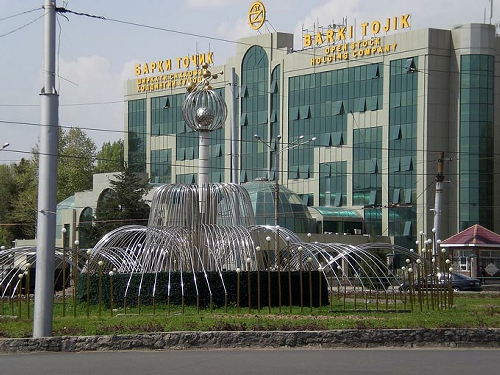
Barqi Tojik states that no electricity rationing officially introduced in Dushanbe

DUSHANBE, March 25, 2011, Asia-Plus  — Repair and service operations for Dushanbe’s power supply network have caused electricity cutoffs in some areas of the Tajik capital city. Representatives of Barqi Tojik power holding state that electricity cutoffs in the city are connecting with repair and maintenance services for Dushanbe’s power supply network. “No electricity rationing […]

Zarina Ergasheva

DUSHANBE, March 25, 2011, Asia-Plus  — Repair and service operations for Dushanbe’s power supply network have caused electricity cutoffs in some areas of the Tajik capital city.

Representatives of Barqi Tojik power holding state that electricity cutoffs in the city are connecting with repair and maintenance services for Dushanbe’s power supply network.

“No electricity rationing has been officially introduced in Dushanbe, however, electricity supplies in some areas of Dushanbe are cut off from 24:00 to 5:00 am for the purpose of saving electricity, because the country’s power supply network currently operates under a special regime,” the source said.

The Barqi Tojik officials say these measures are temporary and regular electricity supply in Dushanbe and other regions of the country will be resumed with increase in water flow in the Vakhsh River and water levels in the reservoir powering the Norak hydroelectric power plant (HPP).  

Current water flow rate in the Vakhsh River is now some 200 cubic meters per second, which is three times lower than last year and two times lower than an average long-term level, the source noted.

We will recall that residential customers in rural areas now have electricity for only two or three hours per day.

In the spring and summer, Tajikistan’s hydropower plants generate a huge amount of electricity that is exported to neighboring countries, but in the autumn and winter, especially if the summer was dry and water levels in reservoirs are low, electricity rationing is introduced in the country.

This winter, electricity rationing did not affect Dushanbe, the regional administrative centers and main cities, while rural areas had electricity for about ten hours a day.
Article translations:

Related Articles

Оби зулол

Most Read

Join us on social media!

Recent Articles

Emomali Rahmon accepted the credentials from new ambassadors

Nine countries have sent new diplomats to Tajikistan.

Russia evacuated 27 Tajikistan citizens from Iran

They worked at the Bushehr nuclear power plant, built by the Russian Federation in Iran.

Baku to host WUF13: shaping the future of sustainable urbanization

Baku, the capital of Azerbaijan, is set to host...

How the Energy Industry Began in Tajikistan 100 Years Ago

We have prepared a historical photo series for you.

Tajikistan and Belarus to establish a joint laboratory for radiation monitoring and nuclear safety

An agreement was signed by the Tajikistan Agency for Nuclear and Radiation Safety and the Belarusian National Technical University.

Former Press Secretary of Emomali Rahmon Sent a Letter to the President Requesting Support for Media Workers

Zafar Sayidzoda believes it is necessary to establish a Media Support Fund, which should operate in the interests of all media — both state and private.

Neither War nor Peace: What Will Be the Next Step for Iran and the US After the Failure of Negotiations?

Tajik experts say that Iran has another leverage that could pose a serious threat to the Trump administration.

In Dushanbe, a criminal group issuing SIM cards and bank cards to fictitious persons was exposed

Through illegally issued plastic cards, the suspects were withdrawing money from an online casino game.

The eKhonish program, an analogue of eDonish, launched in Bokhtar

Now parents and education representatives will be able to remotely monitor students' attendance and academic performance.

#AP30/Experts. Rashid Ghani Abdullo: “Asia-Plus” has become a brand of Tajikistan

A well-known Tajik political scientist expressed his opinion on the role of our media in the informational space of the country and the region.