DUSHANBE, June 12, 2013, Asia-Plus — The World Heritage Committee will consider the inscription of 32 sites on UNESCO’s World Heritage List during its next session that will take place in Phnom Penh and Siem Reap (Cambodia) from June 16-27.
According to press release issued by UNSCO, the following nominations by States Parties to the World Heritage Convention will be examined:
– Natural properties: Xinjiang Tianshan (China); Great Himalayan National Park (India); Mount Etna (Italy). Mount Kenya-Lewa Wildlife Conservancy (an extension of “Mount Kenya National Park/Natural Forest, Kenya); El Pinacate and Gran Desierto de Altar Biosphere Reserve (Mexico); Namib Sand Sea (Namibia); Mount Hamiguitan Range Wildlife Sanctuary (Philippines); Tajik National Park (Mountains of the Pamirs) (Tajikistan); Cat Tien National Park (Viet Nam).
– Mixed Natural and Cultural Properties: Pimachiowin Aki (Canada), Archipel des Bijagós – Motom Moranghajogo (Guinea Bissau); Sehlabathebe National Park (Lesotho) (an extension of “uKhahlamba / Drakensberg Park,” South Africa).
– Cultural properties: Red Bay Basque Whaling Station (Canada); Cultural Landscape of Honghe Hani Rice Terraces (China); Historic Monuments and Sites in Kaesong (Democratic People’s Republic of Korea); Levuka Historical Port Town (Fiji); Water features and Hercules within the Bergpark Wilhelmshöhe (Germany); Hill Forts of Rajasthan (India); Golestan Palace (Islamic Republic of Iran); Cultural Landscape of Maymand (Islamic Republic of Iran); Medici Villas and Gardens (Italy); Fujisan (Japan); Town and Castle of Vianden (Luxembourg); Isandra Zoma (Madagascar); Agadez (Historic Centre of Agadez), (Niger); Wieliczka and Bochnia Royal Salt Mines (extension of “Wieliczka Salt Mine”, Poland), Wooden Tserkvas of the Carpathian Region in Poland and Ukraine (Poland / Ukraine); University of Coimbra – Alta and Sofia (Portugal); Al Zubarah Archaeological Site (Qatar); Bolgar Historical and Archaeological Complex (Russian Federation); Historic city of Alanya (Turkey); Ancient City of Tauric Chersonese and its Chora (5th century BC – 14th century AD, Ukraine).
Five of the above sites, including Tajik National Park (Mountains of the Pamirs) had already been considered for inscription in the past.
We will recall that Tajikistan put forward the Tajik National Park in the Natural category along with the archeological site Sarazm that was put forward as a cultural site.
The World Heritage Committee met in the Brazilian capital, Brasilia, from July 25 to August 3, 2010 to consider the proposed sites and recommended to conduct wider study of the National Park of Tajikistan.
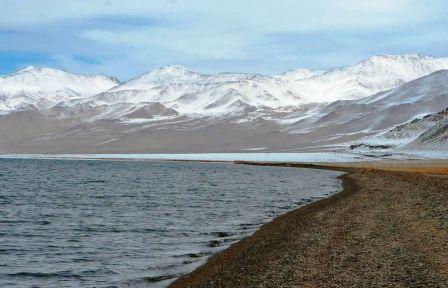
At more than 12,000 square kilometers in size, the Tajik National Park takes up almost a tenth of the area of Tajikistan. According to the Natural Heritage Protection Fund, it is the largest protected area in Central Asia. It includes Somoni Peak, which at 7,495 meters is the highest mountain in the post-Soviet area. Other unique features include Fedchenko Glacier, one of the largest mountain valley glaciers on earth; Sarez Lake, one of the world’s highest lakes; and more than 100 endemic and endangered plants and animals, including the snow leopard.