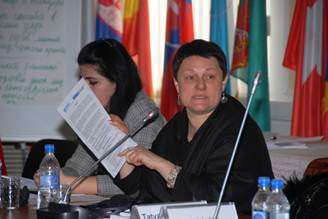
DUSHANBE, March 12, 2014, Asia-Plus — A three-day training course on the United Nations Convention against Corruption (UNCAC) and its review mechanism concluded at the OSCE Office in Tajikistan on March 7.
Organized by the OSCE Office, the course involved two specialists on UNCAC and its review mechanism from the headquarters of the UN Office on Drugs and Crime (UNODC) in Vienna.
According to the OSCE office, it comes as Tajikistan was reviewed for the first time within the context of the Implementation Review Mechanism (IRM) of the UNCAC (year four (2013-2014) of the first cycle of the IRM). The course was reportedly organized by the OSCE Office to build the capacities of state structures involved in this review process.
State officials from the Agency for State Financial Control and Combating Corruption, the Prosecutor-General’s Office, the Ministry of Justice, the Ministry of Internal Affairs, the Ministry of Finance, the Ministry of Foreign Affairs, the Ministry of Economic Development and Trade, the Tax Committee, and the National Legislation Center under the President of the Republic took part in the training.
They received technical training on the UNCAC Chapters 3 and 4 and on the practical requirements of the Convention’s review mechanism.
A similar two-day training course led by UNODC and OSCE experts was organized by the OSCE Office on March 3-4 and brought together representatives of government, civil society and international organizations. Participants learnt about the key preventive anti-corruption measures required under Chapter 2 and how to integrate these into their work plans. As a result of this workshop, participants identified a set of joint measures for both state structures and civil society representatives.
Ambassador Muller, Head of the OSCE Office in Tajikistan, congratulated participants of both workshops for the high level of engagement and their willingness to co-operate in corruption-prevention measures in Tajikistan in line with UNCAC commitments. He reiterated that these measures marked a new and significant step towards improving the climate for investment and employment in Tajikistan.
Two follow-up workshops will be held in May or June 2014.