Four years have passed since a convoy of Tajik troops was attacked in the Kamarob Gorge

DUSHANBE, September 19, 2014, Asia-Plus — Four years ago, on September 19, 2010, a convoy of Tajik government troops was attacked in the Kamarob Gorge, about 185 kilometers east of Dushanbe. 25 government soldiers were killed in an ambush in the Kamarob Gorge. Several other soldiers injured during the attack later died in hospital, bringing […]

Mahpora Kiromova

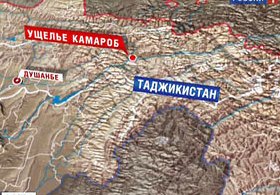
DUSHANBE, September 19, 2014, Asia-Plus — Four years ago, on September 19, 2010, a convoy of Tajik government troops was attacked in the Kamarob Gorge, about 185 kilometers east of Dushanbe.

25 government soldiers were killed in an ambush in the Kamarob Gorge. Several other soldiers injured during the attack later died in hospital, bringing the total number of casualties from that attack to 28.

Tajik authorities blamed Islamist militants for the ambush.  Tajikistan’s Interior and Defense Ministries said on October 22 that they believe the attack was masterminded by former United Tajik Opposition (UTO) fighters Abdullo Rahimov (Mullo Abdullo) and Alovuddin Davlatov (Ali Bedaki).

Mullo Abdullo rejected the provisions of the peace agreement the Tajik government signed with the UTO in 1997 and later joined the Islamic Movement of Uzbekistan (IMU), which fought against the government during the civil war.

Official sources said that Mullo Abdullo left Tajikistan for Afghanistan in 2000.  Unofficial reports say he was detained by international forces in Afghanistan in 2002 and spent several years in an Afghan prison.

The government troops launched an operation in the area to hunt down the attackers.

Thirty-four Tajik troops were killed in two separate incidents in the Rasht district in early October.  Military sources said up to 28 troops were killed when a military helicopter crashed in Rasht Valley early on October 6.  Another six soldiers were killed in a landmine explosion in the same area.  Several others were injured in what some military sources described as an accidental explosion.

Ali Bedaki was reportedly killed on January 4, 2011 in a shooting during a special joint operation in the Rasht district village of Runob involving police, security forces, and soldiers from the Presidential Guard.

Abdullo Rahimov, widely known as Mullo Abdullo, was reportedly killed along with 10 of his followers on April 14, 2011 in an operation carried out by the government forces in the village of Samsoliq in the Nourobod district, some 135 kilometers east of Dushanbe.  

Join us on social media!

Article translations:

Related Article

Tenisi
Оби зулол
Оби зулол

Most Read

Коммерсбонк Точикистон

Recent Articles

RZD announces the restoration of passenger services between Moscow and Dushanbe

Direct rail services between the capitals of Russia and Tajikistan were suspended in March 2020 due to the COVID-19 pandemic.

#AP30/Stories. “Selam! Heller nichek?” How Tatars live today in Sughd province

On the 30th anniversary of "Asia-Plus," we continue to publish reports that remain relevant even after years. This story was told in 2021, and since then, little has changed in the life of the Tatar community in Tajikistan.

15,000 cameras, drones, and robots: how technology monitors pilgrims in Mecca and Medina

During Hajj 2026, Mecca and Medina were under unprecedented digital control.

Another child in Dushanbe removed from family and sent to boarding school

The Ministry of Internal Affairs reports that the parents did not pay adequate attention to the child.

Emomali Rahmon instructs to address issues in seed production following criticism of the industry

Issues have been noted with certification, seed quality, and the material and technical base of the industry.

Water, climate, and a $130 billion deficit: seven key outcomes of the Water Conference in Dushanbe

At the forum, countries and international organizations discussed new mechanisms for cooperation, investments, and technologies that are essential for addressing the global water crisis.

Eskhata Bank introduces a new generation children’s wallet

"Eshkata Bank" has created a full-fledged digital platform that helps children aged 7 to 16 learn how to manage money.