Tajik producers reportedly make shift to halal standards

DUSHANBE, January 9, 2015, Asia-Plus — The number of enterprises meeting halal food standards is increasing in Tajikistan. In a report released at a news conference in Dushanbe, Bahtiyor Shukurzoda, the head of the Agency on Standardization, Metrology, Certification and Trade Inspection (Tojikstandart), revealed on January 9 that 16 enterprises introduced halal standards last year. […]

Payrav Chorshanbiyev

DUSHANBE, January 9, 2015, Asia-Plus — The number of enterprises meeting halal food standards is increasing in Tajikistan.

In a report released at a news conference in Dushanbe, Bahtiyor Shukurzoda, the head of the Agency on Standardization, Metrology, Certification and Trade Inspection (Tojikstandart), revealed on January 9 that 16 enterprises introduced halal standards last year.

“Tojikstandart is currently considering documents of three other enterprises that are also going to make shift to halal standards,” Shukurzoda noted.

“Products of enterprises operating in accordance with halal requirements are assessed by the Agency specialists, who graduated from international educational institutions in Malaysia, Turkey and India,” the Tojikstandart top manager said, noting that the assessment committee members also include representatives of Tajikistan’s Council of Ulema.

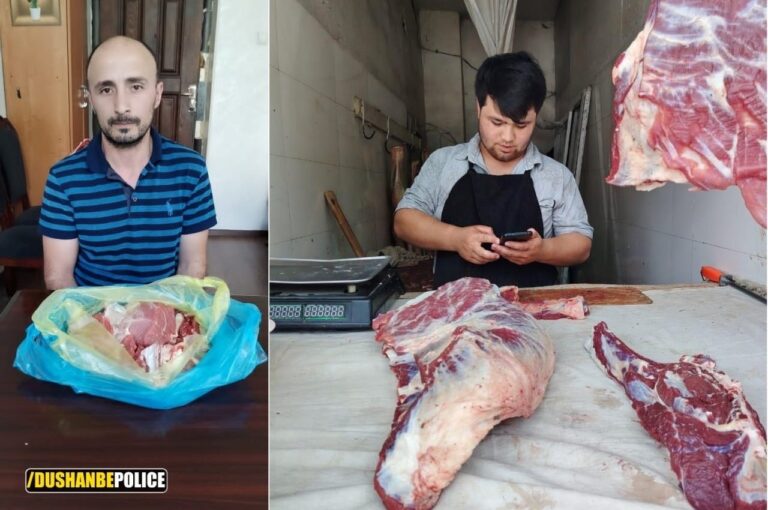
We will recall that food that meets Tajikistan”s halal standards became available for public sale on July 20, 2013.  The government developed the halal standard in 2011-2012 with help from the Tajik Council of Ulema, the Health Ministry, the Committee on Religious Affairs and the Agriculture Ministry Veterinary Service, as well as by reviewing neighboring countries” experience.  The requirements apply across food categories, including meat, bread, baked goods, dairy products and non-alcoholic drinks.  Permission to use the halal label for one year is granted by a special Tojikstandart committee, including specialists from Tojikstandart and from the Tajik Council of Ulema.

Halal foods include foods that are permissible for Muslims to eat or drink under Islamic Sharia. The criteria specify both what foods are allowed, and how the food must be prepared. The foods addressed are mostly types of meat and animal tissue.

Join us on social media!

Article translations:

Related Article

Оби зулол
Оби зулол

Most Read

Recent Articles

Residents of a settlement in Sughd: “Afghan refugees have disappeared from the Dehmoy jamoat”

Earlier, a citizen of Afghanistan was detained on charges of murdering a resident of Khujand.

In Russia, it was proposed to revoke residence permits and temporary residence permits from migrants who do not work for more than two months

During January-March 2026, 90% more residence permits were revoked from migrants in the country compared to the same period last year.

From reach to influence: why advertising no longer works by old rules discussed in Dushanbe

Market research forces a complete reconsideration of the advertising budget allocation strategy.

Facial recognition cameras are being tested in Tashkent schools

Biometric control over children is being implemented without their explicit consent.

A cross-cultural educational festival “New Day” is taking place in Dushanbe

This is not a one-time event — it is an educational laboratory where a child goes from the first acquaintance with a field to achieving their own result.

Tajikistan’s Ombudsman evaluates prison conditions: ‘Access to phone, library, bath, and medical treatment available’

However, he noted that issues with healthcare and transportation persist in detention centers.