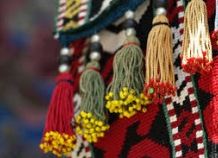
DUSHANBE, February 13, 2015, Asia-Plus — For the first time, Tajik handicrafts will be exhibited on the leading international trade fair for consumer goods, Ambiente, which opened in Frankfurt, Germany today.
The Tajikistan Union of Crafts and “Umed” handcraftsmanship NGO have been supported by the International Trade Center (ITC) to represent Tajikistan at this world’s most important consumer goods trade fair that runs through February 17. This participation was made possible by the ITC project funded by the Government of Switzerland within its Trade Cooperation Program (TCP) in Tajikistan.
ITC Tajikistan notes that with over 4,700 exhibitors from about 90 countries, Ambiente is considered as a meeting place for about 145,000 trade visitors from 160 countries annually. During the fairs, numerous events highlight trending industry topics and offer an ideal stage for networking and dialogue. From functional innovations through design trends, visitors benefit from a trend-setting market overview.
Mr. Husein Ghulomov, Executive Director of Union of Craftsmen, says, “We express our gratitude to ITC for providing us with this opportunity to move the national craftsmanship up to the European market. We believe our first participation at the Ambiente will serve as a base for gaining experience to further strengthen the craftsmanship in Tajikistan. We are here to find new partners and markets, to explore new modern trends in the world of handicraft, as well as to show the unique eastern beauty of the Tajik handicrafts to our potential clients.”
Tajik companies were fully assisted by ITC with preparations for the fair. As part of preparations a workshop was conducted and the fair participants were trained on the effectiveness of participation at international fairs, from the planning stage to success in gaining new contracts and clients. Mr. Alfons Eiligmann, ITC international consultant on marketing, says the Ambiente participants from Tajikistan were assisted by the ITC team of specialists “to select and develop suitable products for the fair, to prepare sale kits, to solve organizational issues, as well as in other preparations to make the best use of the participation in the fair.”
The International Trade Center since the beginning of its work in Tajikistan in 2002 annually supports its focused private sector to enter the foreign markets through improving products, deepening design and marketing skills, as well as establishing international contacts through participation at the international fairs.
The present project is component FOUR of the Trade Cooperation Program (TCP) in Tajikistan and aims to increase the export competitiveness of the textile and clothing (T&C) sector, by providing sector specific support to SMEs and relevant trade support institutions (TSIs), as well as supporting respective stakeholders in taking a strategic approach to the sector’s development. It will also explore the challenges and development potential of the tourism and handicraft sectors in Tajikistan, outlining relevant trade related technical assistance priorities.
Within its Cooperation Strategy for 2012-2015, Switzerland focuses on four sectors in Tajikistan: Health, Rule of Law, Drinking Water Supply and Sanitation, and Private Sector Development. The overall goal of Swiss Cooperation in Tajikistan is to support the transition process in the country through contributing to economic development and by helping build institutions and systems which are responsive to the population’s needs.