DUSHANBE, January 28, 2016, Asia-Plus –
Radio Liberty’s Uzbek Service
report that grave of Abu al-Rayhan Muhammad ibn Ahmad al-Biruni in the Afghan city of Ghazni is in a very poor state.
The grave of al-Biruni, who was one of the greatest scholars of the medieval Islamic era, is reportedly in a very poor state and there is fear that the grave may be leveled to ground.
According to
Radio Liberty’s Uzbek Service
, Ghazni was declared an Islamic capital of culture last year and considerable amount of money was provided for restoration of historical and cultural relics. However, the grave of Al-Biruni remains in a very poor state, says
Radio Liberty’s Uzbek Service
reporter.
Meanwhile,
RFE/RL’s Radio Free Afghanistan
reported that Ghazni was declared an Islamic capital of culture in 2013. An official ceremony that took place on April 13, 2013 was attended by Iran”s culture minister, representatives from Tajikistan and Egypt, and a delegation from the Islamic Educational, Scientific, and Cultural Organization (ISESCO).
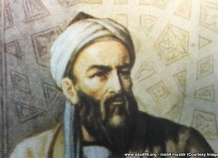
Abu al-Rayhan Muhammad ibn Ahmad al-Biruni (September 4/5, 973 – December 13, 1048), known as Al-Biruni, was a Khwarezmian Iranian scholar and polymath.
Al-Biruni is regarded as one of the greatest scholars of the medieval Islamic era and was well versed in physics, mathematics, astronomy, and natural sciences, and also distinguished himself as a historian, chronologist and linguist. He was conversant in Khwarezmian (an extinct east Iranian language close to Sogdian), Persian, Arabic, Sanskrit, and also knew Greek, Hebrew and Syriac. He spent a large part of his life in Ghazni in modern-day Afghanistan, capital of the Ghaznavid dynasty which was based in what is now central-eastern Afghanistan. In 1017 he traveled to the Indian subcontinent and authored “Tarikh Al-Hind” (History of India) after exploring the Hindu faith practiced in India. He is given the titles the “founder of Indology.” He was an impartial writer on custom and creeds of various nations, and was given the title al-Ustadh (“The Master”) for his remarkable description of early 11th-century India. He also made contributions to Earth sciences, and is regarded as the “father of geodesy” for his important contributions to that field, along with his significant contributions to geography.