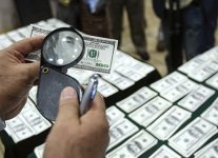
DUSHANBE, February 10, 2016, Asia-Plus – The Financial Times notes the €500 note, $100 bill and £50 note are rarely found in the average consumer’s wallet in today’s world of easy digital payments and “contactless” bank cards.
But with cash still very much king in the underworld of terrorists, drug lords and tax cheats, a new paper has called for the abolition of “the currency of corrupt elites”.
By taking such high-denomination banknotes out of circulation, governments could make life harder for criminals, argues Peter Sands, former chief executive of UK-based Standard Chartered Bank (StanChart), in a paper published on February 7.
Illicit money flows are estimated to run up to $2tn a year, according to the paper, while tax evasion can deprive governments of as much as 70 per cent of their income.
High-value notes “play little role in the functioning of the legitimate economy, yet a crucial role in the underground economy”, said Mr. Sands, who is urging the G20 to take up the matter before its next summit in China in September. “The irony is that they are provided to criminals by the state.”
Mr. Sands’ push comes amid efforts by the EU and other multinational agencies to cut the use of high-value notes, which run a gamut from the 1,000 Singaporean dollar to the 1,000 Swiss franc.
Until now, initiatives to limit circulation have been confined to individual countries such as the UK, which asked its banks in 2010 to stop handling €500 notes after a government study showed that they were used mainly by criminals. But last week the European Commission said it would investigate the role of the €500 note as part of a crackdown on terrorism finance, noting that such bills were “in high demand . . . due to their high value and low volume.”
But the campaign is likely to meet resistance, particularly among factions concerned that scrapping the most valuable form of paper currency is one step closer to a cashless society, which could give banks and governments a stronger grip on people’s finances.
Last week Yves Mersch, an executive board member at the European Central Bank and a former governor of the Central Bank of Luxembourg, said he wanted to see evidence that criminals are disproportionate users of the €500 note. Luxembourg is one of the note’s biggest producers, with a net issuance across all denominations of €93.5bn — about twice its gross domestic product — in 2014.
“There are policemen who are having opinions on this matter, and also in the G20,” he said. “I would be very happy if any substantiated evidence would be shipped to the ECB.”
Criminals are attracted to the notes because of their ease of transportation, said David Lewis, executive secretary of the Financial Action Task Force (FATF). A sum of £250,000 in a mix of £10 and £20 notes weighs up to 20 kilograms and can be carried in a gym bag, he said. But the same amount in €500 notes weighs about 600 grams and fits in an A4 envelope.
Scrapping high-denomination notes would not stop tax evasion, crime, terrorism or corruption, said Mr. Sands, who took up a year’s senior fellowship at Harvard Kennedy School last September after nine years at the helm of StanChart. The “bad guys” would quickly adopt the next highest denomination note in the same currency, digital currencies or valuables such as gold or diamonds, he said.
But in various ways these substitutes are heavier and bulkier, more traceable and less widely accepted, he said, which means the criminals face higher costs and a greater risk of getting caught.