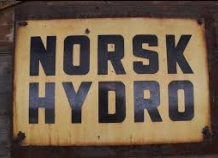
DUSHANBE, March 9, 2016, Asia-Plus — The Ministry of Trade, Industry and Fisheries of Norway (NFD) has asked Norsk Hydro (Hydro) to provide further information on its trade in Tajikistan.
In a statement released on March 7, Hydro emphasizes that the company has zero tolerance towards corruption. In Tajikistan, Hydro has exclusively bought and sold products at market prices and did not engage any agents or intermediaries.
“Hydro has not negotiated with Tajikistan’s President, although we have had several meetings – as we also have meetings with government representatives in many countries where we operate or are engaged in trade. Nor has Hydro had dealings with companies in which the ownership has not been known,” the statement says.
“Hydro has carried out internal and external reviews of the dilemmas related to this trade. Among other things, the company has had an open dialogue on the conditions in Tajikistan with international organizations like the World Bank, the European Bank for Reconstruction and Development (EBRD), the International Monetary Fund (IMF) and Norwegian authorities,” says the Chair of the Board of Directors, Dag Mejdell Dag Mejdell.
“We have conducted an active, open and extensive dialogue with international organizations about challenges in Tajikistan and our relation with Talco to seek advice and guidance on these challenging matters. Openness and dialogue have been important for our handling of dilemmas in this matter,” says CEO Svein Richard Brandtzaeg.
Hydro has repeatedly tried to contribute to improvements in transparency, health, environment and safety in TALCO (Tajik Aluminum Company). Lack of progress in these areas was an important reason for why Hydro in November 2009, decided not to enter into new metal purchase contracts for purchase of metal and for commercial activity coming to an end in 2012.
“Hydro’s trade in Tajikistan has been carefully evaluated throughout. The main conclusion of all earlier reviews has been that there was no indication of Hydro having acted in violation of any applicable laws, internal rules or guidelines. We have now submitted a thorough report on the extensive information available after 20 years of trade. Again, our conclusion is clear: There are no indications of Hydro having acted in violation of applicable laws, internal rules or guidelines,” says Mejdell.
Norsk Hydro ASA, often referred to as just Hydro, is a Norwegian aluminum and renewable energy company, headquartered in Oslo. Hydro is one of the largest aluminum companies worldwide. It has operations in some 50 countries around the world and is active on all continents. The Norwegian state owns 43.8% of the company through the Ministry of Trade and Industry. A further 6.5% is owned by Folketrygdfond, which administers the Government Pension Fund of Norway. Norsk Hydro employs approximately 12,500 people.
The Tajik Aluminum Company (TALCO) is one of the ten largest aluminum smelters in the world and provides up to 70% of the country’s foreign currency earnings, consuming 40% of the country’s electrical power. TALCO is wholly owned by the Tajik government. Tajikistan does not mine alumina but imports the raw material through tolling arrangements.
Construction of the Tajik aluminum plant (TadAZ) began in 1972, and the first pouring of aluminum took place on March 31, 1975. On April 3, 2007, TadAZ was officially renamed to TALCO – Tajik Aluminum Company. The Tajik aluminum smelter had the capacity to produce 517,000 metric tons per year.