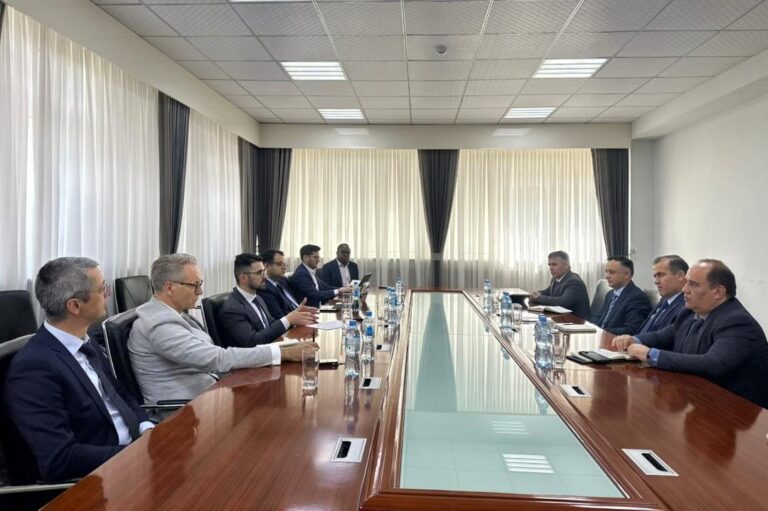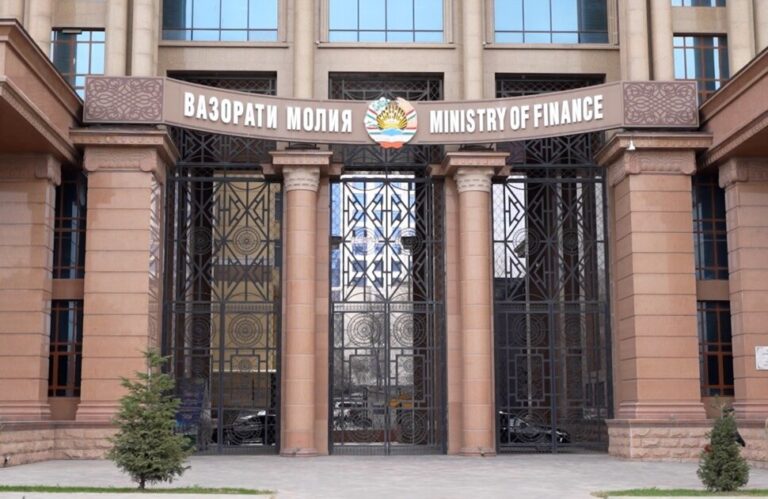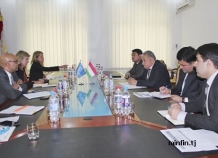
DUSHANBE, May 19, 2016, Asia-Plus – Issues related to financing the Nurek Hydropower Plant Rehabilitation Project were discussed here on May 18 at a meeting of Tajik Finance Minister Abdusalom Qurboniyon with a delegation of the World Bank, led by Ranjit Lamech, the Sector Manager for Energy in the Europe and Central Asia Region.
Patricia Veevers-Carter, the World Bank Country Manager for Tajikistan, and Jamshed Shoimzoda, Deputy Minister of Energy and Water Resources of Tajikistan, also attended the meeting.
According to the Finance Ministry Secretariat, the sides discussed issues of financing the project on the basis of feasibility study for it.
The meeting reportedly focused on the concept and the plan of implementation of the Nurek Hydropower Plant Rehabilitation Project and a role of international financial institutions, including the World Bank, the Asian Development Bank, the Asian Infrastructure Investment Bank, the Eurasian Development Bank, the European Bank for Reconstruction and Development, and the Islamic Development Bank in implementation of the project.
The Nurek Hydropower Scheme is located on the Vakhsh River, some 80 kilometers from Dushanbe. It comprises a 300-meter high embankment dam with impervious core, two spillway tunnels in the left bank designed for an evacuation capacity of 4,040 m3/s and a power plant of nine Francis units for a total installed capacity of 3000 MW and a discharge capacity of 1,350 m3/s.
The construction of Nurek HPP was carried out from 1961 to 1979. The initial installed capacity of the power plant was 2,700 MW and it was then increased to 3,000 MW in 1988 through an upgrade of the hydraulic turbines.
Nurek HPP remains up to this day the key power generation facility of the country, still providing more than 70% of the total generation. In this context, the question of Nurek HPP refurbishment after nearly 40 years in operation appears essential for the Tajik electric network and on a larger scale for the Tajik economy. The rehabilitation of Nurek HPP will cover the rehabilitation measures urgently required with the target to secure the plant”s production and the safety of the power complex, which includes the following: rehabilitation of electromechanical equipment; rehabilitation of auxiliary services; upgrading of instrumentation and monitoring equipment; improvement of the flood warning systems; refurbishment of hydro mechanical equipment of water intake and spillways; improvement of the flood routing capacity of the dam, etc.