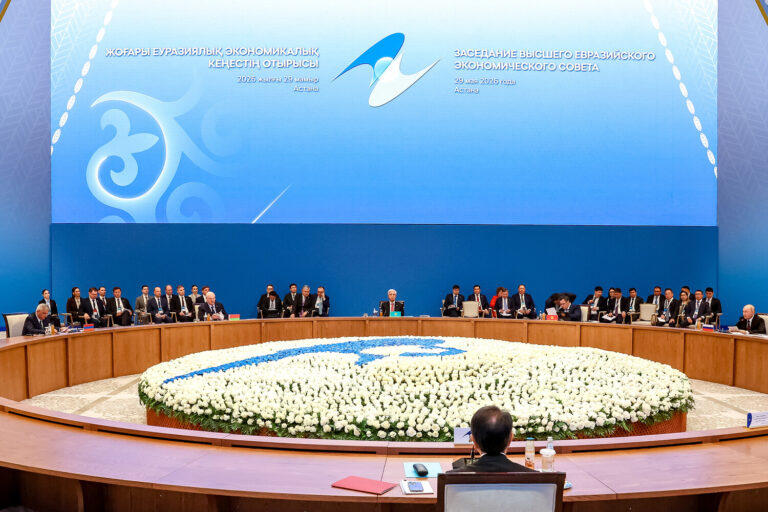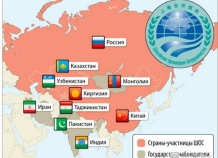
DUSHANBE, May 27, 2016, Asia-Plus — A meeting of the Shanghai Cooperation Organization (SCO) Council of Foreign Ministers that took place in the Uzbek capital, Tashkent, on May 24 adopted memorandum of obligations for India and Pakistan to join the organization.
The meeting participants included the foreign ministers of China, Kazakhstan, Kyrgyzstan, Russia, Tajikistan, and Uzbekistan, as well as the SCO Secretary-General Rashid Olimov and the Chairman of the Executive Committee of the SCO Regional Anti-Terrorist Structure Yevgeny Sysoyev.
According to the SCO’s website, the SCO foreign ministers discussed draft documents such as an SCO convention on fighting extremism, an anti-drug strategy of the SCO member-states for 2017-2022, a program of action toward its implementation, and some others.
Special attention was given to discussions of SCO enlargement aspects, primarily the procedure of India”s and Pakistan”s admission to the organization.
The meeting participants also drew up documents for a meeting of SCO heads of state.
The meeting adopted the memorandum of obligations for India and Pakistan to join the organization, which will be reviewed by the Tashkent summit for approval.
Meanwhile
Xinhua
news agency (China) reports that in a statement of SCO Secretary-General Rashid Olimov on South China Sea issue, all SCO countries agreed and supported China”s efforts made to safeguard peace and stability in the South China Sea.
They also voiced support for any country in the Asia-Pacific region to promote a peaceful, friendly and harmonious environment in the South China Sea.
The SCO member states reportedly stressed the UN Charter, UN Convention of the Law of the Sea (UNCLOS), Five Principles of Peaceful Coexistence and other international laws should be the basic principles when addressing the South China Sea issue.
Directly concerned states should resolve disputes through negotiation and consultation in accordance with all bilateral treaties and the Declaration on the Conduct of Parties in the South China Sea (DOC), the statement said.
It urged to respect the right of every sovereign state to decide by itself the dispute resolution methods, and strongly opposed outsiders” intervention into the South China Sea issue, as well as the attempt to internationalize the dispute.
The Shanghai Cooperation Organization currently has six full members — China, Kazakhstan, Kyrgyzstan, Russia, Tajikistan and Uzbekistan. Afghanistan, Belarus, India, Iran, Mongolia and Pakistan are six observer states, and SCO’s dialogue partners include Armenia, Azerbaijan, Cambodia, Nepal, Sri Lanka, and Turkey.
The Organization’s six full members account for 60% of the land mass of Eurasia and its population is a quarter of the world”s population. With observer states included, its affiliates account for about half of the world”s population.