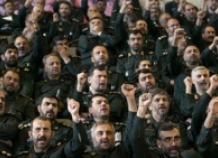
DUSHANBE, June 3, 2016, Asia-Plus — Country Reports on Terrorism 2015 released by the United States State Department on June 2 notes that designated as a State Sponsor of Terrorism in 1984, Iran continued its terrorist-related activity in 2015, including support for Hizballah, Palestinian terrorist groups in Gaza, and various groups in Iraq and throughout the Middle East.
In 2015, Iran reportedly increased its assistance to Iraqi Shia terrorist groups, including Kata’ib Hizballah (KH), which is a U.S. designated Foreign Terrorist Organization, as part of an effort to fight the Islamic State of Iraq and the Levant (ISIL) in Iraq and bolster the Asad regime in Syria.
Iran used the Islamic Revolutionary Guard Corps-Qods Force (IRGC-QF) to implement foreign policy goals, provide cover for intelligence operations, and create instability in the Middle East, the report say, noting that the IRGC-QF is Iran’s primary mechanism for cultivating and supporting terrorists abroad.
Iran is followed by Syria and Sudan
According to the report, Sudan was designated as a State Sponsor of Terrorism in 1993 due to concerns about support to international terrorist groups to include the Abu Nidal Organization, Palestine Islamic Jihad, Hamas, and Hizballah.
In the mid-1990s, Sudan served as a meeting place, safe haven, and training hub for international terrorist groups, such as al-Qa’ida. Usama bin Laden was provided safe haven in Sudan for five years until he was expelled by the Sudanese government in 1996. Sudan’s support to al-Qa’ida has ceased but elements of al-Qa’ida and ISIL-linked terrorist groups remained active in Sudan in 2015.
The report says that designated in 1979 as a State Sponsor of Terrorism, the Asad regime continued its political support to a variety of terrorist groups affecting the stability of the region, even amid significant internal unrest. The regime continued to provide political and weapons support to Hizballah and continued to allow Iran to rearm the terrorist organization. The Asad regime’s relationship with Hizballah and Iran reportedly grew stronger in 2015 as the conflict in Syria continued. President Bashar al-Asad remained a staunch defender of Iran’s policies, while Iran has exhibited equally energetic support for Syrian regime efforts to defeat the Syrian opposition, the report says.
To designate a country as a State Sponsor of Terrorism, the Secretary of State must determine that the government of such country has repeatedly provided support for acts of international terrorism. Once a country is designated, it remains a State Sponsor of Terrorism until the designation is rescinded in accordance with statutory criteria.
A wide range of sanctions are imposed as a result of a State Sponsor of Terrorism designation, including: a ban on arms-related exports and sales; controls over exports of dual-use items, requiring 30-day Congressional notification for goods or services that could significantly enhance the terrorist-list country’s military capability or ability to support terrorism; prohibitions on economic assistance; and imposition of miscellaneous financial and other restrictions.