DUSHANBE, July 11, 2016, Asia-Plus – Tajik grant mufti has called on the country’s Muslims to pray for the early construction of the Roghun hydroelectric power plant (HPP).
During the sermon in the Dushanbe main mosque, Chairman of the Shuro (Council) of Ulema at the Islamic Center of Tajikistan, Saidmukarram Abduqodirzoda, said on July 8 that the Tajik authorities signed a frame agreement with an Italian company on construction of the Roghun HPP.
He called on parishioners to pray for the successful completion of construction of the Roghun power plant.
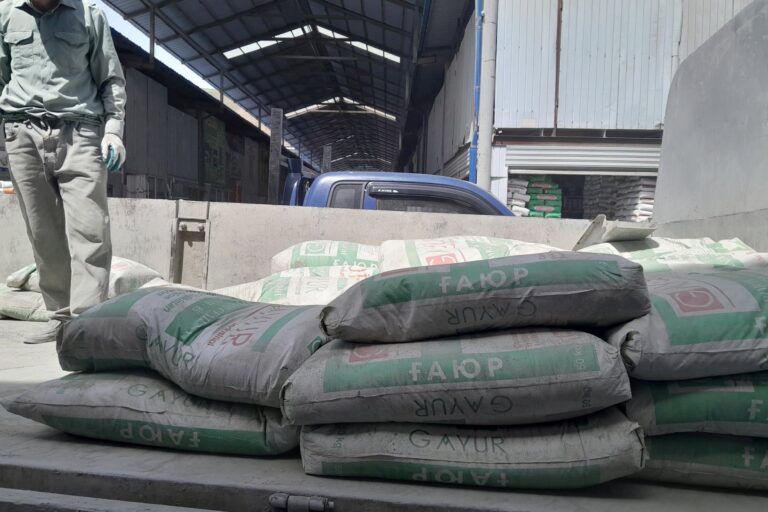
We will recall that the agreement here on July 1. The Roghun HPP (Hydropower Project), a $3.9 billion endeavor that will last 13 years, will be done by Salini Impregilo, which signed with OJSC NOB Roghun (the state-controlled company coordinating the project) an agreement following an international public tender.
It will begin with Lot 2 (signed on July 1 for $1.95 billion) that concerns the construction of the main dam, which foresees the diversion of the Vakhsh River by having it converge into two tunnels to keep the dam’s foundation dry.
The first turbine is expected to go into service in August 2018, followed by the second one in October of the same year. This early generation becomes the first step in a long process that, once completed, will bring to life one of the biggest hydroelectric plants in Central Asia with an installed capacity of 3,600 megawatts (MW).
The economic impact will be enormous because Roghun will double the energy potential of Tajikistan, with a direct effect on several fronts: from agriculture to energy supply to international trade.
Roghun HPP is an embankment dam in the preliminary stages of construction on the Vakhsh River in southern Tajikistan. It is one of the planned hydroelectric power plants of Vakhsh Cascade. Over three decades only preliminary construction has been carried out on the dam. Due to its controversial state, construction was suspended in August 2012 pending World Bank reports. The dam has drawn complaints from neighbor Uzbekistan, which fears it will negatively impact its lucrative cotton crops. The dispute over the project has contributed significantly to bitter relations between the two countries.
The Roghun HPP was first proposed in 1959 and a technical scheme was developed by 1965. Construction began in 1976; however the project was frozen after the collapse of the Soviet Union.
An agreement on finishing the construction was signed between Tajikistan and Russia in 1994; however, as the agreement was not implemented, it was denounced by Tajikistan parliament.
In October 2004, Tajikistan signed an agreement with Russia”s RusAl aluminum company, according to which RusAl agreed to complete the Roghun facility and rebuild the Tursunzoda aluminum smelter. In August 2007, Tajikistan formally revoked a contract with RusAl, accusing it of failing to fulfill the contract.
In April 2008, Tajikistan founded OJSC NBO Roghun with an authorized capital of 116 million somoni for completing the construction of the Roghun HPP. Current authorized capital of OJSC NBO Roghun reportedly amounts to 12 billion somoni.
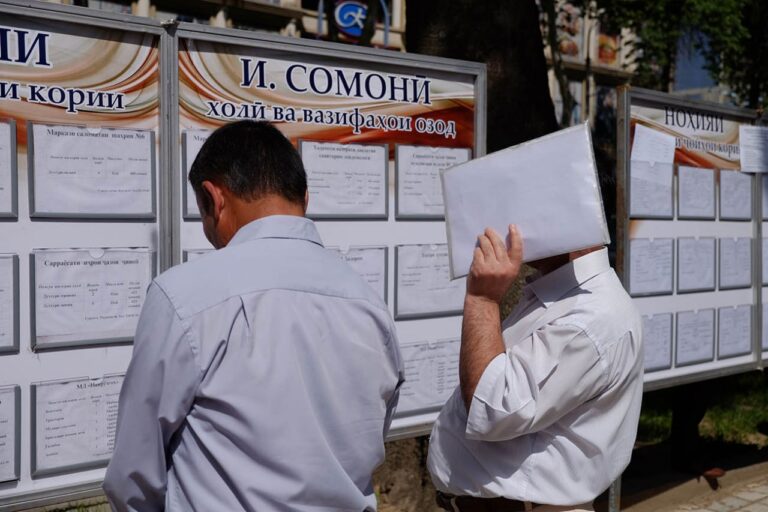
To raise funds to complete construction of the Roghun HPP the government started to sell shares in Roghun to people on January 6, 2010. Tajikistan has reportedly issued 6 billion somoni worth of Roghun shares. To-date, the sale of Roghun shares has reportedly earned the government 830 million somoni.
In response to the request of the bordering countries and especially Uzbekistan, the World Bank has financed the Techno-Economic Assessment Study (TEAS) conducted by consortium of Coyne et Bellier, Electroconsult and IPA Energy + Water Economics, and Environmental and Social Impact Assessment (ESIA) conducted by Poyry. The ESIA was published on June 16, 2014 and the TEAS in July 2014. Overall, the ESIA stated that “Most impacts are rather small and easily mitigated, if mitigation is required at all.” and that “There is no impact of the category “strong negative, mitigation not possible,” which would have to be considered as a no-go for the project.”