UK officially begins Brexit process

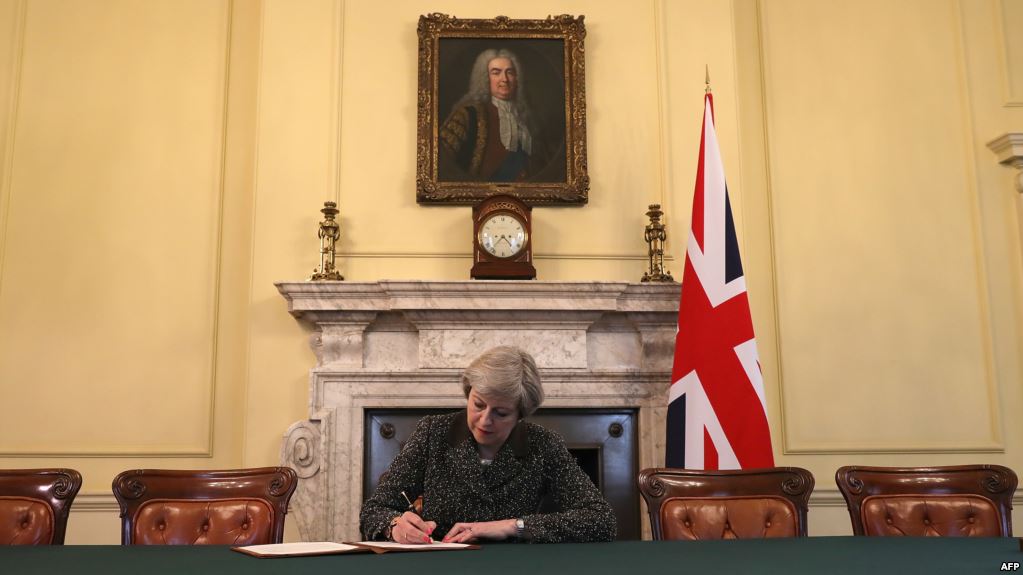
British Prime Minister Theresa May is filing formal Brexit divorce papers today.  Nine months after Britons voted to leave, May will notify EU Council President Donald Tusk in a letter that the UK really is quitting the bloc it joined in 1973. In a statement in the Commons, the prime minister will then tell MPs […]

British Prime Minister Theresa May is filing formal Brexit divorce papers today. 

Nine months after Britons voted to leave, May will notify EU Council President Donald Tusk in a letter that the UK really is quitting the bloc it joined in 1973.

In a statement in the Commons, the prime minister will then tell MPs this marks “the moment for the country to come together,” according to BBC.

It follows June's referendum which resulted in a vote to leave the EU.

Mrs. May's letter will be delivered today at 12:30 BST by the British Ambassador to the EU, Sir Tim Barrow.

The prime minister will have two years to settle the terms of the divorce before it comes into effect in late March 2019.

Tuesday night, Mrs. May reportedly spoke by telephone to Mr. Tusk, EU Commission President Jean-Claude Juncker and German Chancellor Angela Merkel.

Article 50 gives both sides two years to reach agreement, so unless both sides agree to extend the deadline for talks, the UK will leave on March 29, 2019.

Negotiations are expected to begin in mid-May.  The UK government says it wants to carry out both separation and trade talks at the same time, but EU chiefs say the two issues must be handled separately.

Reuters reports that a huge number of questions remain, including whether exporters will keep tariff-free access to the single market and whether British-based banks will still be able to serve continental clients, not to mention immigration and the future rights of EU citizens in the UK and Britons living in Europe.

Global banks such as Goldman Sachs are considering moving staff out of Britain due to Brexit, and some major companies and banks could use the Article 50 trigger date to update investors on their plans.  
Join us on social media!

Article translations:

Related Article

Tenisi
Оби зулол
Оби зулол

Most Read

Коммерсбонк Точикистон

Recent Articles

President of Tajikistan instructed to develop measures for stabilizing the cement market within a week

Despite the increase in the production of this building material in the country, the domestic market faced a shortage, supply disruptions, and a sharp rise in the price of the building material.

Gusty winds and mudslides damage houses, roads, and cars in Dushanbe and some other regions

At least 9 vehicles were damaged, including three in Dushanbe and six in Vahdat.

The US struck military facilities in Iran. Trump expressed dissatisfaction with Tehran’s proposals and threatened Oman.

Earlier, Iran's state TV reported receiving a draft unofficial framework agreement between Tehran and Washington to settle the conflict.

How much did Tajikistan’s budget earn from the “Google tax”?

The law is already 5 years old, but the Tax Committee provided data only for the last 2 years.

The bilateral trade between Tajikistan and Iran increased by 8% in Q1 2026

Another meeting of the joint intergovernmental commission of the two countries took place in Dushanbe.

Russia and Taliban government sign military-technical cooperation agreement

The document may open up opportunities for the exchange of weapons, military technologies, and other types of defense cooperation.

“Hit with fists on the lower back and abdomen.” A teacher from Nurobod, claiming he was beaten by a student’s brother, details the attack

According to him, he is being threatened with murder, and law enforcement agencies have not yet detained the attacker.

International internet starts coming back in Iran after long shutdown 

Western media reports says Iranians ​isolated by a long...

Tajikistan listed among countries with low generative AI usage

Among the Central Asian countries, Kazakhstan has the highest rate.

Prices in Tajikistan rise almost 2% in January-April: apples, fuel, and utilities become particularly more expensive

In April, inflation was 0.6%: food products became more expensive, non-food products increased in price comparatively less, and tariffs for paid services remained unchanged.