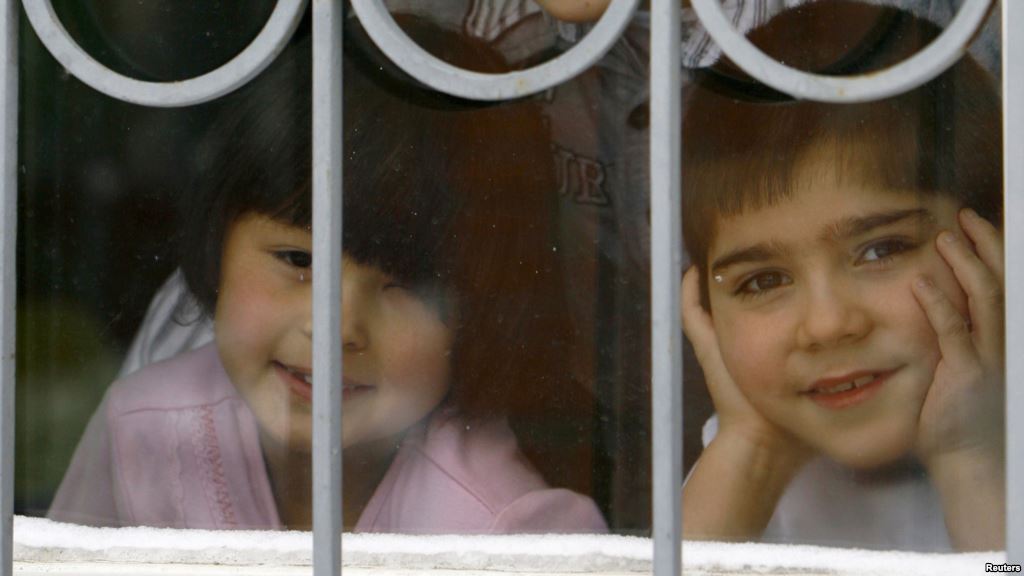
At least 2.7 million children live in residential care worldwide and face increased risk of violence, abuse and long-term damage to their cognitive, social and emotional development, a United Nations study says, warning that “this is just tip of the iceberg,” according to the UN News Center
The study Child Abuse & Neglect, published by the UN Children's Fund (UNICEF), notes that official records in many countries only capture a small fraction of the actual number of children living in residential care and children in privately owned centers are often not counted.
“It is critical that governments keep more accurate and comprehensive listings of all existing residential care facilities, as well as regularly undertake thorough counts of children living in these facilities in order to help strengthen official records,” said Claudia Cappa, Statistics Specialist at UNICEF and co-author of the study. “That way we will be able to measure the breadth of the problem and work with governments to respond effectively.”
In residential care, such as institutions or orphanages, children who are already vulnerable due to family separation are at increased risk of violence, abuse and long-term damage to their cognitive, social and emotional development, said Cornelius Williams, Associate Director of Child Protection at UNICEF.
Research shows some of the key risk factors that result in children being placed in residential care include family breakdown, health issues, poor or unequal provision of social services, disability and poverty.
Governments are urged to reduce the number of children living in residential care by preventing family separation where possible, and by seeking homes for children in family-based care such as foster homes. Stronger investment in community-based family support programs is also needed, UNICEF said.
UNICEF's new estimate is based on data from 140 countries. Central and Eastern Europe was found to have the highest rate worldwide, with 666 children per 100,000 living in residential care, over 5 times the global average of 120 children.
Industrialized countries have the second-highest rate with 192 children, followed by East Asia and the Pacific region at 153.