A number of holidays is increasing in Tajikistan as the government has offered amendments to the country’s law on holidays,
A draft law worked by the government offers to put three new holidays on the list of Tajikistan’s holidays.
The government, in particular, proposes to celebrate Mehrgon festival and the Day of Employees of Agrarian Sector on October 15.
Besides, the government proposes to Sada festival on January 30.
The government also proposes to celebrate the Day of Judicial Employee on October 26. The Supreme Court of the Soviet Socialist Republic of Tajikistan was established on October 26, 1929.
These holidays will not be day offs.
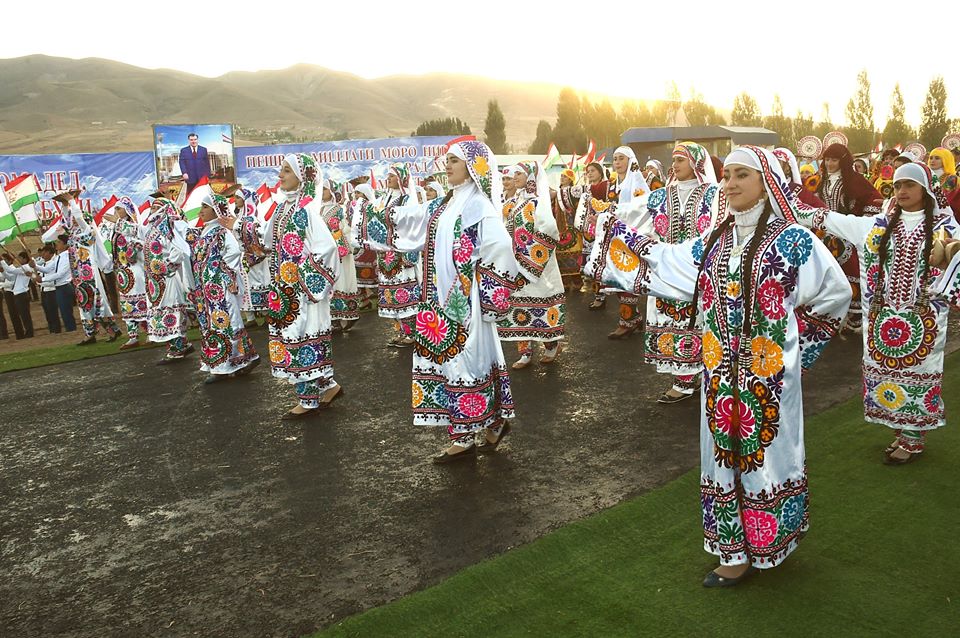
Recall, Tajikistan commemorated Mehrgon festival on October 15. In Dushanbe, events dedicated to the Mehrgon festival took place in Boghi Iram (Iram Park). A theatrical show was held and agricultural and handicraft exhibitions took place in the Iram Park on the occasion of the Mehrgon festival. Besides, a festive concert was held in the park.
Mehrgon (Mehregan in Persian) is a popular Iranian festival that is celebrated in the autumn of every year. It aims to celebrate the Persian culture and is a tribute to the season of Fall (the harvesting season).
It is a Zoroastrian and Persian festival celebrated to honor Mithra (modern Mehr), which is responsible for friendship, affection and love. It is also widely referred to as the Persian Festival of Autumn.
It was reportedly originally a feast honoring the Persian god Mithra (modern Mehr). By the 4th century BCE, it was observed as one of the name-day feasts, a form it retains in today. In Iran, it is one of the two pre-Islamic festivals that continue to be celebrated by the public at large: Mehregan, dedicated to Mithra (modern Mehr), and Tirgan, dedicated to Tishtrya (modern Tir).
In the present days, for this celebration, the participants wear new clothes and set a decorative, colorful table.
Sada (in Persian Sadeh or Sade) is an ancient Iranian festival that dates back to the first Persian Empire, Achaemenid Empire. Sada celebrates 50 days before Navrouz. Sada in Tajik and Persian means “hundred” and refers to one hundred days and nights past the end of summer. Sada is a mid-winter festival that was celebrated with grandeur and magnificence in ancient Persia. It was a festivity to honor fire and to defeat the forces of darkness, frost, and cold.