Tajik authorities have reportedly asked the Eurasian Fund for Stabilization and Development (EFSD) for another 20 million U.S. dollars for implementation of the reform program but the EFSD Board even has not discussed that issue.
The reform program is currently being implemented by the Government and the National Bank of Tajikistan under financial support of the EFSD, which had approved a US$40 million loan for Tajikistan. The Tajik authorities have asked the EFSD for another US$20 million but the EFSD Board even has not discussed that issue.
Under a loan agreement between the Government of Tajikistan and the EFSD, the first tranche of US$20 million was provided to Tajikistan in August 2016 after the Tajik authorities committed themselves to eliminate multiple exchange rates and transfer conditions for analysis of efficiency of tax and customs allowances from the status of an indicative index to the status of a control index.
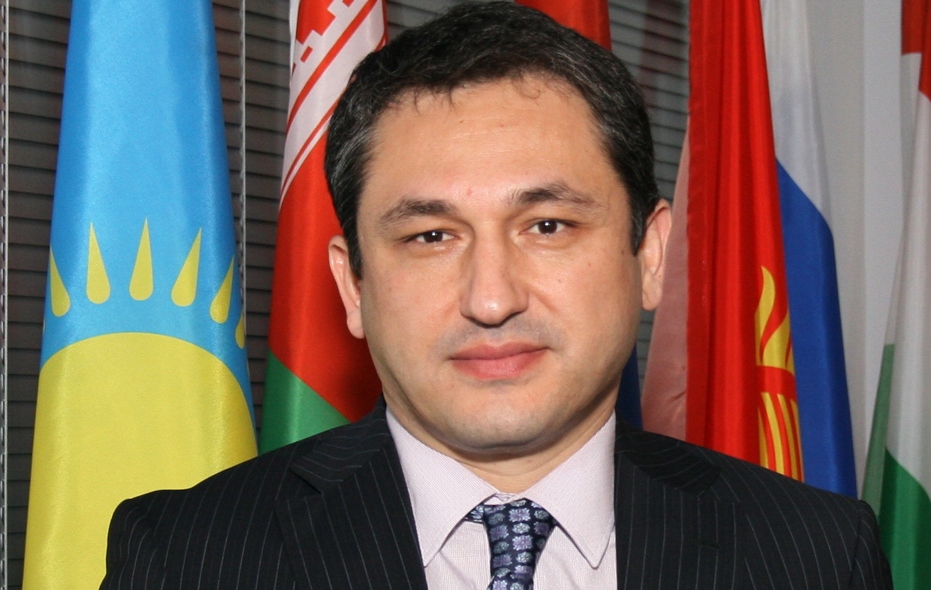
“In late 2016, the Tajik authorities applied to the EFSD Board for the third tranche of US$20 million,” Alisher Mirzoyev, the head of the EFSD project group on finance loans, told Asia-Plus in an interview in Moscow yesterday on the sidelines of the conference on the Eurasian Integration.
According to him, the EFSD Board has not discussed that issue because of lack of progress in analysis of efficiency of tax and customs allowances, resumption of multiple exchange rates in March-May 2017 and existing debts of legal entities to the Eurasian Development Bank (EDB).
Meanwhile, allocation of the second US$20 million tranche is also not guaranteed. The EDB Board Chairman Dmitry Pankin noted yesterday that allocation of the second tranche to Tajikistan is still under question.
The Eurasian Fund for Stabilization and Development (EFSD, before known as the EURASEC Anti-Crisis Fund) is a regional financial arrangement in the amount of US$ 8.5 billion. It was established by Armenia, Belarus, Kazakhstan, Kyrgyzstan, Russia and Tajikistan in 2009.
EFSD mission is to help member countries ensure their long-run economic stability and foster economic integration between them.
EFSD is guided by members` finance ministries. Supreme decision-making body is EFSD Council consisting of members` Finance Ministers.
Eurasian Development Bank manages the resources of EFSD.
EFSD financial instruments are: financial credits (FCs), which are extended only to central governments to support stabilization programs aimed at making their economies more resilient to external and domestic shocks (FCs support national budgets and/or the balance of payments); investment loans (ILs), which are available to governments and/or to companies implementing large investment projects that contribute long-term economic and financial stability and spur integration between member states; and grants, which are available from the share of EFSD net profit for financing government programs in social sphere.
EFSD credits and loans are repayable, have finite maturity, carry interest and are extended in US Dollars or Euros. While lending to low income countries, EFSD is guided by International Monetary Fund recommendations on loan concessionality. The prospective borrower should have no debt arrears to the Fund itself, to any of its member countries, or to other international financial institutions.