Tajik parliamentarians believe that Tajikistan will turn into industrial-agrarian country in the near future.
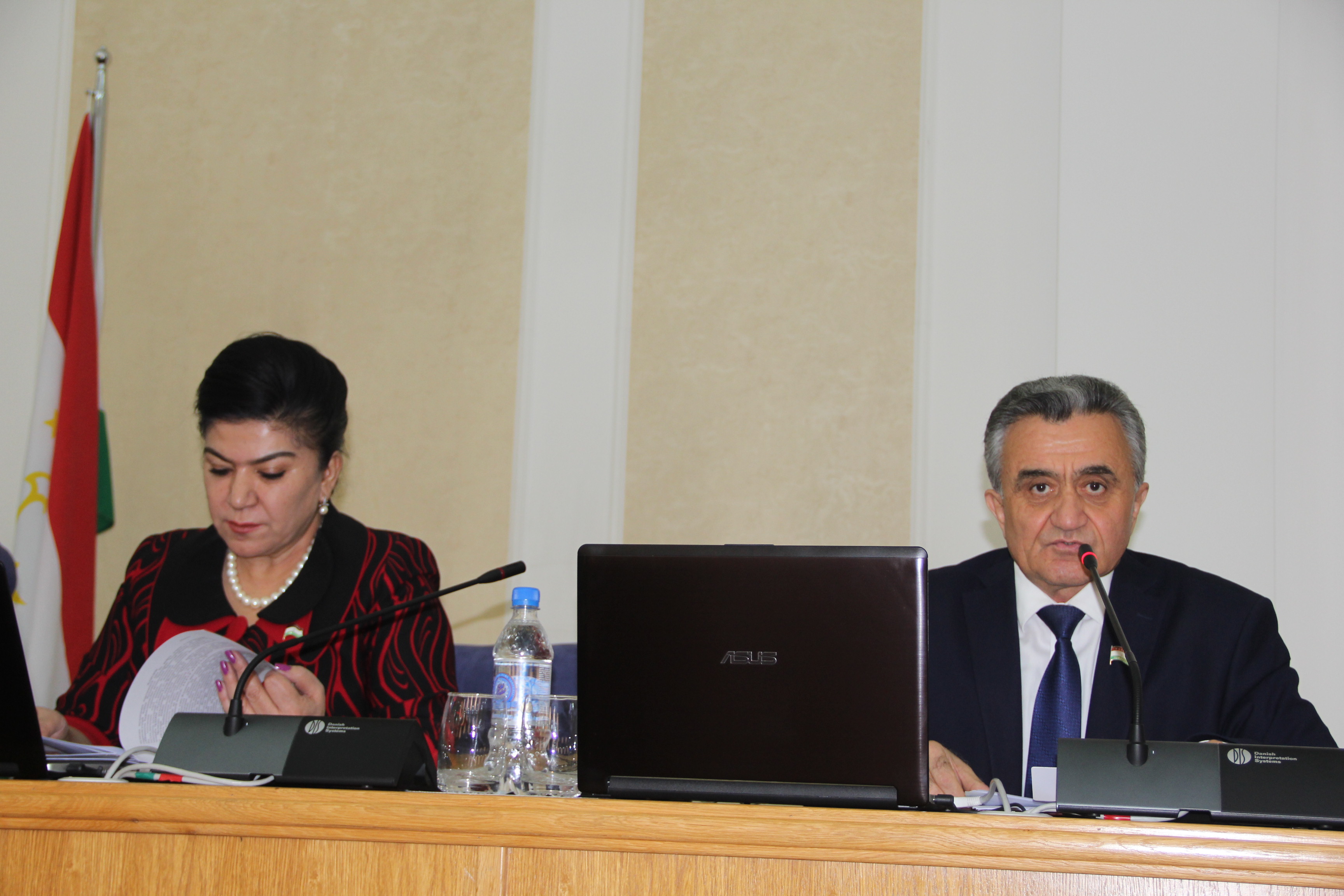
Parliamentary discussions on Tajikistan’s economic development trends took place in Dushanbe on November 30.
Speaking at the meeting, MPs Akramsho Felalliyev and Khusrav Abdunazar, in particular, noted that the strategic objective was in turning Tajikistan from the agrarian-industrial country into the industrial-agrarian country.
By 2030, the country’s regions will turn into areas with attractive conditions for life, the parliamentarians said.
Recall, the government plans to turn Tajikistan from the agrarian-industrial into a developed industrial-agrarian country.
Speaking at the ceremony of commissioning of a new cement plant in Yovon district, Tajik President Emomali Rahmon noted on August 24, 2016 that the government has set a goal through the establishment of various industrial enterprises to establish greater processing of domestic raw materials and in this way to turn Tajikistan from agrarian-industrial to a developed industrial-agrarian country." He noted that to achieve this objective the government creates a major industrial zone in Yovon region.
At the end of last year Tajikistan adopted the national development strategy for the period to 2030 (NDS-2030).
The following three basic principles of future development have been taken as a basis for NDS-2030 development system approach: 1) prevention or prediction (reduction) of vulnerability in future development; 2) Industrialization or more efficient use of national resources; and 3) innovation or development through the integration of new developments into country's social and economic mainstreams.
The document notes that the economic potential of the country should be considered as the material basis of national security. In this respect, the rational use of human and natural capital, and strengthening institutional capacity of development towards better efficiency, diversification and competitiveness of the national economy, will determine the industrial future development and ensure the transition from agrarian-industrial based economy to the industrial-agrarian based economy.
NDS-230 says that for transition from agrarian-industrial based economy to the industrial-agrarian based economy it is necessary to ensure a high rate of industrial growth and increase share of industry and energy in the country's GDP to 50 percent.
Today, agriculture’s share in Tajikistan’s GDP is more than 20 percent, while share of industry, including energy, is little more than 17 percent.